Our Faculty-wide Diversity, Equity and Inclusion Conference Day is an initiative that brings together staff and students to strengthen our shared commitment to inclusion across the Faculty. The conference explores what diversity, equity, and inclusion mean to us at MDHS through presentations, activities and conversations designed to foster inclusive learning, research and working environments.
Diversity and Inclusion

Welcome message from the Associate Dean of Diversity and Inclusion
Welcome to the Diversity and Inclusion website for the Faculty of Medicine, Dentistry, and Health Sciences.
As your Associate Dean of Diversity and Inclusion, I am passionate and committed to equity, and I will use my role to advocate for people, their purpose, and the advancement of medicine and science.
We all have the right to a diverse and discrimination-free workplace, where gender, sexuality and sexual orientation, disability, health issues, ethnicity and race, and an individual’s background should not be a barrier to reaching their full potential. My resolute goal is to continue developing and bringing new ideas to lead key initiatives that will enhance our Faculties' progression towards Diversity and Inclusion.
Our Faculty is ranked among the top in the world for its impact, innovation, education and growth. I believe we are ready to also be known for celebrating our diverse and outstanding people.
Professor Natalie Hannan
Associate Dean, Diversity and Inclusion
Stay connected with the latest news, events, opportunities, and stories related to Diversity, Equity & Inclusion across the Faculty. Sign up below to receive our DE&I Newsletter: https://forms.office.com/r/mHXtmsHecG
If you would like to share any information or events in our upcoming newsletter, please contact us at mdhs-diversityinclusion@unimelb.edu.au

MDHS Diversity and Inclusion Advisory Committee (DIAC)
The MDHS Diversity and Inclusion Advisory Committee (DIAC) is made up of faculty staff who are committed to a diverse and respectful community.
The Committee includes professional staff, early career researchers and senior leaders who have a range of diverse experiences, perspectives, and expertise. They are from across different departments, schools and disciplines. DIAC is guided by the University’s Athena Swan (SAGE) Gender Equity Bronze Award, the Diversity and Inclusion Strategy 2030, and the Faculty’s Advancing Health 2030. Read our Terms of Reference here. Please email DIAC with any questions or initiatives you'd like to propose.
What is SWiM?
The Supporting Women in MDHS (SWiM) program aims to promote gender equity and support academic promotion of women in our Faculty.
SWiM aims to encourage women to step into leadership roles in their academic careers, as well as strategically prepare them for academic promotion.
Read more
SWiM: Inspiring Stories
In this monthly seminar series, Professor Natalie Hannan, Associate Dean Diversity and Inclusion, invites women in leadership to reflect on their careers and share their advice, knowledge and experience. The series is open to all staff, students and honoraries in the faculty.
SWiM: Mentoring for Promotion Program
The SWiM Mentoring for Promotion Program is a tailored program of support for female and non-binary staff who are eligible for academic promotion.
Our Commitment
At the Faculty of Medicine, Dentistry and Health Sciences (MDHS), we are deeply committed to creating a learning, research and working environment where everyone feels respected, valued, and safe.
Our anti-racism efforts align directly with the University’s Anti-Racism Action Plan (2024-2027), Murmuk Djerring, the University’s Indigenous Strategy 2023–2027, Advancing Health 2030, and relate to the Faculty’s Truth Telling in Health Initiative.
The Faculty of Medicine, Dentistry and Health Sciences acknowledges the Wurundjeri people of the Kulin Nation and the Yorta Yorta Nation, the Traditional Owners of the lands on which our campuses are situated. We pay our respect to Elders past and present. We are committed to honouring Aboriginal and Torres Strait Islander peoples’ unique cultural and spiritual relationships to the land, waters and seas and their rich contribution to society, particularly their knowledge of health and wellbeing, which we will continue to learn from.
We recognise that the University’s foundations are deeply intertwined with colonial practices of dispossession and with knowledge systems that sought to erase Indigenous life, knowledge and authority. This includes historical involvement in scientific racism and eugenics, as revealed through Dhoombak Goobgoowana and our institutional history.
Truth-telling, allyship and equity are vital to dismantling racism and advancing reconciliation. This work demands reflection, courage and collective commitment, and we are dedicated to continuing it.
Racial Literacy Conversations
Join our Racial Literacy Conversation sessions to explore how racism and systemic inequities appear in our university community and how we can respond together.
What you’ll gain
Through interactive discussions, you’ll build practical skills to recognize, discuss, and challenge racism in everyday and institutional settings. No prior knowledge is needed, and you will not be asked to share personal experiences of racism. Everyone’s perspective is welcome.
Session details
Open to all MDHS students, graduate researchers, and staff.
Registrations for students: Register Here
Registrations for graduate researchers and staff: Register Here
Each session runs for 2 hours and concludes with refreshments and networking. Sessions will be held at different locations across the Parkville campus, with details provided in the calendar invite.
Places are limited to support a safe and comfortable space, so please book early.
This program is part of the Faculty of Medicine, Dentistry and Health Sciences (MDHS), committed to creating a learning, research and working environment where everyone feels respected, valued, and safe and the University’s Anti-Racism Action Plan (2024–2027).
-
Sources and initiatives supporting anti-racism, cultural safety, and inclusion across the University, Victoria, and nationally.
University Resources
- University Anti-Racism Resources offers practical tools, training, and guidance to strengthen anti-racist practice and cultural safety across the University community.
- Addressing racism in the classroom: Staff Hub advice on setting up an anti-racist classroom and responding to racism in learning spaces.
- Asian Names Resource provides guidance and resources to support the correct pronunciation and use of Asian names. The Padlet link has also been updated in the agenda.
- Safe Research Resource Cards provide practical guidance and resources to support safe, ethical and culturally appropriate research practices.
Support for Students Impacted by Conflict in West Asia (including Iran, Israel, and Gaza)
- Support for Iranian students and graduate researchers includes information on leave and special consideration.
- Advice for students impacted by conflict in the Middle East provides guidance and support for students affected by conflict in West Asia, including access to wellbeing services, academic support, and advice on managing study during challenging circumstances.
University Support Services
If you have experienced racism, you have the right to seek support and advice. The University encourages you to engage with the available services.
- Safer Community Program provides confidential support and advice about inappropriate, concerning, or threatening behaviour.
- Respect at Melbourne supports a safe, respectful community by addressing sexual misconduct with a trauma-informed approach.
- Counselling and Psychological Services (CAPS) offers free, confidential mental health support for students and staff, with trauma-informed and intersectional care.
- Employee Assistance Program (EAP) delivers free, confidential counselling for staff and immediate family members on personal or work-related matters.
- chaplain provides inclusive emotional and spiritual support for students and staff from all faiths—or no faith.
- Health Service offers comprehensive medical care for students, staff, and their dependants, including student mental health services.
External Resources (Victoria & National)
- Understanding Race Educational resources to build awareness about racism and its impacts in Australia.
- Anti-Racism Victoria – Support Services Connects individuals with information, community organisations, and reporting pathways for race-based discrimination.
External Formal Complaints
- Australian Human Rights Commission Receives and investigates complaints about racial discrimination under federal law.
- Victorian Equal Opportunity and Human Rights Commission (VEOHRC) Handles complaints about racism and discrimination in Victoria.
- Phone: 1300 292 153 (weekdays 10am – 2pm)
- Email: complaints@veohrc.vic.gov.au
- National Student Ombudsman Independent body for students to raise complaints about education providers in Australia.
Anonymous Reporting
- VEOHRC Community Reporting Tool Report racism anonymously and help monitor discrimination trends in Victoria.
- Racism Register Allows people to confidentially record experiences of racism to support advocacy and awareness.
- Call It Out – First Nations Racism Register Dedicated reporting tool for Aboriginal and Torres Strait Islander peoples to share racism experiences.
- Islamophobia Register Tracks and supports victims of anti-Muslim hate incidents across the country.
- Victorian Community Security Group (Jewish Community) Provides safety, advocacy, and incident reporting support for Victoria’s Jewish community.
-
These recommended readings support learning and reflection on race, history and belonging. They provide research-informed perspectives that contribute to understanding diversity, equity and inclusion within academic and professional contexts.
Featured readings
- How to Argue With a Racist – Adam Rutherford
A clear and evidence-based challenge to the myths of biological race, drawing on genetics, history and science.
- Why Race Still Matters – Alana Lentin
Explores how race continues to shape power, inequality and everyday life, particularly within institutional and political systems.
- How to Be an Antiracist – Ibram X. Kendi
A call to move beyond neutrality, offering a framework for recognising and actively dismantling racist ideas and structures.
- A Short History of Humanity – Johannes Krause
Examines how migration, diversity and human movement have shaped who we are, challenging fixed ideas of identity and belonging.
- On Being Included: Racism and Diversity in Institutional Life - Sara Ahmed explores how the language of “diversity” is used within institutions, questioning what it actually does in practice and how it may replace or dilute more critical concepts like equality and justice.
Interesting reading
- Seeking Asylum: Our Stories–Asylum Seeker Resource Centre
- Cultural Diversity Research Collection–Australia Policy Online
- Racism at Work Report–How organisations can stand up to and end workplace racism
- Face the facts–Cultural diversity in Australia
- Talking about a Revolution–Yassmin Abdel-Magied
- Anti Racism Resources for White People in Australia
- The Hate Race–Maxine Beneba Clarke
- Why I'm no longer talking to white people about race
- Reporting on Aboriginal and Torres Strait Islander Peoples and Issues
- Growing up African in Australia
- Growing up Asian in Australia
- Growing up Aboriginal in Australia
- How to Argue With a Racist – Adam Rutherford
-
- The Colour Cycle–Diversity Arts Australia
- The Art of Inclusion–Diversity Council of Australia
-
Growing up mixed race in Australia
An episode of Insight (SBS) about how being mixed race shape people’s identity and experience of the world, and how families maintain multiple cultures.
This SBS documentary puts survey findings into action through a series of hidden camera social experiments to capture the experience of racism in Australia today.
Stay Connected
To learn more about MDHS anti-racism initiatives or upcoming events, join our Newsletter here or contact the MDHS Diversity and Inclusion team: mdhs-diversityinclusion@unimelb.edu.au
Together, we are building a Faculty grounded in truth, justice, and belonging, where equity and respect are part of everyday practice.

About Visibility in Pride
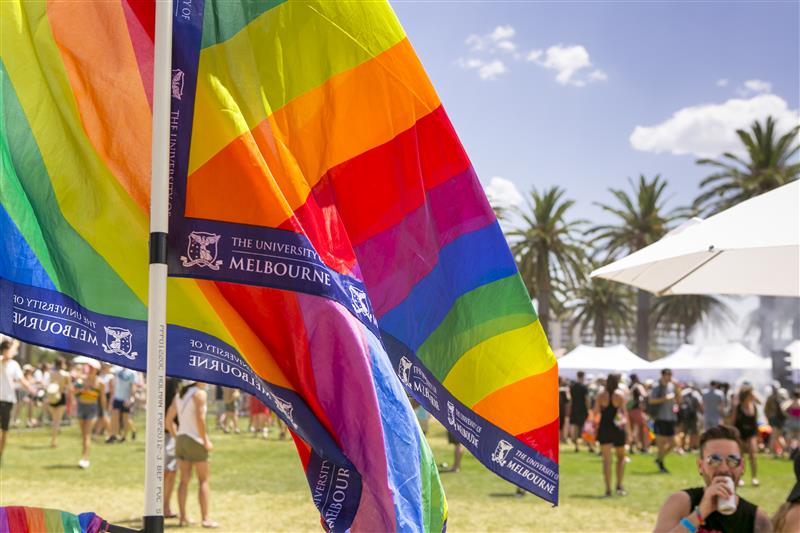
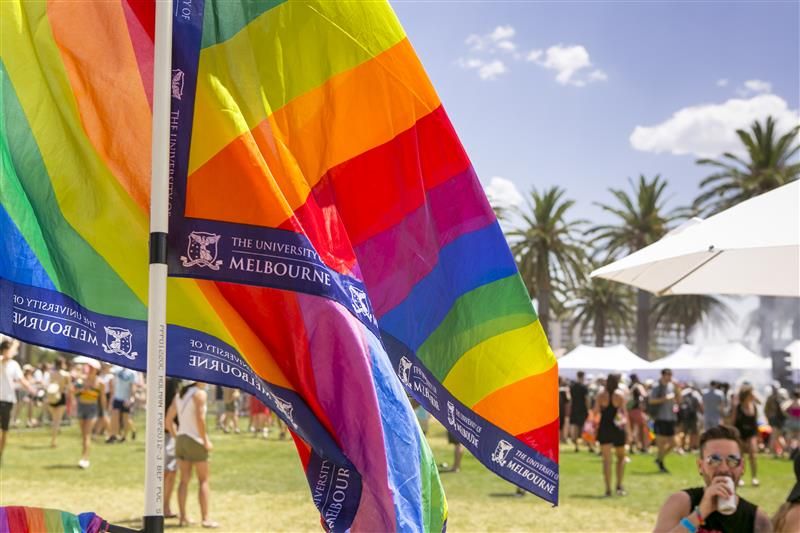
Visibility in Pride as a network is a commitment to building a Faculty where every LGBTQIA+ person feels seen, supported, and valued.
The ViP program has been designed with three core purposes:
- Creating spaces where LGBTQIA+ staff and graduate researchers feel genuinely welcome, and where diverse identities are celebrated as a strength of our Faculty.
- Offering a safe space for peer connection and informal mentoring, a place to share experiences, and support one another within MDHS and across the University of Melbourne.
- Supporting the career advancement of LGBTQIA+ staff and graduate researchers and helping to build a more inclusive culture across health sciences research and practice.
ViP will offer regular events, peer mentoring opportunities, and a growing community of people committed to making MDHS a more visible and inclusive place for everyone.
Return to Self: Supporting Trans Colleagues and Students
The University of Melbourne has launched Return to Self, a new video and podcast series that explores gender affirmation through the lived experiences of three trans people.
Designed as a self-paced learning resource, the series offers practical guidance to help build understanding and confidence in supporting trans colleagues and students. Users can watch the videos, listen to the podcast episodes or read the transcripts, making the resource accessible across different learning preferences.
Questions? Please reach out to us here: Pride-vip@unimelb.edu.au
Resources and Support
Sources and initiatives supporting LGBTQIA+ inclusion across the University, Victoria, and nationally.
Stay Connected
To learn more about MDHS anti-racism initiatives or upcoming events, join our newsletter here or contact the MDHS Diversity and Inclusion team: mdhs-diversityinclusion@unimelb.edu.au
Together, we are building a Faculty grounded in truth, justice, and belonging, where equity and respect are part of everyday practice.

Staff Disability Inclusion Network
The Disability Inclusion Network is a staff-led representative group that enables connection, engagement and advocacy for staff with a disability. The group was established in 2023 and aims to improve visibility and inclusion of staff with disability and carers/family members, and encourage connections to reduce stigma and disability discrimination in the workplace.
Staff with disability, including family members and carers of people with disability, are encouraged to join the Network at the link below (Note - there are different channels for staff with disability, and for carers and family members of people with disability).
Disability Inclusion Action Plan
The Disability Inclusion Action Plan 2023-2026 represents a significant step towards the University’s aspiration to become a champion and an exemplar of disability inclusion and accessibility.
Achieving the plan requires the whole University community makes a collective and ongoing effort: actively creating an environment in which people with disability can feel confident, empowered and supported to fully participate in University life.
Disability at work
Disability-related resources at the university.
Momentum Grants
The Momentum Grants support the research development, career progression and retention of Level B and C research fixed-term and continuing (research contingent) academic staff with extraordinary and compounding personal circumstances.
Diversity and Inclusion Grants
Our Diversity and Inclusion Grants support academic staff to undertake scholarly-based work that contributes to building a more equitable, diverse and inclusive faculty community.
Career Continuity Grant
A grant scheme for early career academic parents to maintain their research when taking or returning from a period of parental leave.