The scourge of the 20th century, polio drove doctors and scientists to devote their lives to vaccine research and improved treatment, transforming healthcare and epidemic surveillance in the process.
Summer was the most dangerous time.
When the word went out, public pools were closed, cinemas shut and people were told to avoid public transport and crowds or remain at home. Streets emptied. Holidays were cancelled, and children were kept at home during the hottest months of the year.
The threat of a polio infection sent a chill through the hearts of parents.
“It was an extraordinarily serious condition, impacting children and creating fear within the community,” says Dr Jacqueline Healy, Director of Museums at the Faculty of Medicine, Dentistry and Health Sciences. “Polio epidemics were deeply feared.”
With multiple epidemics throughout the first half of the 20th century, the consequences of infection were well understood: possible paralysis, permanent disability or even death. Not everyone experienced extreme symptoms, but for those who became seriously ill, damage to their respiratory system could mean extended time in an iron lung – a respirator that breathed for them while their paralysed diaphragms recovered.
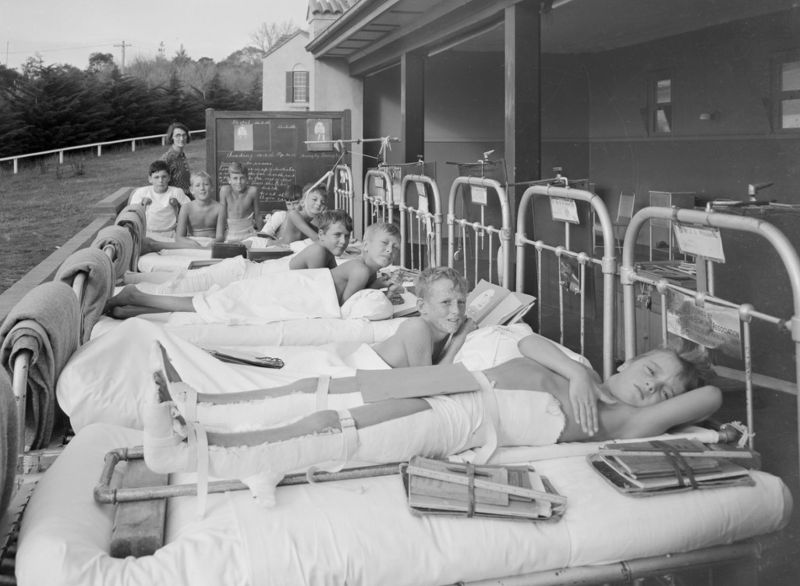
Source: State Library Victoria.
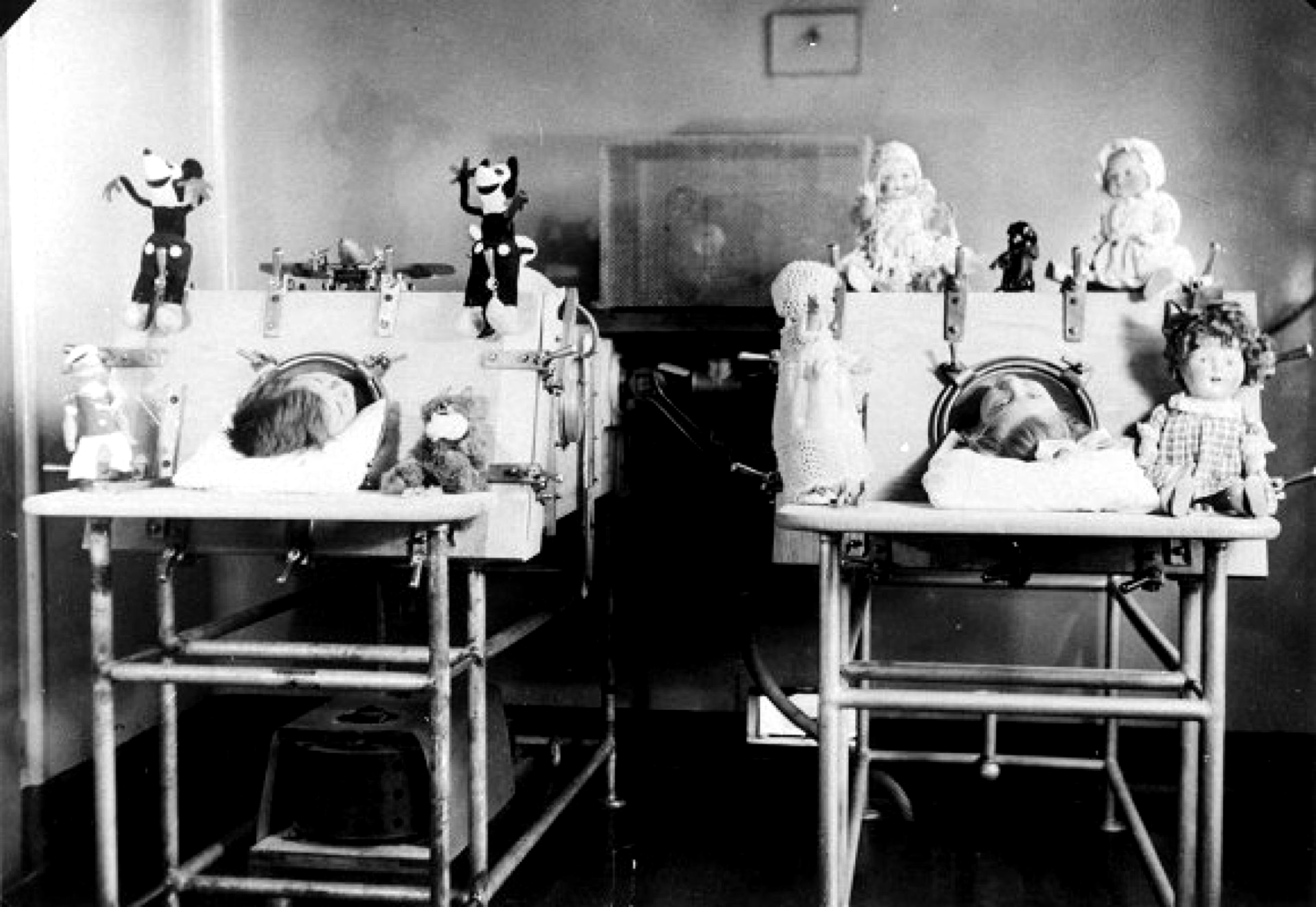
Photographs from the Royal Children’s Hospital archive show rows of children in hospital beds, their torsos encased in iron lungs. In one poignant image, two children lie in adjacent beds – their heads the only visible part of their bodies – surrounded by toys they are unable to play with.
It was in these wards, amid scenes like these, that a brilliant young doctor began the work that would reshape how polio was treated in Australia.

The woman who took on polio
When Dr Annie Jean Macnamara became one of the first women to take up residency at the Royal Children’s Hospital in 1923, polio had just been declared a notifiable disease. Confronted daily with its devastating toll, the fresh University of Melbourne graduate quickly resolved to improve treatment and help drive the development of a vaccine.
Together with her fellow graduate Sir Frank Macfarlane Burnet, Dr Macnamara began researching the disease at WEHI (Walter and Eliza Hall Institute of Medical Research). In 1931, their experiments proved the existence of more than one strain of the poliovirus – a pivotal finding that laid the groundwork for the eventual development of a vaccine by American Dr Jonas Salk. But Dr Macnamara’s work didn’t stop there.
Training in orthopaedics to better understand and improve treatments to damaged bodies, she developed a structure inspired by the rigid cradleboards used to carry infants that stabilised children’s paralysed limbs while allowing gradual rehabilitation – one of many ingenious devices she championed. “It was a much gentler approach, one that focused on mobility,” says Dr Healy.
As three major polio epidemics swept across Victoria in the 1930s, Dr Macnamara was recognised for her work leading the fight against polio from virus research to pandemic management and her long-standing contribution to the budding field of physiotherapy. In 1935, she was named Dame Commander of the Order of the British Empire.
Dame Jean had an active open mind looking for solutions across the board. That is an extraordinary symbol of her inquiring nature and her caring for people…that is what made her special. Dr Jacqueline Healy
Ending an epidemic
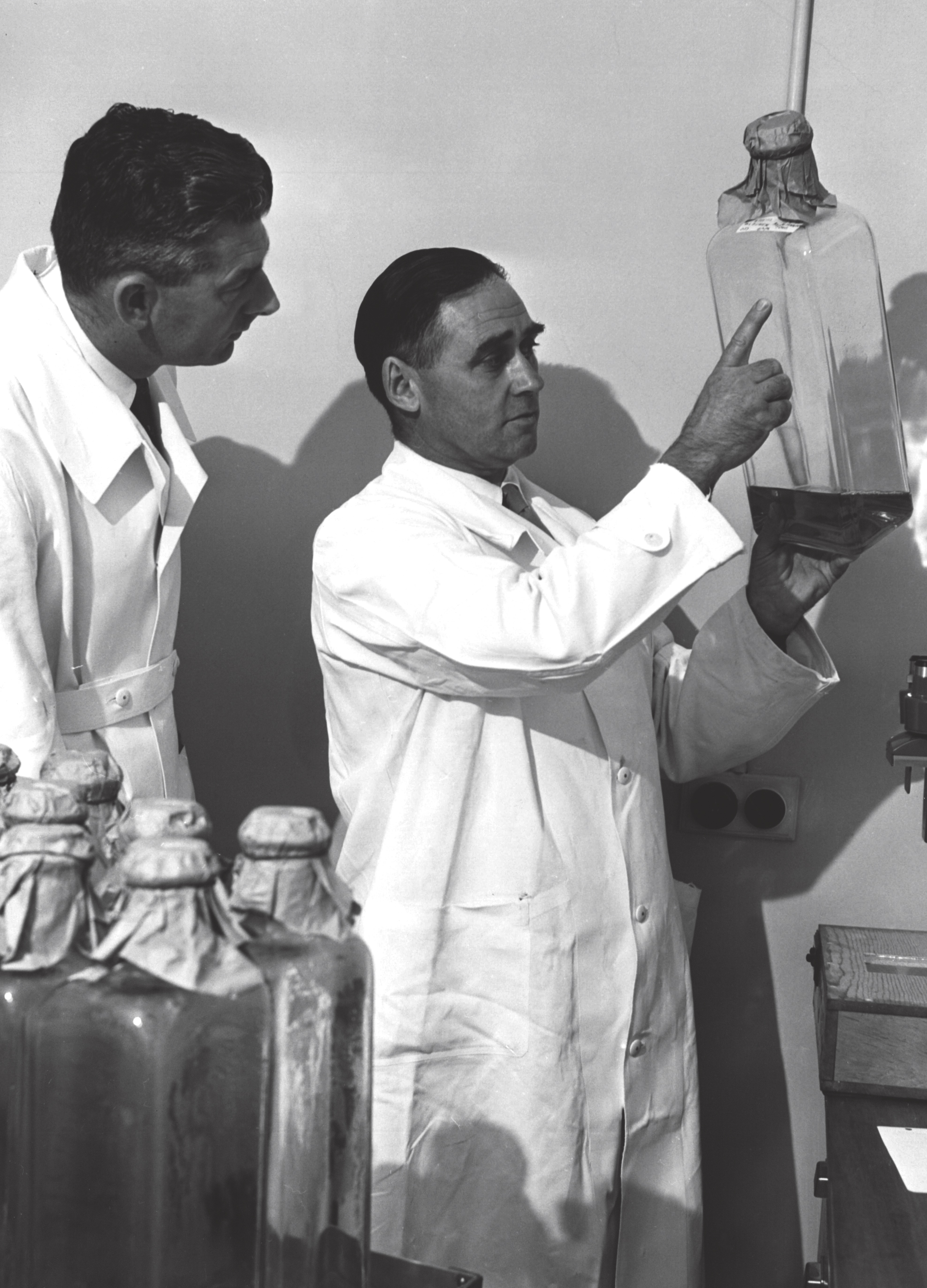
By the mid-twentieth century a breakthrough was finally within reach and Dr Percival ‘Val’ Bazeley at the Commonwealth Serum Laboratories (CSL) was determined that Australia wouldn’t be left behind.
As Jonas Salk’s team in the US closed in on a vaccine, Dr Bazeley wrote that in the face of “serious poliomyelitis epidemics now recurring in Australia, I want very much to divert the attention of my present research laboratory almost entirely to this field.” In 1952, he secured a place on Dr Salk’s research team, relocating to Pittsburgh to help oversee the development of what became the first successful polio vaccine.
Dr Bazeley returned to Australia in 1955 armed with the skills to begin manufacturing the vaccine in Parkville, with the University of Melbourne’s Pathology Department independently testing each batch. When the vaccines became widely available, children all over the country began receiving polio vaccinations.
Holding the line
Few people born in or after the 1960s remember polio. That’s the way Associate Professor Bruce Thorley would like it to stay. As Head of the WHO Polio Regional Reference Laboratory at the Doherty Institute and chief investigator for Australia’s national polio surveillance program, he plays a key role in the global effort to eradicate the disease.
Where wards across the city once echoed with the hum of iron lungs, today Melbourne’s fight against polio unfolds under microscopes and sequencing machines. Associate Professor Thorley’s lab now receives samples from Asia-Pacific neighbours such as Papua New Guinea, which experienced outbreaks in 2018 and 2025. Wastewater surveillance tracks the disease, and accelerated vaccine programs help contain it.
In Australia, surveillance is required as part of membership of the WHO polio eradication program. “One of the big challenges now for the polio program,” says Associate Professor Thorley, “Is that if you don’t immunise, there is a risk.” That risk is another outbreak – and with it, death or long-term disability for the youngest and most vulnerable members of our community.
Before we had a vaccine, the mortality rate for children six and below, and particularly for infants, was very high…people need to be reminded that without vaccination, it will all come back. It’s the main weapon against disease. Associate Professor Bruce Thorley

The power of prevention
Today, around 400,000 Australians are still living with the long-term impact of their childhood infection. Up to 40 percent of survivors experience post-polio syndrome, muscle weakness or pain, atrophy and profound fatigue which can occur anywhere from 10 to 40 years after the initial infection.
The epidemics that once defined Australian summers have receded, but their legacy remains in the knowledge and systems built in labs and hospitals across Melbourne to ensure they are never repeated.
Thanks to the early work of Dame Jean Macnamara and Sir Frank Macfarlane Burnet at WEHI, and Australia’s expertise in vaccination and disease surveillance, today’s post-polio syndrome sufferers will be the last generation to experience polio in Australia.