Seven women defied convention to be admitted to the Faculty of Medicine in 1887.
Today, the challenge is turning access into power.
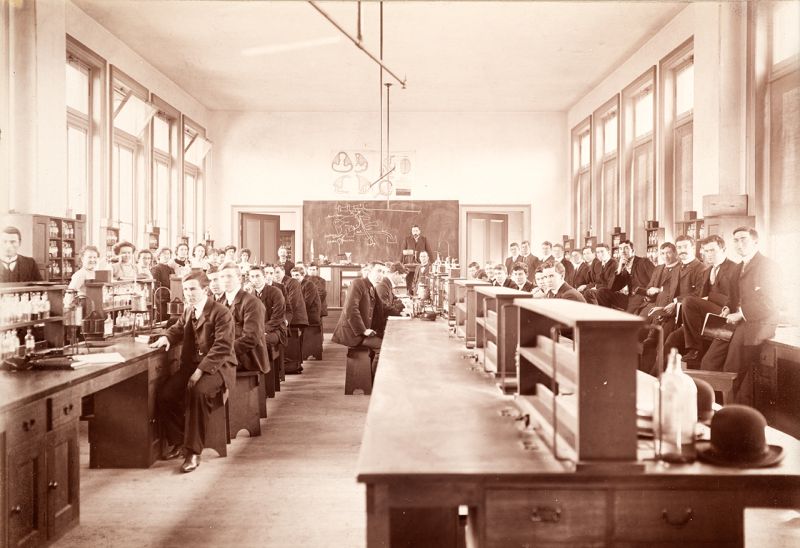
Source: Medical History Museum, Faculty of MDHS
In February 1887, seven determined Melbourne women awaited a decision that would shape their futures. A vote of the University of Melbourne Council would decide whether they could study medicine, or remain barred from the profession altogether.
The votes were counted. Despite strong opposition at the highest level, the University of Melbourne Council voted 10 to three in favour of enrolling women into its Faculty of Medicine.
It was a watershed moment that drew fierce debate. Women still could not vote in Federal elections (that came in 1902), yet that day, Lilian Alexander, Helen Sexton and five others were at last permitted to enter a world that had kept its doors closed to women since 1862.
Their campaign, led by Lilian Alexander and Helen Sexton, included newspaper articles, securing the backing of two professors, working family connections, tirelessly lobbying University councillors, and even presenting themselves at the University ready to pay their tuition fees.
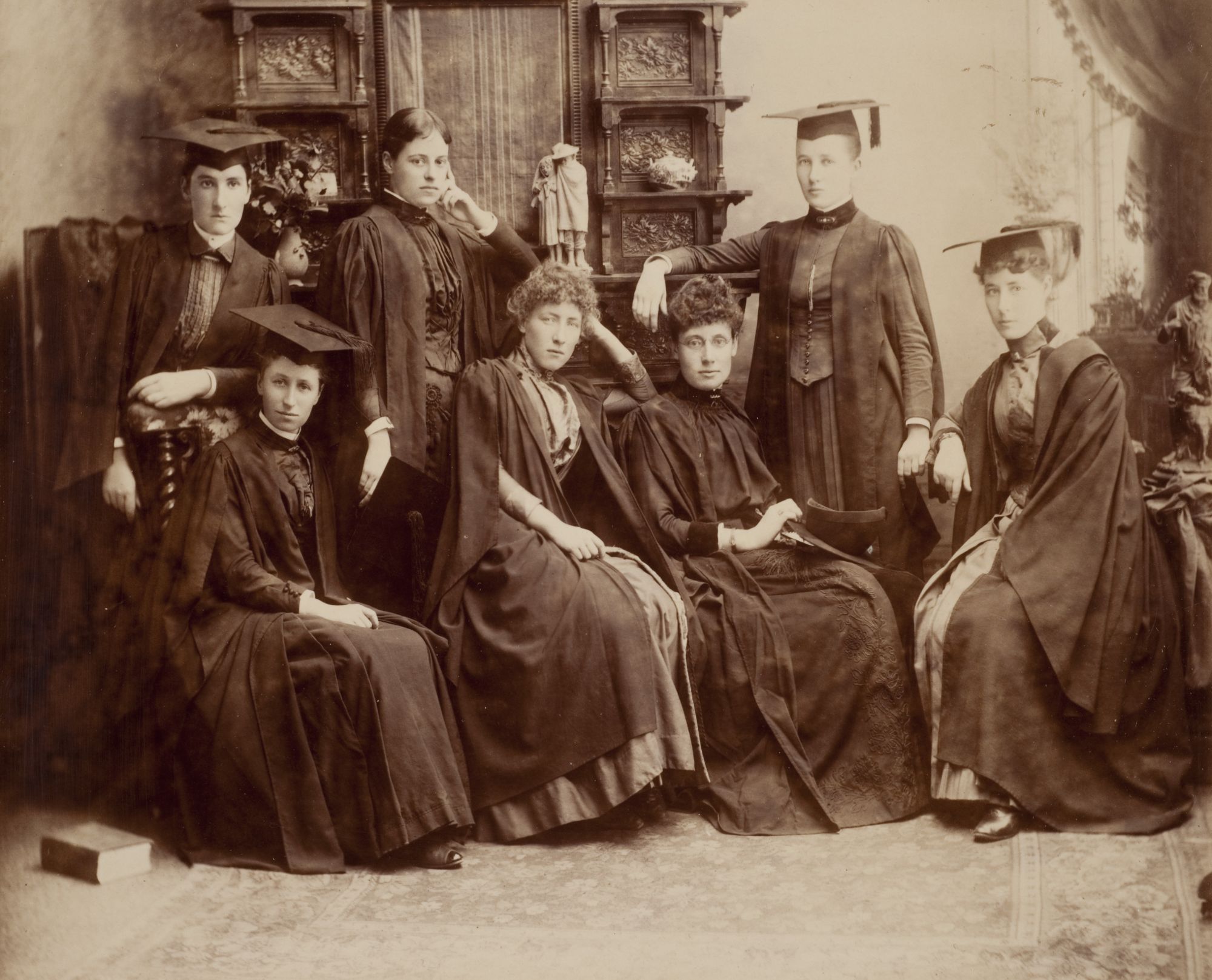
bottom row: Clara Stone, Margaret Whyte, Grace Vale, and Elizabeth O'Hara. Source: Medical History Museum, Faculty of MDHS
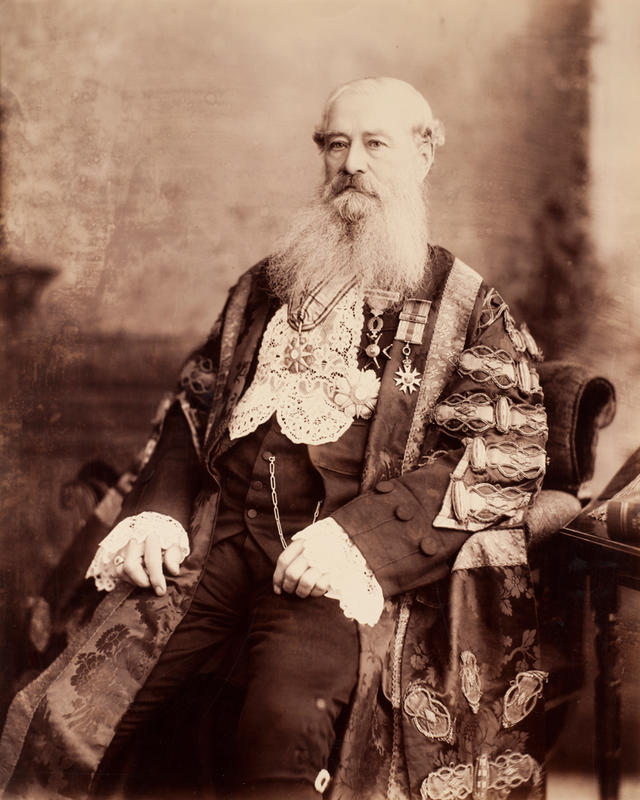
Source: Medical History Museum, Faculty of MDHS
It was all in the face of staunch opposition from Vice-Chancellor Sir Anthony Brownless, who had repeatedly blocked women’s entry.
Looking back through the archives, Dr Jacqueline Healy, Director, Museums, Faculty of Medicine, Dentistry and Health Sciences and author of Strength of Mind: 125 Years of Women in Medicine, says resistance to women becoming doctors was grounded in assumptions about the nature of medical work.
It was considered dirty work that included cutting up bodies. The Medical School was kept away from the buildings for classical education. Women were not considered by some to be emotionally suitable. Dr Jacqueline Healy
"Yet, it was a time of social change," says Dr Healy. "There was real discussion, genuine debate, but the person in the University with the most power – Sir Anthony Brownless – didn't want women in the medical course and kept them out until 1887."
The first seven
Lilian Alexander and Helen Sexton came from prominent middle-class families whose fathers supported their ambitions.
“The advice that Lilian Alexander and Helen Sexton got from their fathers was to apply. They said, 'There’s nothing stopping you… but two applications won’t be enough, you need a ‘pool of women’,” Dr Healy says.
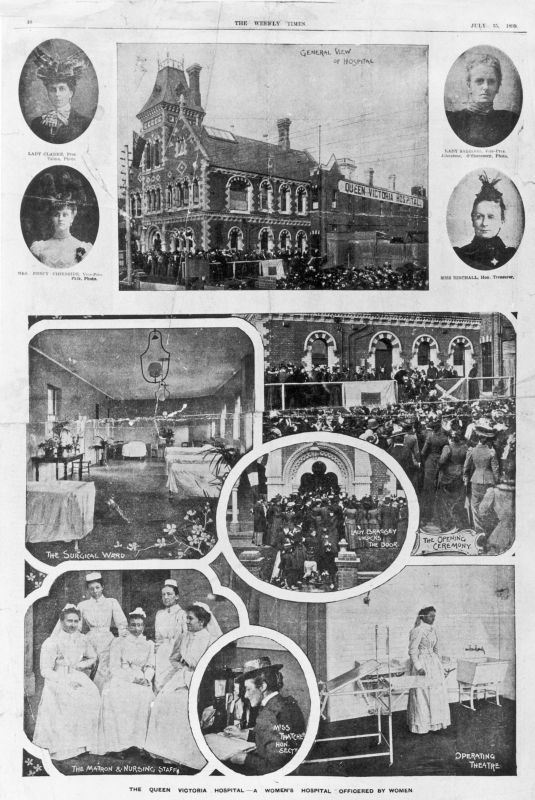
Source: The Weekly Times, 13 July 1899, p. 10. Reproduced in Queen Victoria Hospital Annual Report 1969, courtesy of Monash Health Historical Collections Archive via the Medical History Museum, Faculty of MDHS
Lilian Alexander and Helen Sexton placed an advertisement calling for others. The pool grew to include Elizabeth and Annie O’Hara, Clara Stone, Grace Vale and Margaret Whyte. Once admitted to study, however, excellence did not guarantee acceptance.
“It was tough,” Dr Healy says. “You can’t underestimate how strong they were.”
“There was a request for separate classes for women... it actually came from the women because they didn’t want to be harassed.”
Few expected them to succeed. Faculty attitudes varied, but the seven put their heads down and got to work.
“One of the first seven women, Margaret Whyte topped the course; a remarkable achievement,” Dr Healy says. Despite her result and winning two scholarships, Melbourne Hospital put up barriers to prevent her from taking up the resident medical officer position she was entitled to.
A hospital by women, for women
Denied opportunities, these pioneer women doctors created their own. Some joined Dr Constance Stone, the first woman registered to practise medicine in Australia after qualifying overseas, to found the Victorian Medical Women’s Society and later establish the Lyceum Club.
When other institutions were reluctant to employ women as medical residents, they established their own hospital, opening a clinic in 1896. Dr Stone led a public campaign to purchase permanent premises. In 1899, the Queen Victoria Hospital was established, funded by the women of Victoria through the state-run ‘shilling fund’.
Pressure had slowly shifted the system. In 1896, University of Melbourne alumni Alfreda Gamble and Janet Greig walked into Melbourne Hospital as its first female resident medical officers. Staff complained and newspapers questioned whether women could handle trauma, but their appointments held.
The chairman of the hospital board even issued the pair with an apology at the end of their tenure, wishing them well in their future careers.

Credit: Michael Kai
Pushing women forward
Today, women comprise 66 per cent of Faculty of Medicine, Dentistry and Health Sciences’ students and half of Faculty leadership, as well as an increasing number of the medical workforce across the Melbourne Biomedical Precinct.
Yet this representation has not erased the practical work of ensuring women reach the pinnacle of the profession in greater numbers.
Alum Professor Kate Drummond AM, Director of Neurosurgery at the Royal Melbourne Hospital, and Professor Christobel Saunders AO, James Stewart Chair of Surgery and Head of the Department of Surgery at the University of Melbourne – say more needs to be done practically to see women rise to the highest echelons of medicine in greater numbers.
“The more important thing for us as established clinicians, is to be the person who's giving opportunities to young women; just pushing them forward,” Professor Drummond says.
That principle is now formalised in initiatives that provide structured backing, such as the Supporting Women in MDHS (SWiM) Mentoring for Promotion Program, which in 2025 saw 38 of 48 participants promoted across Levels C, D and E.
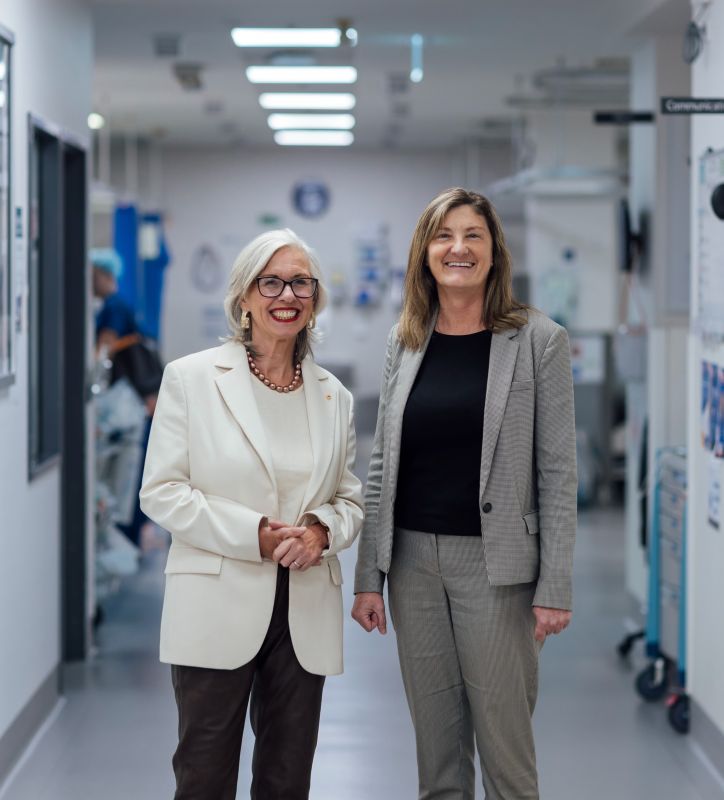
Credit: Michael Kai
Professor Drummond is blunt about standards: “Need an operation? Do you want the person who's done ten of them or the person who's done 1000 of them?” Equity must marry rigour, she argues, but it also requires leaders willing to put women forward for opportunities they already merit.
We need to socially engineer women into surgery. Once we get to 30–40 per cent of the workforce, we'll reach that tipping point where culture will change and our current efforts will be redundant. Professor Kate Drummond AM
While only around 16 per cent of neurosurgeons in Australia are women, Professor Saunders says more women are pursuing general surgery, with younger generations of men and women approaching work with a different lens, particularly when it comes to raising a family.
She recalls (in 1994) when her three-month-old son was rushed to intensive care with croup. He was ventilated and her husband was worried he would die. Yet, when she called her boss, he said she couldn’t step away from work.
“He told me I could visit him after my ward round the next morning. And at that time, I considered this normal,” she says.
“I don’t think that would happen now... your supervisor would work out a way to let you be with your child.”
While much has changed in 150 years, there is still work to do.
In 1887, seven tenacious women forced a vote. They went on to build a hospital to practise their profession and create networks when excluded from power.
The task now is no less deliberate: ensuring women can rise to the highest levels of the health system, and making their presence the norm, not the exception.