One man’s passion for improving cancer research, diagnosis and treatment continues to benefit generations of Australians.
It felt like being smashed in the face with a baseball bat.
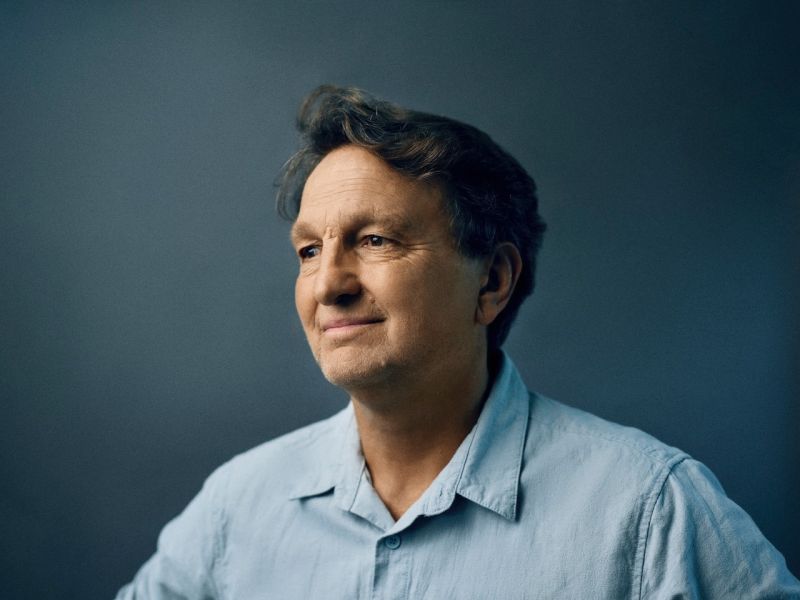
That’s how Tim Baker describes the moment he was diagnosed with metastatic prostate cancer in 2015. At just 50 years old, he was told he had five years of “reasonable health” left. “I remember my GP saying, ‘don’t go looking for a cure because there isn’t one’. It was pretty blunt.”
Mr Baker did not go looking for a cure, but he was determined to seek the best treatment available. “A doctor gave me the advice, ‘go to the website of the best cancer hospital in Australia, find an oncologist who specialises in your type of cancer and is active in research, and get a consultation’.”
That advice led him directly to one place – the Peter MacCallum Cancer Centre.
Credit: Kenny Smith

Source: iStock
From the trenches to the fight against cancer
Sir Peter MacCallum’s journey towards transforming cancer treatment began in an unlikely setting.
During World War I, the use of poison gas turned air into a weapon. Soldiers described the terror as clouds of poison drifted toward them – the “guttering, choking, drowning” immortalised by poet Wilfred Owen.
Scotland-born Sir Peter knew that terror first-hand. After just six months in general practice – the culmination of a lifelong desire to study medicine – he was called up in 1915 to serve in Britain’s Royal Army Medical Corps. For years he treated the casualties of chemical warfare, then in 1918, he became one.
By the time he recovered from gas poisoning, Sir Peter’s experiences on the frontline had shifted his interests away from direct patient care and towards pathology and research.
Supplied: Peter MacCallum Cancer Centre
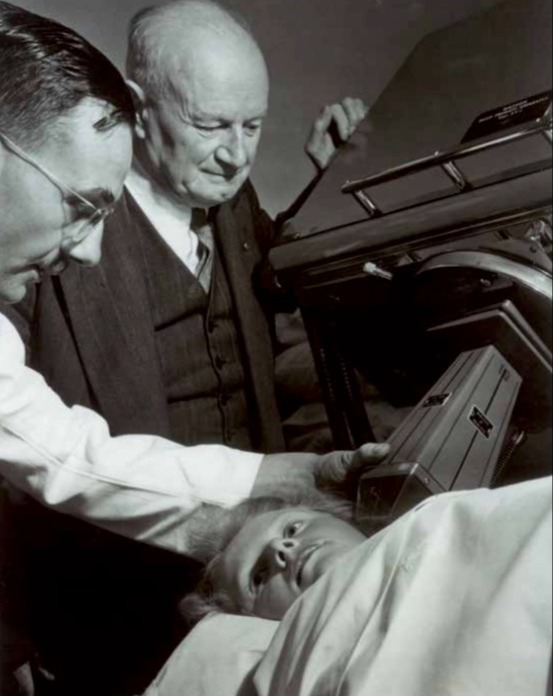
After leading pathology teams in Scotland, in 1924 he was headhunted for the Chair of Pathology at the University of Melbourne. Scotland’s loss was Victoria’s gain: over the next few decades, Sir Peter would dedicate his energy and intellect to one of the world’s greatest medical challenges – the fight against cancer.
In The Cancer Puzzle, Dr Ross Jones describes Sir Peter as “a towering figure in the history of cancer research, treatment, campaigning and support in Australia,” but when he arrived in Melbourne he was shocked by the lack of funds for research. For more than 20 years, Sir Peter and his University of Melbourne colleagues pushed hard for a dedicated cancer hospital with research, pathology and care all under one roof.
It was basically the idea of a Comprehensive Cancer Centre before the term was ever coined. He and his colleagues had this view that the future was coming, and it would be driven by knowledge creation and research. Professor Ricky Johnstone, Executive Director of Cancer Research at Peter MacCallum Cancer Centre
Source: VCCC Alliance
Turning vision into reality
Sir Peter’s vision finally started to take shape in 1949 with the opening of The Cancer Institute, Victoria’s first cancer centre. It had humble beginnings – just one room in the now-closed Queen Victoria Hospital – but by the time the centre was renamed in Sir Peter’s honour in 1986, it had expanded to 11 sites across Melbourne.
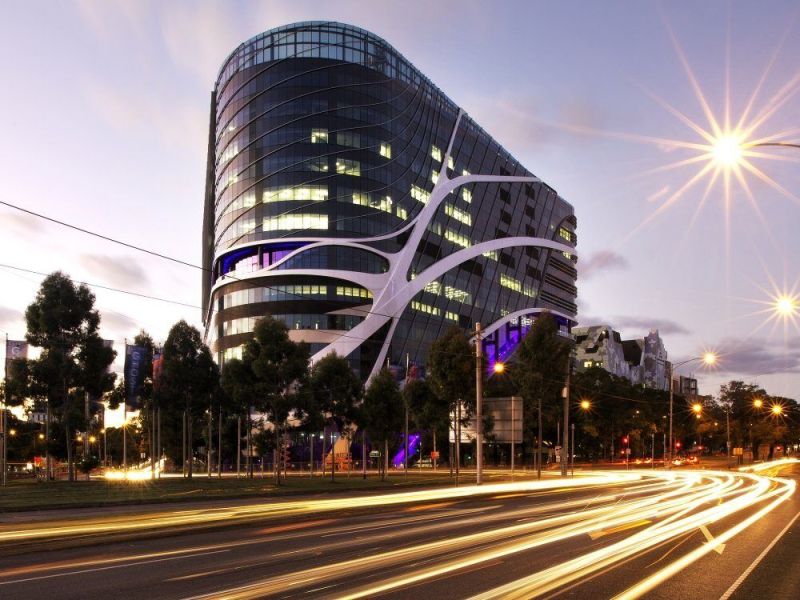
In 2016 the Centre moved to Melbourne’s Biomedical Precinct as part of the Victorian Comprehensive Cancer Centre (VCCC) Alliance – a partnership bringing together 12 renowned research, academic and clinical institutions (among them the University of Melbourne) to form one of the world’s leading cancer hubs.
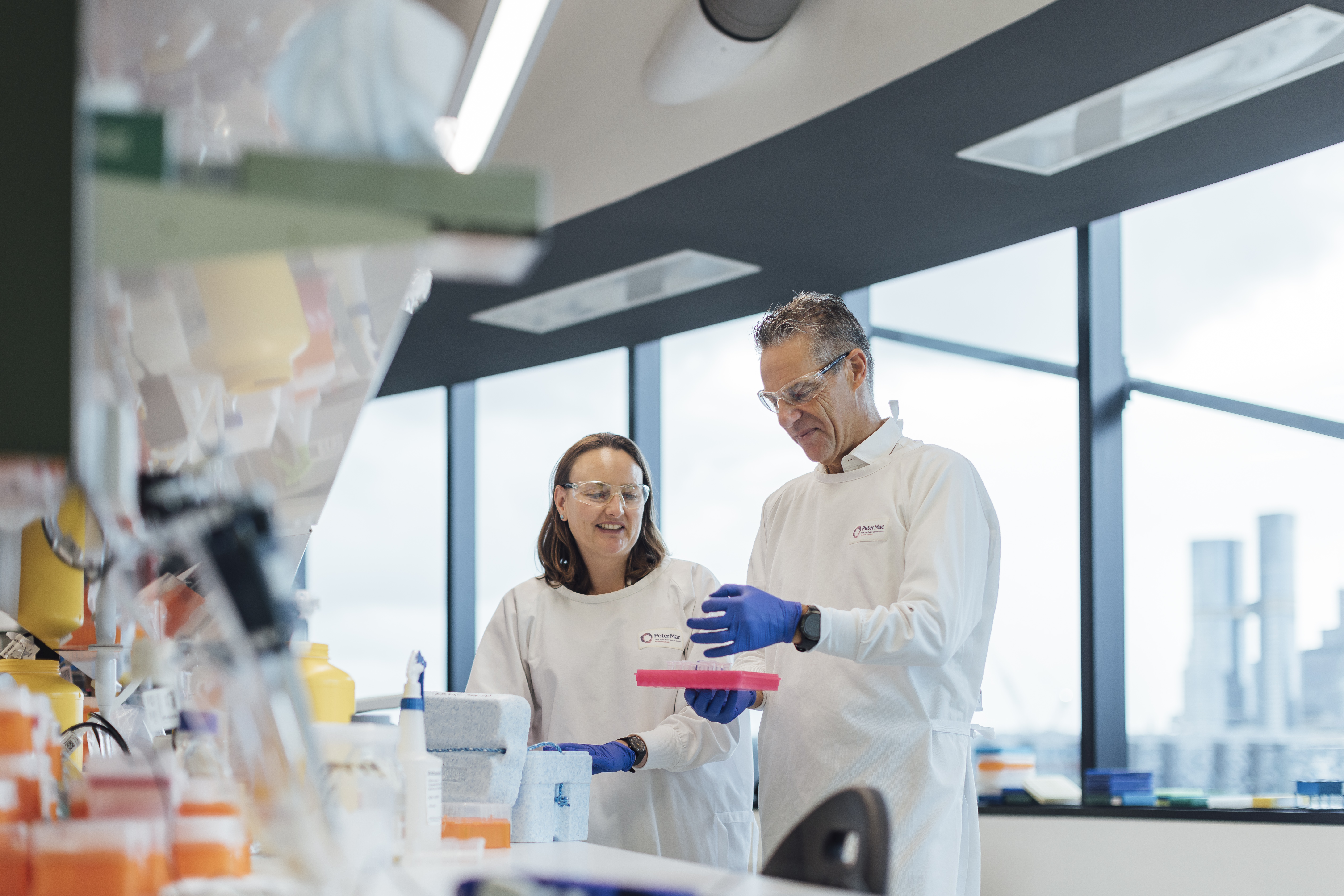
The Centre’s early pillars were surgery and radiotherapy, followed by chemotherapy. Today, immunotherapy has become part of the ‘Peter Mac’ legacy. The Centre’s pioneering use of CAR T-cell therapy, which allows clinicians to genetically engineer a patient’s own T-cells to attack the cancer cells in their body, is delivering life-saving results for leukaemia, lymphoma and melanoma patients.
Credit: Michael Kai
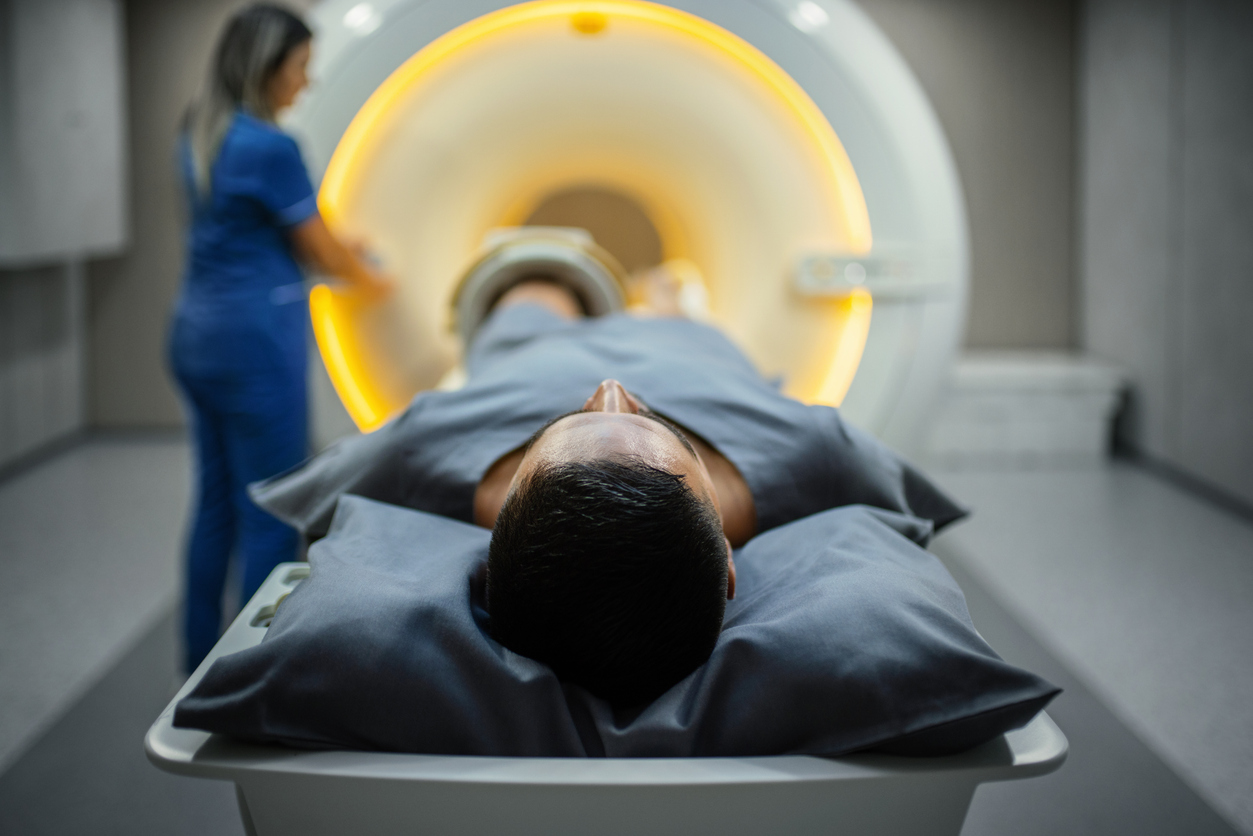
For Peter Mac patients like Tim Baker, advances in cancer research have steadily expanded the possibilities for treatment and survival. “When I was diagnosed back in 2015, eleven years would have been a wildly optimistic prognosis,” he says. “Now, it’s not that unusual. Men with prostate cancer are living longer because there are more therapies available.”
Under the guidance of his specialist oncologist, Professor Arun Azad, Mr Baker has continued to push beyond the timeline doctors first gave him through a combination of modern drug therapies, hormone treatment and careful attention to his physical and mental wellbeing. “I don’t just go to the Peter Mac for treatment – they’ve organised a psychologist, an exercise physiologist, oncology massage. It’s such a wraparound, holistic service.”
He has also benefitted from PSMA PET scans – an advanced imaging technology developed by Peter Mac researchers that has paved the way for new targeted treatments such as lutetium therapy. “That’s a treatment that may become relevant for me in the future,” says Mr Baker. “Arun is really on the frontline of all those research and treatment advances, so I feel pretty stoked that I’m in the best possible hands.”
Nothing but the best
“The wolf”, as it was once colloquially known, still kills people, acknowledges Professor Johnstone, “but we’re constantly and consistently finding better ways to detect and treat cancer.”
He’s looking ahead to highly personalised treatments for patients, and even cancer vaccines. “All of this is underpinned by research, by having an educated, talented workforce.” Today nearly 200 PhD students from the University of Melbourne are being educated at the Peter Mac. “That relationship between the hospital and the university is still strong to this day,” says Professor Johnstone. “That’s something to be celebrated.”
“Nearly 80 years on, the guiding philosophy Sir Peter MacCallum established remains unchanged,” says Peter Mac CEO Professor Jason Payne. “His belief that ‘nothing but the best is good enough in cancer care’ continues to shape how we care for patients, conduct research and train the next generation of clinicians.”
“It’s not just about keeping people alive,” Professor Payne says. “It’s about giving people the opportunity to live their lives well.”