A bold partnership with The Royal Victorian Eye and Ear Hospital laid the foundations for one of Australia’s most renowned medical innovations: an implantable device enabling deaf people to hear.
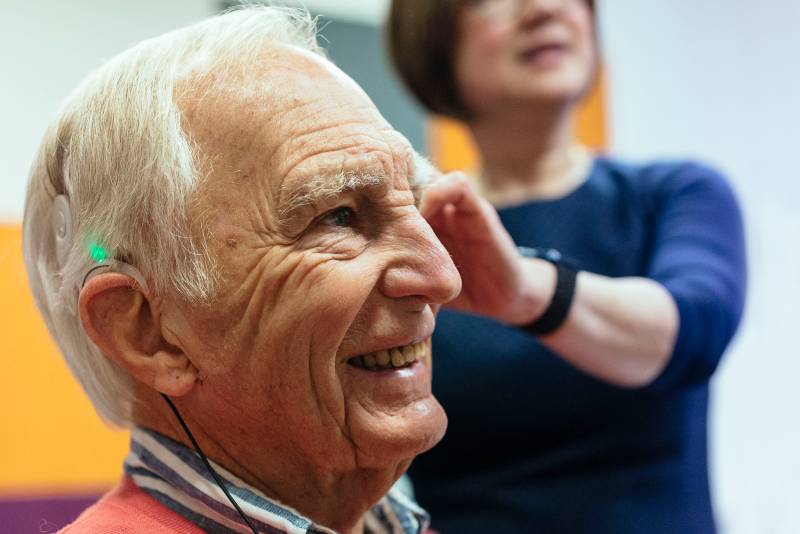
Credit: Anna Carlile
Sometimes extraordinary things happen in the most ordinary places.
John Fisher was walking past a vintage store when he perceived a sound he hadn’t heard for a very long time: the notes of the 1950s rock ‘n’ roll classic See You Later, Alligator drifting out from a turntable inside the shop. He turned to his partner, overwhelmed, and said, “I heard it!”
Mr Fisher wasn’t just enjoying a moment of nostalgia; it was the first time he was actually “hearing” music for more than a decade. His brain had “retrieved a memory” of the song and, thanks to his new cochlear implant, successfully translated it into sounds Mr Fisher could recognise. More than just understanding speech, the implant had given him something he never expected to enjoy again: music.
One of more than a million people around the world who have been fitted with a cochlear implant, Mr Fisher spent ten years unable to hear before the device “gave me my life back”. He was 72 when he had the operation in 2014, more than fifty years after the car crash that damaged his ear and left him with lifelong hearing challenges.
Chasing the impossible
After witnessing his father’s hearing challenges, Professor Clark knew what he wanted to do with his life. “At the age of five, when my kindergarten teacher asked, ‘What would you like to do when you grow up?’ I said, ‘I want to fix ears.’” He never wavered from his goal.
But getting there wasn’t going to be easy. No-one had done what he was hoping to do, and most people thought it was impossible. Rather than simplify amplifying sound like a hearing aid, Professor Clark envisioned an implant that would convert sound into electrical signals that directly stimulate the auditory nerve, bypassing damaged parts of the ear. To understand the components that would go into such a device, he dedicated himself to years of study and research, gaining a PhD in brain science and developing expertise in surgery, pathology, audiology, animal conditioning and speech.
Securing support for a device people thought “would not work and was not worth funding” was challenging, but Professor Clark was eventually able to pull together a research team at the University of Melbourne and The Royal Victorian Eye and Ear Hospital (Eye and Ear). Around the world, institutions were focused on developing single-channel hearing devices, but Professor Clark and his team believed a multi-channel device would deliver better results. They spent years building and testing prototype electrodes in animals while refining their surgical methods.
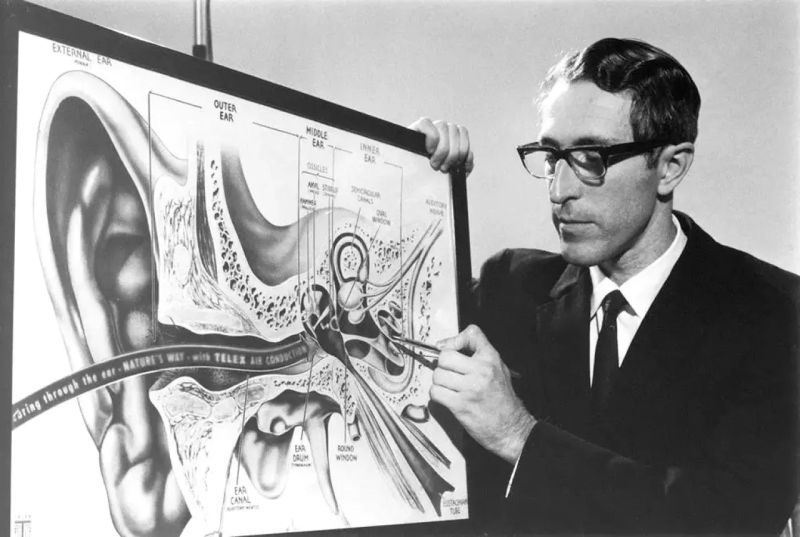
Source: Medical History Museum, Faculty of MDHS
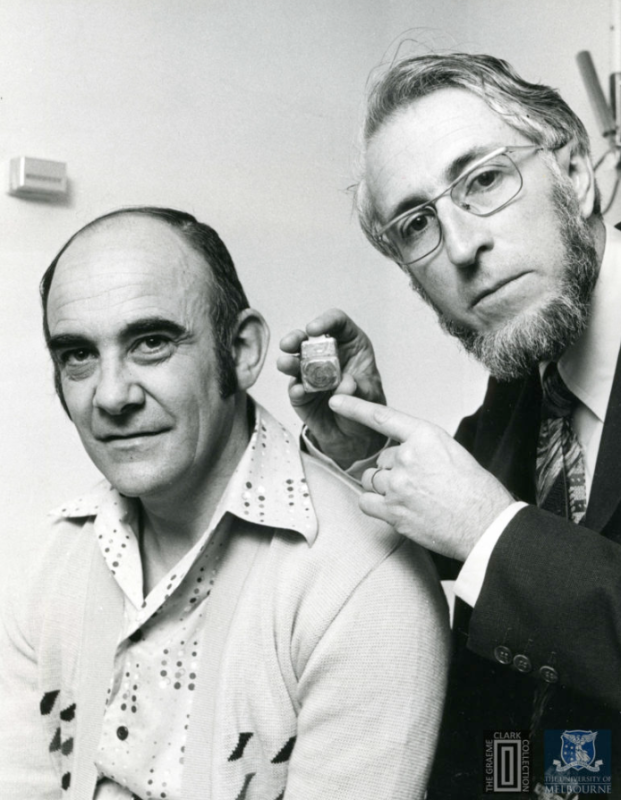
Source: Medical History Museum, Faculty of MDHS
In 1978, the day arrived. They were ready to implant the first device into a human patient. On Tuesday 1 August Professor Clark drove from his home in Eltham to the Eye and Ear, where he found his colleague Professor Gerard Crock AO standing outside the operating theatre. “The moment of truth has arrived, Professor Clark,” he said.
When all was ready, Professor Clark raised his scalpel and with Brian Pyman completed the operation they had rehearsed many times.
The echoes of a breakthrough
Following the surgery at the Eye and Ear, the world was on tenterhooks waiting to see if the device would work. The moment patient Rod Saunders indicated he could hear and understand speech was profound. “I was so moved, I went into the next lab and burst into tears of joy, something that I'd only ever done once before,” recalls Professor Clark. Some believed its success was pure luck, but every subsequent patient proved it was not a fluke.
Following this breakthrough, the Australian government funded the device’s industrial development which led to the world-leading firm Cochlear Limited. Since Rod Saunders’ groundbreaking surgery, the Eye and Ear has implanted thousands of these devices, while hundreds of thousands have been implanted in severely deaf people in 180 countries.
But the success of the device was only the beginning. In 1986, Professor Clark founded and began directed the Bionic Ear Institute (now the Bionics Institute at St Vincent's Hospital Melbourne) while also serving as Chair of the University's Department of Otolaryngology, enabling him to secure ongoing support for cochlear implant research. He did so as Chief Investigator of a nine-year National Health & Medical Research Council Program Grant, as well as two US National Institutes (NIH) grants and two NIH contracts. In 1988, Professor Clark was awarded a nine-year Special Research Centre from the Australian Research Council (ARC), which he established as the Human Communication Research Centre.
Expanding horizons
What began as a device to restore hearing has since transformed far beyond its original purpose. As the bio-engineering advances behind the cochlear implant began to be applied to the restoration of brain function more generally, Professor Clark went on to lead the bionics programme for Distinguished Professor Gordon Wallace AO’s ARC Centre of Excellence in Electromaterials Science at the University of Wollongong in 2002. His team made significant progress in using spinal cord implants to restore a patient’s ability to feel and walk after a spinal cord injury.
Advances in implant technology and nerve stimulation are now being applied to conditions including inflammatory bowel disease, epilepsy, Parkinson’s disease and rheumatoid arthritis. Professor James Fallon, Chief Technology Officer at the Bionics Institute, is leading a team building on Professor Clark’s work. “Almost since their inception, cochlear implants have been able to stimulate and record from the vagus nerve...those kinds of technologies have a widespread application,” he says.
The Bionics Institute regularly partners with others to achieve outcomes that improve lives. Professor Fallon is leading work with researchers from The Florey Institute of Neuroscience and Mental Health and clinicians from Austin Health to test an implantable device that stimulates the vagus nerve to help people with Crohn’s disease.

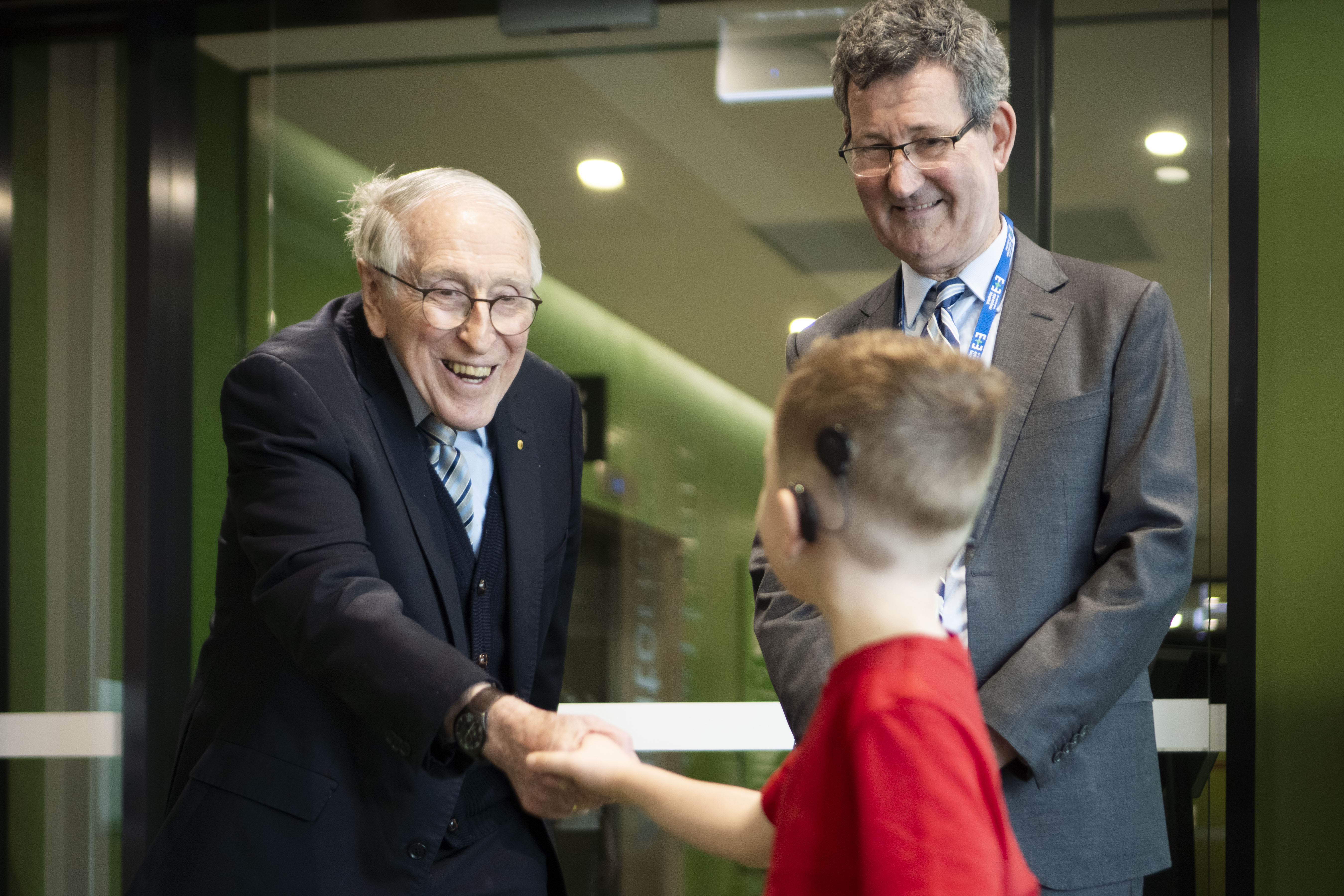
Credit: The Royal Victorian Eye and Ear Hospital.
For Professor Fallon, Professor Clark’s enduring impact lies not only in the remarkable technological advancements he has pioneered, but in the diverse teams he has brought together to make it happen. “That's what gave him the ability to create the cochlear implant. To me, in some ways, the bigger legacy is building the team that was needed to get that job done, and once you assemble that team, you can tackle a vast array of problems.”
Building further on this legacy, in 2017 Professor Clark was delighted to learn that the University of Melbourne had created an institute bearing his name to coordinate research in biomedical engineering for human benefit. Since that time, he has been able to participate as an Honorary Professor of Engineering.
A lasting legacy
While the cochlear implant was the spark, the Graeme Clark Institute is the legacy. Today, the Institute brings together over 400 interdisciplinary researchers across: Biomechanics and Medical Implants; Electroceuticals, Bionics and Neuroimaging; Biomaterials and Regenerative Medicine; and Digital Health Technologies and Simulation. By converging these diverse talents within the University of Melbourne, the Graeme Clark Institute is not just refining existing tools; it is reimagining the very boundaries of human health.
For the University’s partners, this Institute represents a unique ecosystem where fundamental science is rapidly translated into clinical reality, ensuring that the spirit of persistence which defined Professor Clark’s early work now fuels a multi-generational engine of global impact.
Professor Clark’s achievements continue to gain attention and garner recognition. In February 2026, it was announced at the Science Museum in London that he was one of the winners of the Queen Elizabeth Prize for Engineering for pioneering modern neural interfaces to restore human function. The award emphasises the importance of collaboration in medicine and engineering.
The journey that began in a kindergarten classroom has now improved the lives of more than a million recipients and their families, restoring connection, independence and opportunity at a global scale.
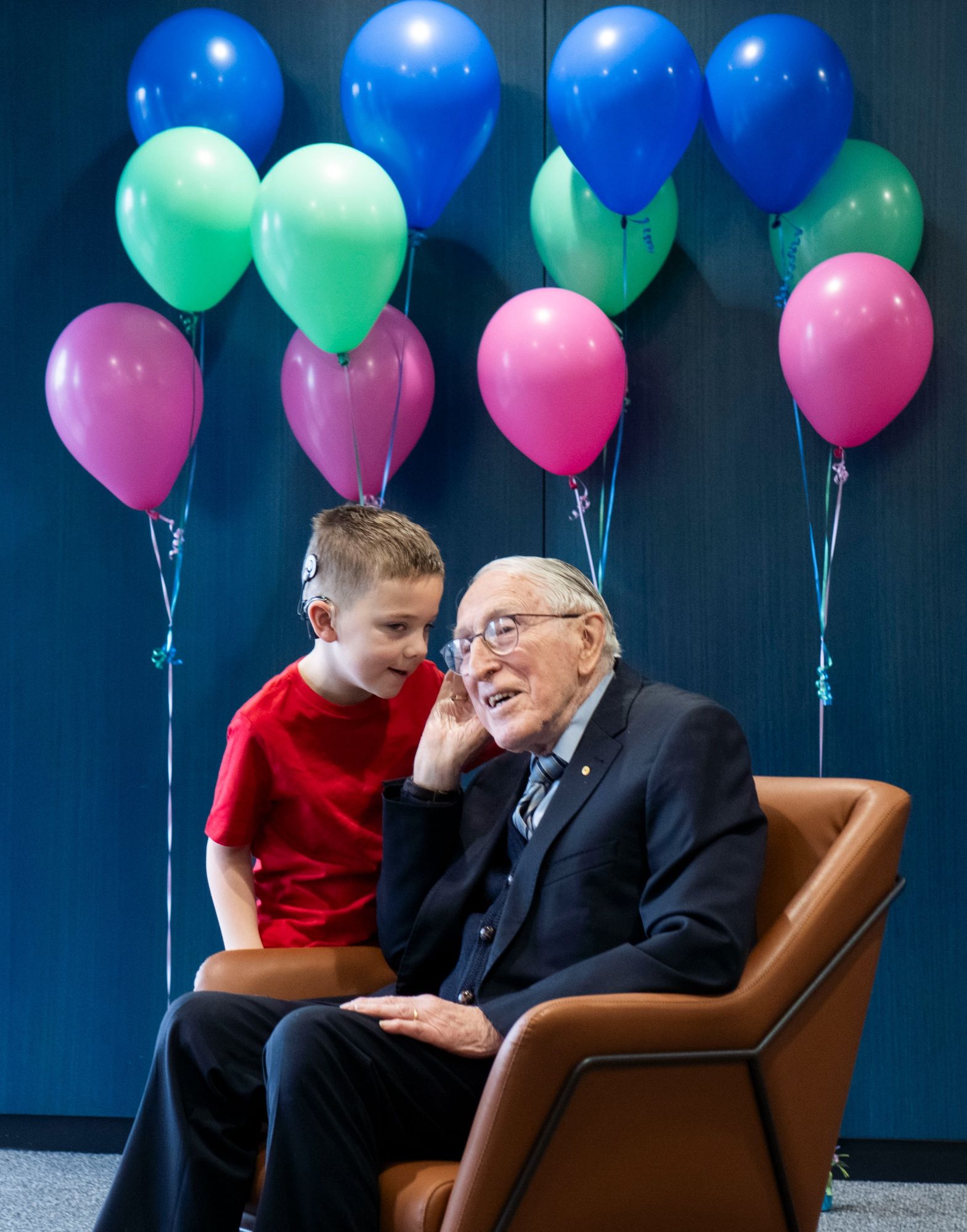
Credit: The Royal Victorian Eye and Ear Hospital.