Three decades of Indigenous leadership at the University have reshaped health research in Aboriginal and Torres Strait Islander communities from a source of mistrust into a collaborative force for change.
“We don’t like research.”
It was a provocative statement to mark the launch of a new health research unit. But for Aboriginal and Torres Strait Islander peoples in the 1990s, the words resonated deeply.
Decades of research had documented conditions like trachoma, ear disease and diabetes in Indigenous communities but failed to make a difference. “The view in Indigenous communities is that white researchers come in, build their careers on the back of our disadvantage, then we never hear from them again,” says Professor Shawana Andrews, a Palawa Trawlwoolway woman and Director of the Melbourne Poche Centre for Indigenous Health.
Professor Marcia Langton AO, a descendant of the Yiman and Bidjara peoples and Foundation Chair of Indigenous Studies, says distrust in research was also fuelled by the University’s troubling history. “In the early 20th century, professors of anatomy paid grave robbers and collected hundreds of Aboriginal bodies, allegedly for ‘research’,” she says. “For a long time it was impossible for Aboriginal people to trust any research coming out of the medical faculty.”
So when the University of Melbourne’s new Indigenous health research unit – today known as Onemda – held its first community workshop in 1999 under the title We Don’t Like Research – But in Koori Hands it Could Make a Difference, it sent a clear message.
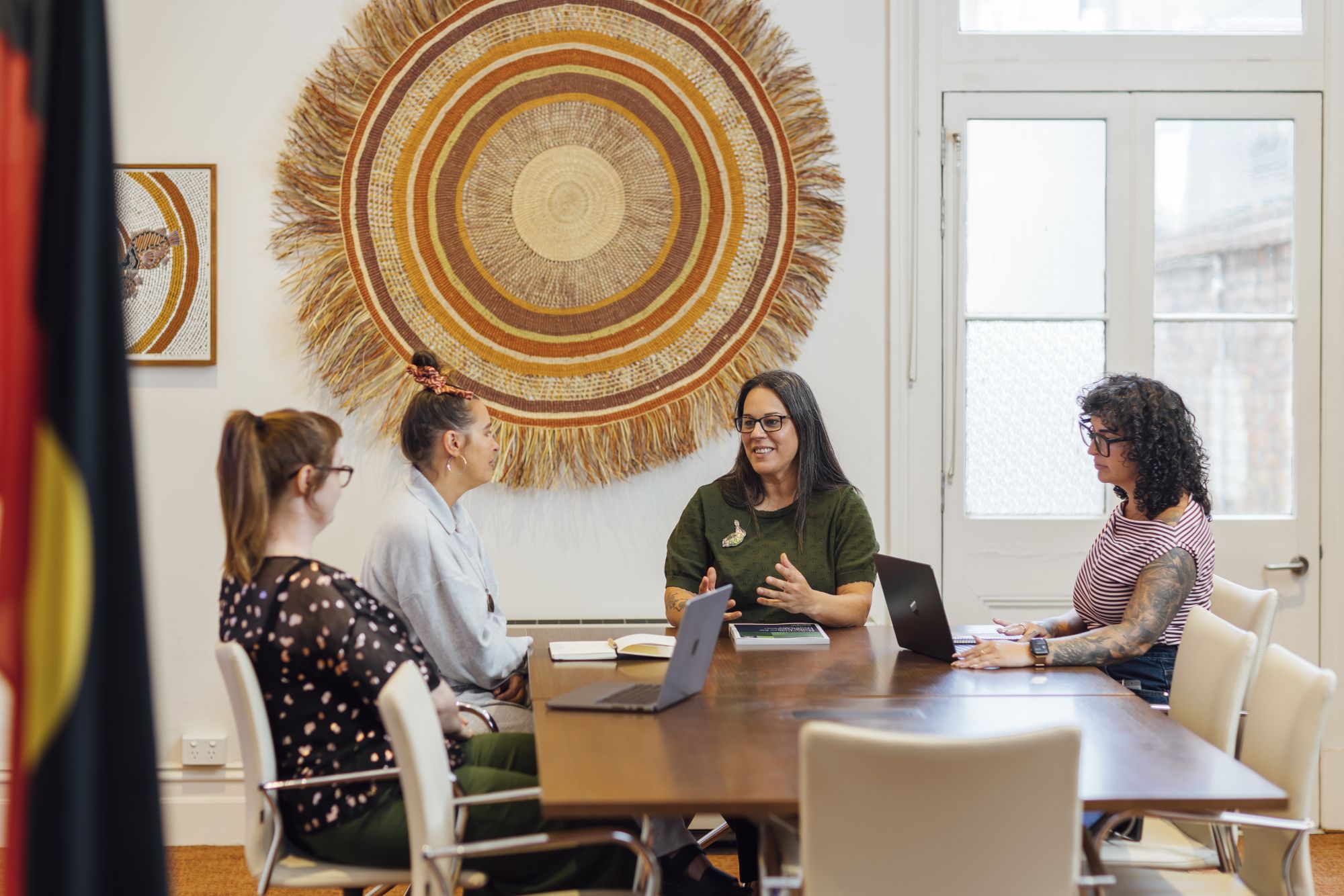
Credit: Michael Kai
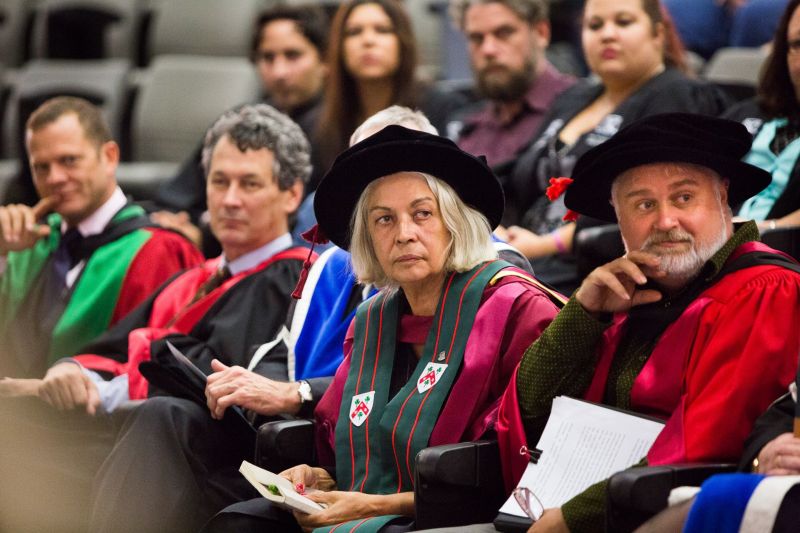
Finding our place
Professor Ian Anderson AO was uniquely placed to lead this movement. A Palawa man from Tasmania, he became the University’s first Indigenous medical graduate in 1989, working as a doctor before gaining policymaking experience in the Commonwealth government.
His experience working with Aboriginal communities convinced him that Victoria needed a new centre for health research – one led by and for Indigenous people.
A decade after graduating, Professor Anderson returned to the University as founding director of the Koori Health Research and Community Development Unit (later renamed Onemda, a Woiwurrung word meaning ‘love’). Supported in its early years by VicHealth and the Commonwealth Department of Health and Ageing, Onemda became a vibrant hub of collaboration between Indigenous researchers, community organisations and health services.
“You could turn up at Onemda on any one day and there’d be a group of Elders sitting around a table having a cuppa,” recalls Professor Andrews, one of the Faculty’s many Indigenous academics who began their academic career through Onemda. “Community had never had that kind of access to this place.”
Onemda quickly demonstrated the power of community-led research. Studies on tobacco use in Aboriginal communities informed culturally appropriate smoking reduction programs. A partnership with the LIME Network (Leadership in Indigenous Medical Education) helped embed Indigenous medical education into Australian and New Zealand medical schools. Minum Barreng: Indigenous Eye Health Unit, founded by Professor Hugh Taylor AC, began outside of Onemda but worked in alignment to support the elevation of Indigenous leadership and drive a dramatic decline in trachoma rates.
It was so impressive. It was like a miracle was happening in the Onemda building under Ian’s leadership. Professor Marcia Langton AO
The surge of Indigenous-led projects drove Professor Langton to relocate her own research program from the Faculty of Arts to Onemda, where she formed the Indigenous Studies Unit. Together with rural partners, the unit has conducted critical research on alcohol management and preventing violence against Indigenous women and children. Professor Langton has also been a driving force behind the Indigenous Data Network, which supports Aboriginal and Torres Strait Islander peoples to govern and use data about their communities for their own benefit.
Eight years after Onemda’s establishment, the conversation had shifted. In 2007, the unit held a series of workshops under a new title: We Can Like Research.
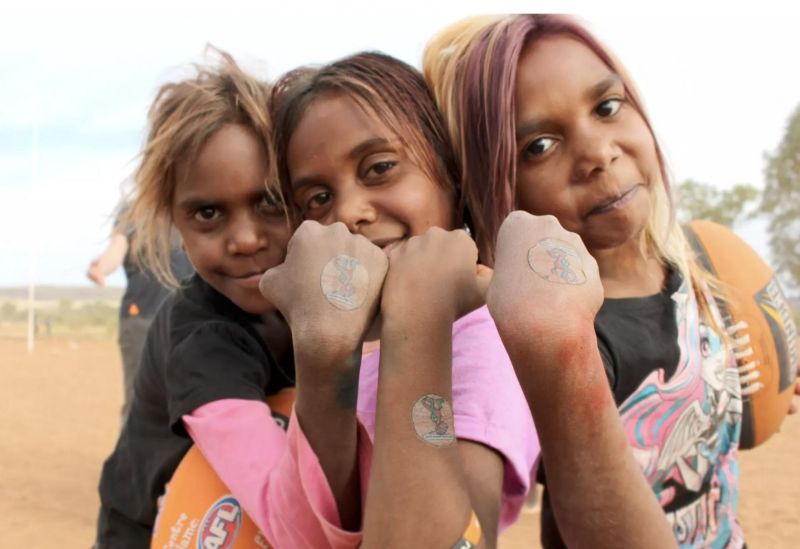
Picture: Rachael Ferguson, IEH
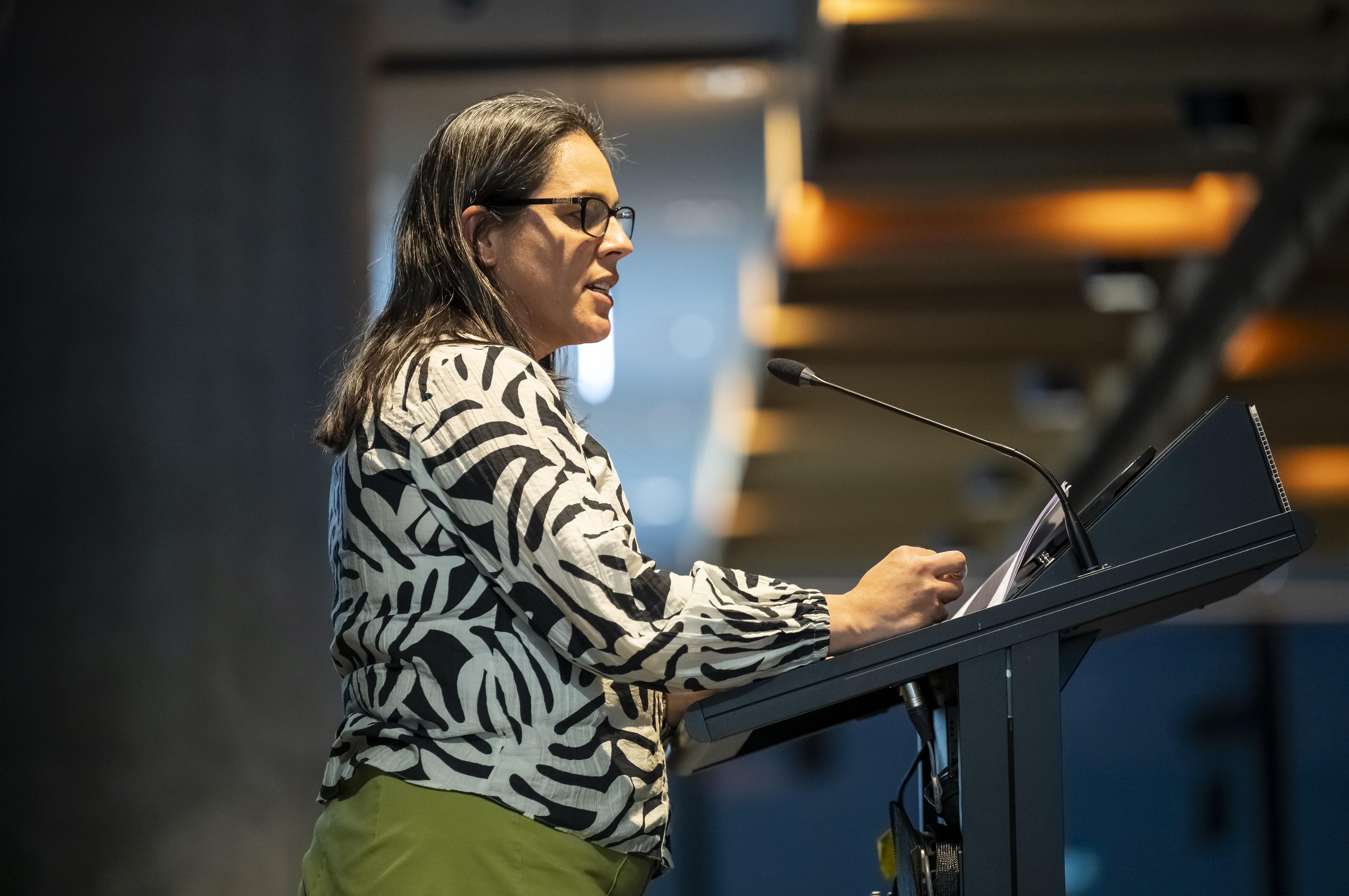
Supplied: Melbourne Poche Centre for Indigenous Health
Supplied: Melbourne Poche Centre for Indigenous Health
Building the leadership pipeline
By the 2010s, Onemda had proven the value of Indigenous-led research. But to build lasting change, and to address continued health disparities, it was clear Australia needed more Indigenous researchers, clinicians and policymakers.
“The question became, ‘how do we grow the next generation of leaders?’” says Professor Andrews.
The answer came in 2015 with the establishment of the Melbourne Poche Centre for Indigenous Health, supported by philanthropic funding from the Poche Family Foundation. Building on Onemda’s foundations, the Centre develops Indigenous health leadership through doctoral pathways and professional development programs.
One signature program, the Poche PhD Familiarisation Program, supports Indigenous students to enrol and pursue PhDs across a range of health disciplines, helping grow the Indigenous health research workforce. “When the Centre was launched in 2015, the Faculty had only five Indigenous PhD students,” says Professor Andrews. “Within five years we had 20 students enrolled and 27 by 2023.” In 2025, the Centre ushered in 10 new students – the largest single cohort to date – and the Faculty graduated five Indigenous students in the same year.
The Centre also delivers a leadership program that brings Fellows together in a richly interconnected and interactive series of modules, supporting their development as Indigenous health leaders.
“Indigenous approaches to leadership can look really different,” explains Professor Andrews. “The principles all come from Indigenous values within culture and community.” The program has over 60 alumni who work in a diverse range of health contexts including hospitals, research institutes, community organisations and governments across the country.
Supplied: Melbourne Poche Centre for Indigenous Health
The movement continues
While much has changed since Onemda’s first workshop in 1999, the work is far from finished. “The Commonwealth Closing the Gap annual report indicates that we have made some improvements but on some measures we’re going backwards, and we still experience racism in the health system,” notes Professor Andrews.
One way to change that is from within.
“Indigenous Australians make up around three to five per cent of the population, but we’re not three per cent of the medical workforce,” says Professor Sandra Eades AO, a Noongar woman and Deputy Dean Indigenous of the Faculty of Medicine, Dentistry and Health Sciences. “That’s why we created an Indigenous admissions pathway — to train and support more Indigenous doctors.”
For Professor Eades, the lesson of the past three decades is clear: real progress means transforming the structures that shape health and education. “Everything that’s possible today comes from efforts to change national and university systems over the last 30 years,” she says. “We didn’t just graduate and act as individuals — we worked for system-wide change across Australia. And there’s still a lot more work to be done.”
Dhoombak Goobgoowana Volumes 1 and 2 were a major source for this article. These books document the long, complex and troubled history between Aboriginal and Torres Strait Islander people and the University of Melbourne.
As part of its 150th anniversary, the Faculty of Medicine, Dentistry and Health Sciences has established the Indigenous Graduate Researcher Publishing Award, supported by the Duncan Leary Bequest, to provide publishing support to Indigenous researchers following the submission of their PhD thesis. Contact mdhs-gr-candidature@unimelb.edu.au to find out more.