Priestley Scholars are PhD candidates jointly enrolled at the University of Melbourne and University of Birmingham. Throughout their candidature, Priestley Scholars receive joint supervision from renowned academics who share with them priority research interests, including across a wide range of health and medical issues in a diverse range of laboratory, hospital and community settings.
In addition to expert mentoring from their Melbourne and Birmingham-based supervisors, all joint Priestley Scholars receive a scholarship package providing a living allowance, health insurance, relocation support, and waivers of their tuition fees at both universities.
Since its establishment, confirmed in the signing of a Memorandum of Understanding in 2016 and renewed in 2020, Priestley Scholarships have been awarded to 35 PhD candidates, 11 of whom have now completed.
In 2023, in its fourth cohort, Priestley Scholarships were awarded to four joint PhD candidates who will gain access to the expertise, resources and world-class training at the universities of Melbourne and Birmingham, spending at least 12 months at each institution. In the process, candidates will benefit from the global experience and receive support from internationally recognised leaders in their areas of research specialties to increase the impact of their research and to contribute to developing solutions to some of the most intractable health problems facing the world today.
In landmark research explorations supported by Priestley Scholars, two PhD candidates are working with their Melbourne and Birmingham-based supervisors to explore the mental health disorders of schizophrenia and psychosis.
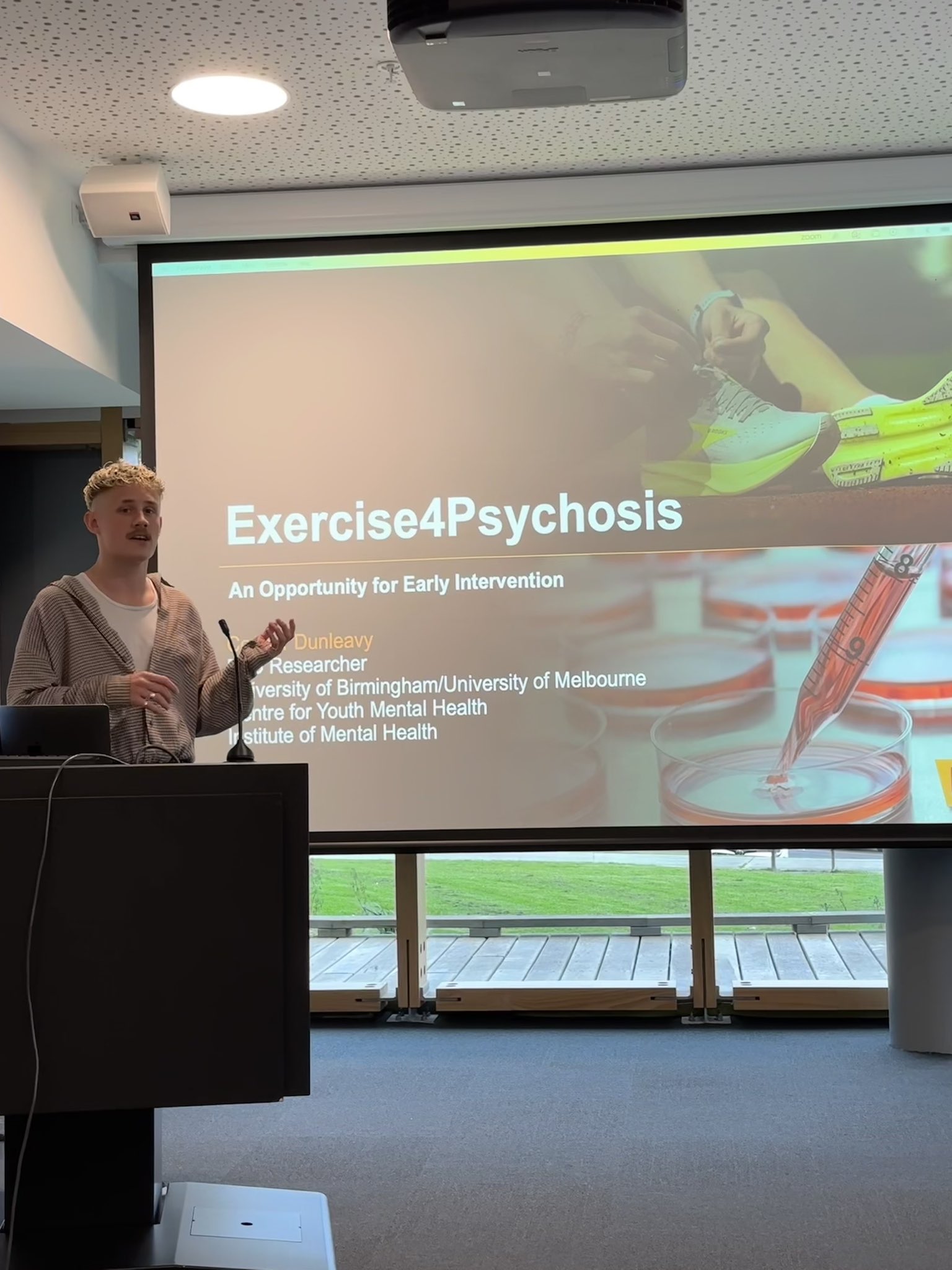
In one study, Connor Dunleavy is being supervised by Professor Stephen Wood and Professor Kelly Allott, at the University of Melbourne and Professor Sarah Aldred and Professor Rachel Upthegrove at the University of Birmingham in carrying out lab-based investigations into the effects of inflammation in the brains of people with schizophrenia. Connor’s ultimate aim is to identify more effective therapeutic treatments, including the efficacy of regular exercise as a feasible intervention for reducing negative symptoms often experienced in first-episode psychosis.
Rosa Rituanno’s project uses a three-dimensional investigation – empirical, philosophical and ethical, and clinical – to investigate delusions experienced in early psychosis. Taking a cross-disciplinary and mixed-methods approach, she is conducting a rigorous characterisation of the experience of delusion from different perspectives to explore the ways in which delusions are lived as a human experience. Her aim is to overcome prejudices, tackle power imbalances in the clinical encounter, and move towards a more open and engaged interdisciplinary discussion.