The international research partnership between Katholieke Universiteit Leuven (KU Leuven) and the University of Melbourne was initiated in 2020 during a visit to Melbourne by a Leuven delegation led by Rector Luc Sels.
In the following year, the two world-leading universities made a joint investment of €10EUR million to pool their expertise and undertake a number of cutting-edge research projects and, in 2023, consolidated the collaboration with a further €1 EUR million joint investment to further deepen the partnership and elevate its support to 44 joint research projects.
Providing early-career researchers opportunities to build global networks and connect with leading global researchers
A key goal of the KU Leuven-Melbourne collaboration is to make rapid progress in scientific and medical research and to pursue this goal in the long term to continue funding development of innovations and proactive interventions.
Inherent in this aim is a determination to provide cultural and academic opportunities for joint PhD candidates attached to the partnership and, on the back of a proven track record, attract additional funding from European and Australian research programs and international funds.
PhD candidates accepted into the KU Leuven-Melbourne joint PhD program spend at least one year at each of the universities under the direction of two supervisors from each institution. On completion, their PhD qualifications are recognised by both universities.
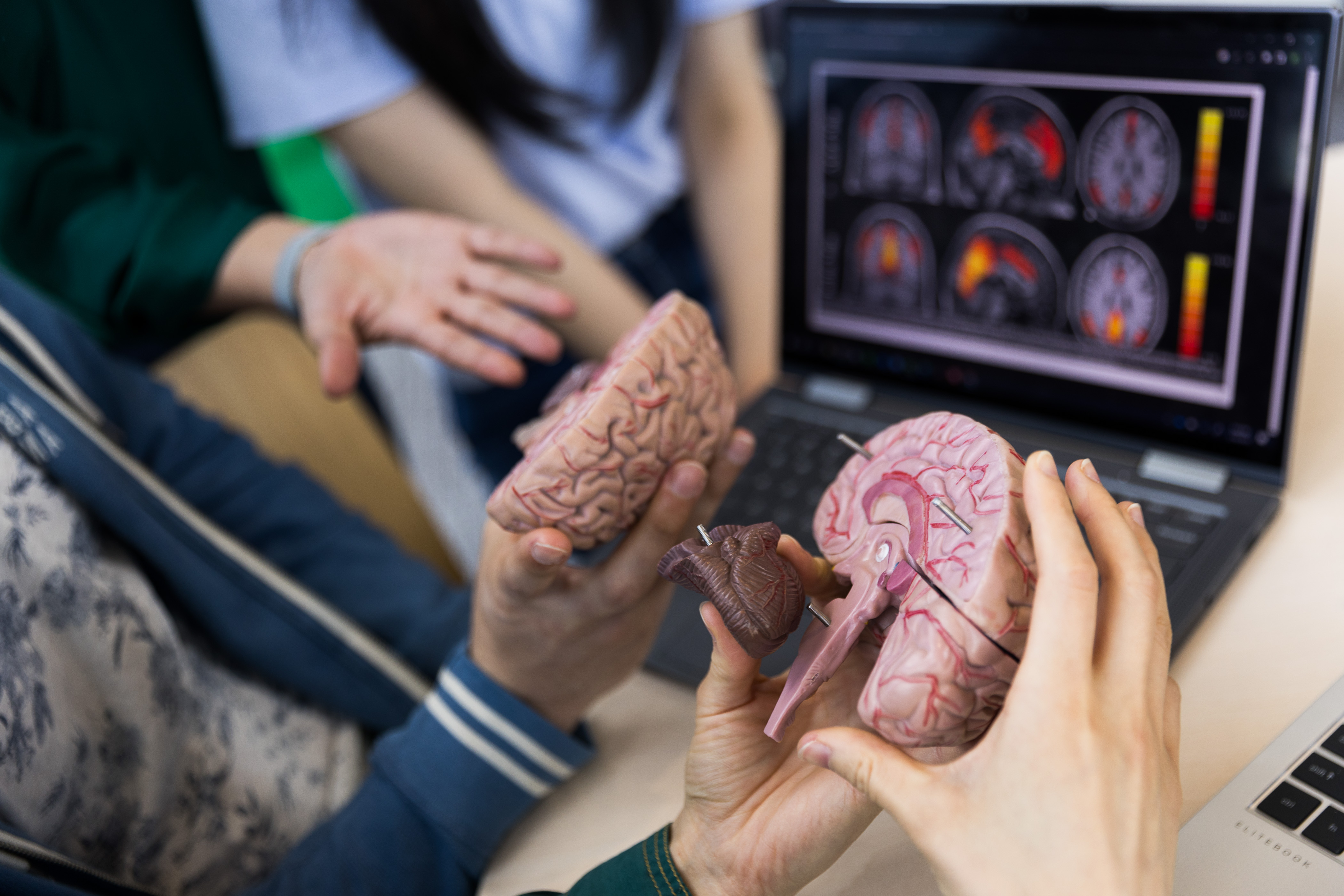
Working to predict Alzheimer’s disease before symptoms appear – a key Leuven-Melbourne project
Leading clinicians and scientists from Leuven and Melbourne with expertise in neuropathology, ophthalmology, imaging and artificial intelligence are examining how retinal imaging can be used to screen for pre-symptomatic Alzheimer’s disease.
This flourishing collaboration is being led by the University of Melbourne’s Professor Peter van Wijngaarden and Dr Xavier Hadoux from the Centre for Eye Research Australia in partnership with KU Leuven’s Professor Ingeborg Stalmans and Professor Lies De Groef.
The project exemplifies the inherent benefits of a cross-country collaboration by world-leading medical researchers in addressing intractable global health challenges such as Alzheimer’s disease, which, since 2016, has affected 43.8 million people across the world and is estimated to grow to 130 million by 2050.
With pathological changes of Alzheimer’s disease typically emerging gradually over 20–30 years before the onset of symptoms, current methods to identify individuals with pre-symptomatic disease are expensive, invasive and not scalable at a population level.
Retinal imaging offers an ideal solution, as the retina is part of the central nervous system and manifests many pathological processes in the brain in Alzheimer’s disease. Along with support provided by the KU Leuven and the University of Melbourne through the joint PhD program, the teams are recipients of grant funding from the European Union and the National Health and Medical Research Council of Australia via the EU Joint Program for Neurodegenerative Disease Research.