
What is SUCCEED?
SUCCEED stands for Systematically Understanding Comorbidities in Childhood Epileptic Encephalopathy Disorders. This program aims to help doctors diagnose and treat childhood epileptic encephalopathies faster and more precisely.
Biomarkers that reveal the problem
We are developing rapid, objective biomarkers using the body’s natural electrical signals from the eye and ear. These signals can act as measures (biomarkers) to identify a child's specific type of epilepsy and show how well treatments work. By validating these signals in mouse models, matched to each child's genetic profile, we create a biological fingerprint unique to that child's condition.

AI to decode the pattern
Our team is building computational tools that recognise gene and mutation-specific signatures in the data we collect. This artificial intelligence (AI) learns to spot patterns that human eyes might miss, helping clinicians make faster, more confident treatment decisions tailored to each individual child.

A device designed for children
We are prototyping a portable clinical device that makes testing easier and less frightening for kids. Instead of invasive procedures, children can undergo quick, non-invasive assessments in clinics, hospitals or even community settings, removing barriers to early diagnosis.
Why this matters
Developmental and epileptic encephalopathies are devastating conditions that begin in infancy and often lead to severe, lifelong disability. Children experience frequent seizures that disrupt their normal development, while families face years of uncertainty searching for answers. Currently, clinicians lack rapid, objective ways to confirm which type of epilepsy a child has, or to guide personalised treatment. This means that children may spend years on ineffective medications while their brains continue to be damaged by epileptic seizures. The window for preventing permanent disability is narrow, and delays cost a child's future.

What we're changing
Today, families with children suffering from developmental and epileptic encephalopathies face a diagnostic odyssey that can last years.
SUCCEED is changing this by developing a two-part platform in partnership with hospitals, patient groups and biomedical engineering partners.
We are validating electrographic biomarkers in preclinical (mouse) models against individual children’s genetic profiles, then translating them into a portable, child-friendly device that clinicians can use in any setting.
Alongside this, we are building artificial intelligence tools that fingerprint each child's unique disease signature, enabling clinicians to prescribe the optimal therapy from the start.
Success means a shorter time to diagnosis, faster access to effective treatment, and children who develop normally instead of facing lifelong disability.
Our experts
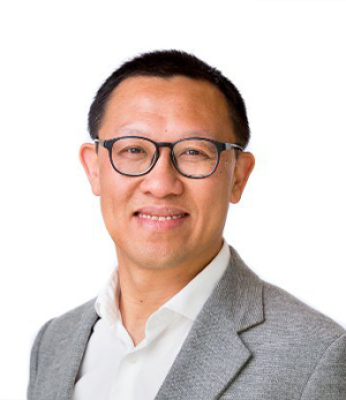
Professor Bang Bui
Professor Bang Bui is an optometrist and director of research for the Melbourne School of Health Sciences at the University of Melbourne. His expertise spans visual neuroscience, biomarkers and electrophysiology, with a particular focus on understanding how blood vessels, immune cells and neurons interact during disease development. He leads the biomarker validation stream of SUCCEED, developing and validating the electrographic signals from the eye and ear that form the foundation of our diagnostic approach.

Professor Christopher Reid
Professor Chris Reid is Lead of the Epilepsy and Neurodevelopment Research Priority at The Florey and head of the Neurophysiology of Excitable Networks Laboratory. He is a translational neuroscientist who leads a multidisciplinary team investigating the molecular and cellular causes of epilepsy, including the development of new genetic rodent models that recapitulate individual children's conditions. He brings deep expertise in epilepsy mechanisms and translational pathways, and leads the preclinical platform development that underpins SUCCEED's ability to model each child's unique disease.
Our partner