Meet Dr Mohamed Fareh, one of the first Galli Senior Research Fellows supported by the Lorenzo and Pamela Galli Medical Research Trust. His research at the Peter MacCallum Cancer Centre seeks to understand how cancers develop drug resistance before those changes emerge in patients.
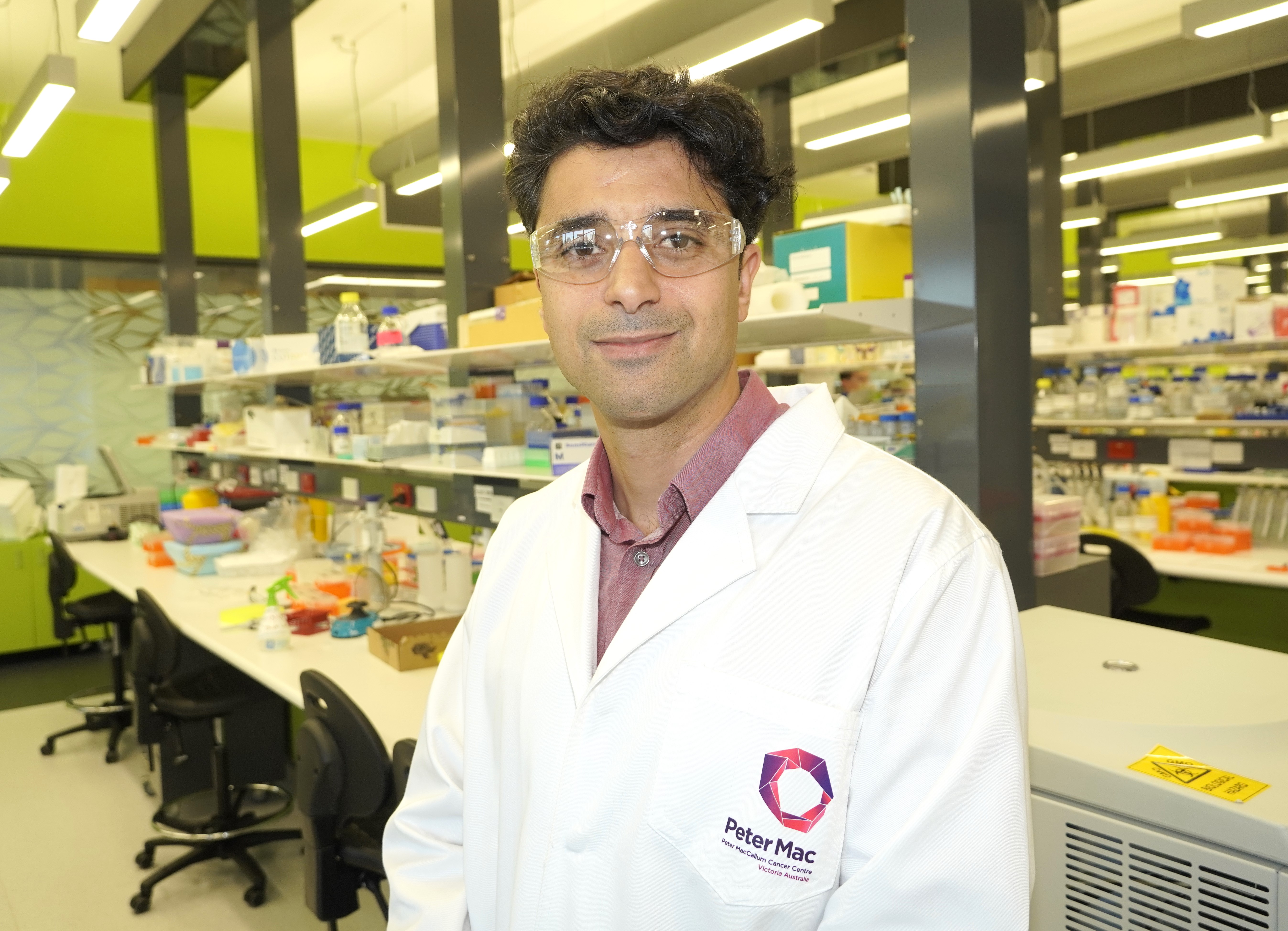
Can you tell me a little about your life outside of research, and the journey that brought you to where you are today?
I was born and grew up in Ouled Teima, a small town in southern Morocco, near the coastal city of Agadir. From an early age, I was fascinated by the natural world and curious about how things worked. Despite limited opportunities for scientific training where I grew up, I became particularly drawn to experimental science and began dreaming of becoming a scientist one day.
After completing a degree in biological sciences at the University of Agadir, I moved to France to pursue my scientific training at the University of Nice Sophia Antipolis. I gradually adapted to the new environment in France and completed a Master's degree in Genetics, Immunology, and Development. I then began a PhD investigating one of the most aggressive forms of brain cancer, glioblastoma.
During my PhD in Professor Virolle and Prof. Aberdam’s labs, I discovered a previously unrecognised regulatory network controlled by a group of small RNAs called microRNAs that helps glioblastoma stem cells maintain their ability to grow and adapt to treatment. Back then, little was known about non-coding RNA that was considered as a ‘junk genome’, and this work showed me the power of asking fundamental biological questions while keeping sight of their potential therapeutic impact. This incredibly rich PhD journey reinforced my desire to pursue a career in research.
After my PhD, I wanted to understand biology at an even more fundamental level. I moved to the Netherlands and joined Professor Chirlmin Joo's laboratory at TU Delft to learn single-molecule biophysics. Here, I developed new approaches to watch RNA and protein complexes, including the molecular machinery of RNA interference and CRISPR, working one molecule at a time.
This experience fundamentally changed the way I think about biology. I could actually watch RNA editing machineries search for their targets and perform their functions in real time, on nanometre and millisecond scales and one molecule at a time, which is quite astonishing. I often spent entire nights in the microscopy room, fascinated by what was happening on the screen. It taught me to think about biology not just as a collection of molecules, but as a dynamic process governed by the principles of physics and chemistry.
In 2018, my family and I moved to Australia after I was offered a position in Professor Joseph Trapani's laboratory at the Peter MacCallum Cancer Centre, working on personalised cancer therapies. During my first visit to Melbourne, I was struck by the quality of the science, the research infrastructure and, above all, the kindness and enthusiasm of the people I met.
Drawing on my background in cancer biology, RNA biology and CRISPR, I developed a vision to create programmable therapies that could target the genetic drivers of cancer. A few months after we relocated to Melbourne, I secured my first independent funding, recruited my first PhD student and began building a research program at the interface of CRISPR biology, RNA therapeutics and cancer.
Today, my team is developing programmable CRISPR and RNA technologies that aim to understand and treat diseases at their genetic source. Our goal is to turn fundamental discoveries about molecular machines into new medicines for cancer and, ultimately, a much broader range of human diseases.
Can you tell us about your research?
My lab’s research focuses on the development of programmable genome editing technologies and RNA therapeutics to better understand and treat cancer and other human diseases.
Cancer is, at its core, a disease of our genes. As cancer develops, changes in DNA can cause genes to become permanently switched on, produce abnormal proteins, or acquire new functions that allow cancer cells to grow and spread. These changes can take many forms, from single-letter mutations in DNA to gene fusions, extra copies of genes, and abnormal changes in the way genes are switched on and off.
Modern sequencing technologies can accurately identify many of these changes in cancer patients. However, the vast majority of these genetic changes that fuel the cancer remain difficult or impossible to target with conventional medicines. Our research aims to change this paradigm by developing programmable CRISPR technologies that can be directed towards the specific genetic abnormalities driving an individual cancer.
The basic idea is simple: rather than developing a different drug for every disease, can we develop a programmable medicine that can be reprogrammed to target the genetic cause of each disease?
Our research is developing CRISPR and RNA technologies that can act at three different levels of the genetic information inside a cell.
At the RNA level, we develop CRISPR systems that can find and destroy specific disease-causing RNA molecules, the temporary messages that carry genetic instructions from DNA to make proteins. This provides a way to switch off harmful genes without changing the underlying DNA. We have used this approach to target cancer-driving genes, including specific mutations and gene fusions that can make cancer cells dependent on abnormal proteins.
At the DNA level, we are developing next-generation CRISPR technologies designed to make precise changes to the genome. The long-term goal is to correct or eliminate disease-causing mutations at their source.
At the epigenetic level, we are developing CRISPR systems that can switch specific genes off without cutting the DNA. This approach can place molecular “off switches” on selected genes, potentially providing long-lasting gene silencing while avoiding the double-stranded DNA breaks generated by conventional CRISPR editing.
A critical part of turning these technologies into medicines is delivery. We are therefore developing mRNA and lipid nanoparticle (LNP) technologies to safely deliver CRISPR instructions into cells. Instead of permanently putting the CRISPR machinery into a cell, mRNA can provide temporary instructions for the cell to make the CRISPR system. The CRISPR machinery can then perform its programmed task and naturally disappear.
We think of this as a “hit-and-run” approach to genetic medicine: deliver the instructions as mRNA, let the molecular machinery make the desired change, and then let the machinery disappear.
Our ultimate goal is to create a flexible platform for developing programmable medicines that can be tailored to the precise molecular abnormality driving a disease. For cancer, this could mean designing treatments that specifically target the genetic changes that make a tumour grow, including abnormalities that are currently beyond the reach of conventional drugs.
The potential applications extend well beyond cancer. The same technologies could eventually be adapted to correct mutations responsible for inherited genetic disorders, silence genes involved in other diseases, or target the RNA of pathogenic viruses. In fact, we have shown that exactly the same CRISPR machinery can be reprogrammed to silence pathogenic human viruses such as SARS-CoV-2, hepatitis B virus, HIV (see our publications below).
Rather than developing a completely new therapeutic approach for every disease, our vision is to build a programmable technology platform in which the target can be changed simply by changing the genetic sequence that guide the CRISPR system, like changing the “ZIP CODE”. This could open a new way of developing medicines that directly address the molecular causes of disease, with the potential to tackle diseases that have previously been considered difficult or impossible to treat.
How has the Lorenzo and Pamela Galli Medical Research Trust supported your career and allowed you to collaborate with other researchers?
The support from the Lorenzo and Pamela Galli Medical Research Trust has been transformative for my career. It gave me the opportunity to launch a new and ambitious research program around a question that I believe could change how we approach cancer treatment: can we understand how cancers develop drug resistance before those changes emerge in patients?
Targeted cancer therapies have transformed patient care by attacking specific molecular weaknesses in cancer cells. Unfortunately, cancer is an evolving disease. Even when a treatment initially works very well, some cancer cells can acquire genetic changes that allow them to escape the therapy and eventually cause the cancer to return. At present, these resistance mutations are often discovered only after a patient relapses, when the disease has progressed and treatment options can be more limited.
With the support of the Galli Trust, my lab is taking a different approach. Rather than waiting for resistance to emerge in patients, we are developing ways to map and understand the genetic changes that could allow cancer cells to escape treatment before they occur clinically. Our broader goal is to improve our understanding of how cancers develop drug resistance, with the aim of enabling earlier detection and the development of more durable and resistance-proof cancer therapies.
To tackle this challenge, we are bringing together expertise from several fields, including cancer biology, CRISPR gene editing, high-throughput genetic screening, structural biology, computational modelling and artificial intelligence. These complementary approaches allow us to systematically explore thousands of possible genetic changes and determine which ones can make cancer cells resistant to targeted treatments.
The collaborative nature of this work has been one of the most valuable aspects of the Galli Trust's support. It has allowed me to build a team with diverse expertise and establish collaborations with researchers, clinicians and computational scientists who approach the problem from very different perspectives. By bringing these disciplines together, we can move from identifying a resistance mutation to understanding why it causes resistance, whether it can be detected early, and how we might design treatments that remain effective when that mutation occurs.
Our vision is to turn this knowledge into two important advances in cancer care: earlier detection of emerging drug resistance through molecular diagnostics, and the development of next-generation therapies designed to overcome or prevent predictable resistance mechanisms.
What excites you about the future of this research?
What excites me most is the possibility of changing the way we think about cancer resistance; from waiting for treatment to fail, to anticipating how cancer might evolve and staying one step ahead of it. If we can identify the genetic changes that enable cancer cells to escape treatment before they emerge in patients, we may be able to detect resistance earlier and design therapies that remain effective for longer.
I am also excited about the broader potential of the technologies we are developing. Along the way, we are building a new generation of programmable CRISPR platforms that can precisely target the genome, epigenome and transcriptome. These technologies could ultimately allow us to correct, silence or modify disease-causing genetic changes.
My long-term vision is to develop programmable medicines that can be tailored to the precise genetic abnormality driving a disease. While our immediate focus is cancer, the same technologies could ultimately be applied to a much broader range of human diseases, including inherited genetic disorders and infectious diseases. The possibility of turning our growing understanding of disease genetics into programmable treatments is what makes this research particularly exciting to me. The collaborative research environment fostered by the Galli Medical Research programs provides an ideal platform to bring together the expertise needed to translate this vision into new treatments that can ultimately benefit patients.