Dr Charis Teh
Read about how Dr Charis Teh is uncovering how climate change reshapes our immune system and health.
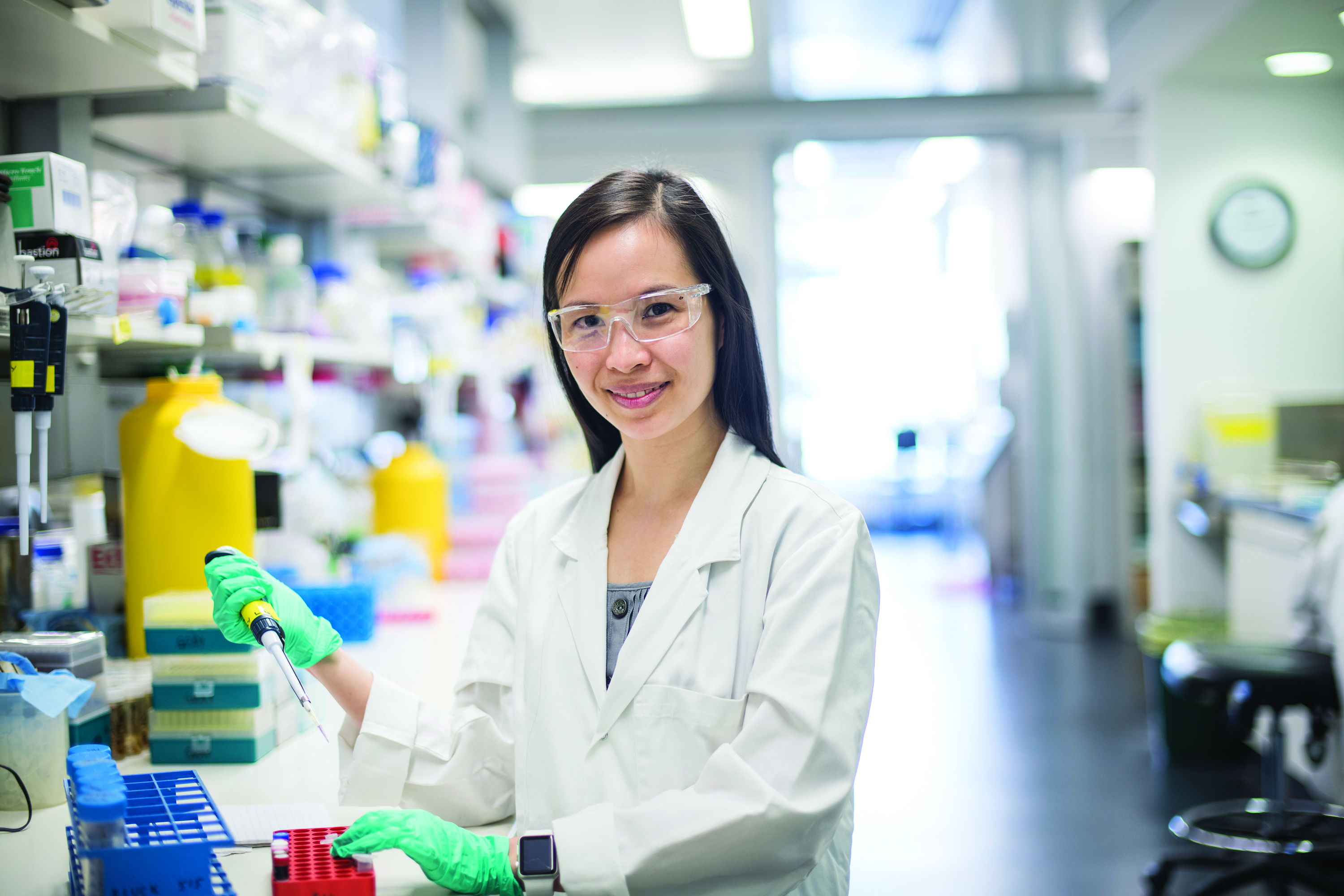
Can you tell me a little about your life outside of research, and the journey that brought you to where you are today?
Growing up on the island of Borneo in Malaysia, I saw firsthand the impact infectious diseases can have on families and communities. I contracted malaria at the age of five and travelled a long distance to receive treatment. News reports about malaria, dengue and Japanese encephalitis were part of everyday life. Looking back, these experiences sparked a curiosity about why people become sick and how science might prevent that suffering.
After high school, I moved to Australia for my undergraduate studies. A summer laboratory internship introduced me to scientific research for the first time. Until then, I had never met a scientist and did not realise that research could be a career. I went on to work on projects ranging from glowing worms and fruit flies to engineered plants, but it was the immune system that ultimately captured my imagination.
This passion led me to a PhD in Immunology at the Australian National University, followed by postdoctoral research at Stanford University and WEHI. Today, my research focuses on understanding how the immune system functions in infectious disease, cancer and autoimmunity, and how that knowledge can be translated into better treatments for patients.
Can you tell us about your research?
Climate change is one of the biggest health challenges of this century, but we still know little about how rising heat and humidity affect the body over time. With the support of the Galli Senior Research Fellowship, I lead a program at WEHI to study how long-term exposure to hotter, more humid environments influences our health, especially the immune system.
Because large human studies are hard to run and animal studies can be affected by factors like diet, genetics and housing, my team is building a specialised lab platform where we can carefully control temperature and humidity and watch how the body responds. By isolating the effects of heat on the immune system, we aim to provide clear evidence of how climate change impacts health and to guide future public health strategies in a warming world.
How has the Lorenzo and Pamela Galli Medical Research Trust supported your career and allowed you to collaborate with other researchers?
Balancing a research career with raising a young family in a highly competitive funding environment is challenging. The Lorenzo and Pamela Galli Medical Research Trust Senior Research Fellowship gives me the security and flexibility to pursue ambitious, long‑term questions in immunology and climate health that traditional schemes often cannot support. As a female researcher, this support has been particularly valuable.
In the first few months, I have worked closely with researchers, technical staff, veterinarians and facilities specialists to establish new research capabilities at WEHI, including the specialised platform to study heat and humidity. The Fellowship has also helped bring together experts in immunology, infectious disease, cancer biology, behavioural science and childhood development. These collaborations are opening new ways to explore how climate‑related stressors influence health across different diseases and populations.
What excites you about the future of this research?
What excites me most is helping to shape an entirely new field of climate immunology. It is rare to work on questions that are both scientifically unexplored and highly relevant to the future health of our communities.
Over the next five years, I hope our work will provide clear evidence of how prolonged heat exposure reshapes the immune system in health and during infection. By combining laboratory research, interdisciplinary collaborations and, eventually, human studies, we aim to better understand how climate change influences disease risk and identify ways to improve resilience in a warming world.