Turning data into decisions: how digital health is transforming emergency care
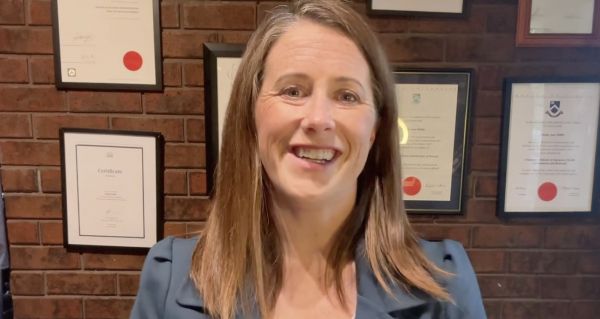
"Digital health is about translating real-world clinical complexity into meaningful, actionable data that improves care at the bedside and informs strategy and workforce planning at the system level."
Dr Belinda Hibble
Learner in the Centre's Transforming Healthcare with Data Analytics and AI short course
|
Motivating question: How can clinicians and leadership leverage data for faster, safer decisions?
Dr Belinda Hibble could see the potential for data within her service to help clinicians make better, faster, and safer decisions.
“In my work, digital health is about using data and technology to enhance clinical decision-making, patient flow, and system safety. It spans everything from EMR optimisation and clinical dashboards to hopefully considering AI-enabled decision support in the future within our health service.”
As the Director of Emergency Services at Barwon Health, she is leading digital transformation projects to ensure safe, equitable, and sustainable emergency care for the Greater Geelong community.
Belinda was curious about how to use data-driven insights to make decisions with the leadership team.
She built her clinical informatics experience on the job, working on projects like tracking emergency care demand, reviewing alerts for risky behaviour, and analysing referral times—reinforcing that well-designed data systems can make complex care environments safer and more sustainable.
Despite her on-the-job experience, Belinda wanted a structured approach to ensure any solutions ensure were truly fit for purpose and would improve collaboration across teams—so she enrolled in the Transforming Healthcare with Data Analytics and AI course.
Belinda’s experience doing the Transforming Healthcare with Data Analytics and AI course
“Moving on from my MBA and learning on the run, I wanted a structured way to consolidate my clinical informatics knowledge.”
The Transforming Healthcare with Data Analytics and AI short course allowed Belinda to participate in flexible online modules with live, interactive workshops — designed to fit around busy clinical schedules while connecting participants with leading experts and peers.
“The flexibility of the course made it easy to balance learning with my clinical and other duties. I valued the mix of perspectives — hearing from industry panels and clinicians who’ve navigated similar challenges resonated with me. It felt practical and relevant, and learning from experts in data and AI alongside peers gave me insights I could immediately apply in my role.”
One of the most valuable aspects of the course for Belinda was its focus on contemporary issues shaping healthcare — like ambient AI scribes. These sessions didn’t just cover the technology; they explored real-world implementation, risk considerations, and industry insights from vendors and clinicians, offering multiple perspectives on how to ensure quality and fit-for-purpose solutions.
“The discussion on ambient AI scribes helped me develop a balanced view of these rapidly evolving technologies. Hearing from both clinicians and industry experts gave me practical insight into how vendors work and the safeguards needed for quality implementation.”
How the course helped
“The course shifted my view of digital health from isolated tools to an integrated ecosystem—it’s made me more intentional about embedding evaluation, governance, and interoperability from the outset of every digital project.”
That shift in thinking has sparked new ideas for how Belinda can apply what she’s learned, looking at ways to bring digital health principles into everyday practice.
“I’m really excited to refresh our data dashboards and explore trialing the safe use of ambient scribes and AI tools in the operational space to improve workflows and workforce efficiency.”
Belinda stressed the urgency of building digital literacy across the healthcare sector.
“My recent work in EMR optimisation revealed how important it is for teams to have a strong grounding in digital health, to ensure we can embed the most safe and efficient approaches within these systems — else we risk adding complexity for no gain.”
She also highlighted the importance of clinical expertise in digital transformation, noting that progress depends on collaboration and timely action.
“Clinical insights are so important as digital systems are rolled out across health services, and with the pace of innovation, we need to get moving.”
Interested in going on a similar journey? Find out more about the course.
Next course starts 21 July 2026. Learn more and register now →