
BLISS is a state-of-the-art, interactive projection-based simulation suite that puts users in a fully immersive, responsive environment.
Unlike VR headsets, BLISS keeps teams together in a shared physical space – interacting naturally, with real tools, in real time.
Located within the clinical simulation lab at the Centre for Digital Transformation of Health, Level 1, Melbourne Connect, BLISS™ is a flexible testbed for prototyping, evaluating, and reimagining how people learn, train, and solve complex problems.
At the University of Melbourne, we are harnessing BLISS to drive innovation in health professions education and simulation-based research – exploring new pedagogical approaches, developing and testing training solutions, and generating evidence to shape the future of healthcare delivery.
As an adaptable platform, BLISS can be configured to meet a wide range of educational, research, and training purposes across disciplines and industries. We welcome collaborators from across the University, research, healthcare, industry and beyond who are looking for new ways to engage, educate, and innovate.
BLISS is a collaboration between the Faculty of Medicine, Dentistry and Health Sciences Education, the Collaborative Practice Centre, and the Centre for Digital Transformation of Health.
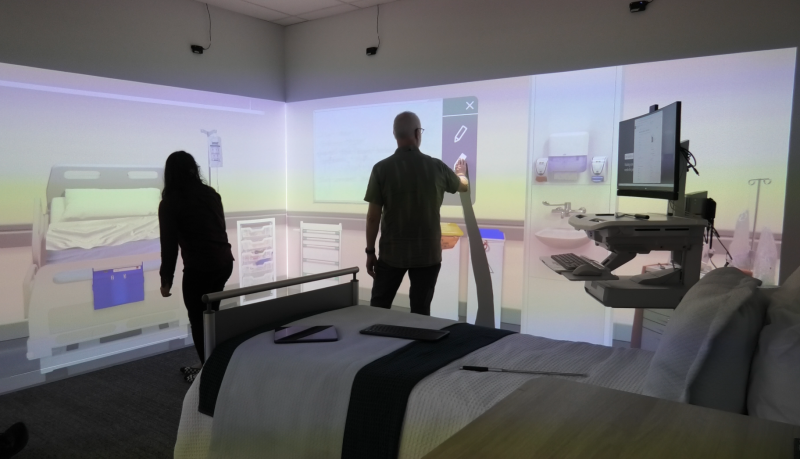
Inside the suite
BLISS transforms the Centre's clinical simulation lab hospital room into a fully immersive, responsive environment with custom project images and video, multitouch on every wall and immersive audio.
Three walls of panoramic projection surround participants in realistic, scenario-based environments – from hospital wards and emergency departments to command centres and disaster response settings.
The room enabling simulations that feel genuinely authentic, equipped with, clinical equipment (e.g. hospital bed), workstation on wheels, and recording capabilities.
A dedicated control room with one-way glass allows facilitators, researchers, and observers to monitor sessions without disrupting the experience.
How can BLISS support your work?
Piloting the future of medical education
For academic educators, curriculum designers, and clinical educators. Design, pilot, and evaluate immersive blended learning environments – from mixed reality teaching scenarios to interprofessional simulation.
Clinical simulation research for education
For researchers and PhD students. Design controlled simulation studies to evaluate educational interventions and build a robust evidence base for health professions education.
Pre-implementation validation in digital health
For researchers and industry partners. BLISS complements the existing physical spaces in the simulation lab. Test digital health tools in realistic, controlled conditions before clinical deployment – reducing risk and building confidence in your solution.
Immersive technologies for healthcare and interprofessional learning
For clinicians, hospitals and industry partners. Use augmented/virtual reality and immersive technologies to simulate complex, time-pressured clinical scenarios – building clinical confidence, strengthening interdisciplinary teamwork, and developing new approaches to clinical training.
BLISS in action
Scenarios
BLISS scenarios can be developed and customised to suit specific educational, research, or training needs, or chosen from a bank of ready-made options – get in touch with us to see what is possible.





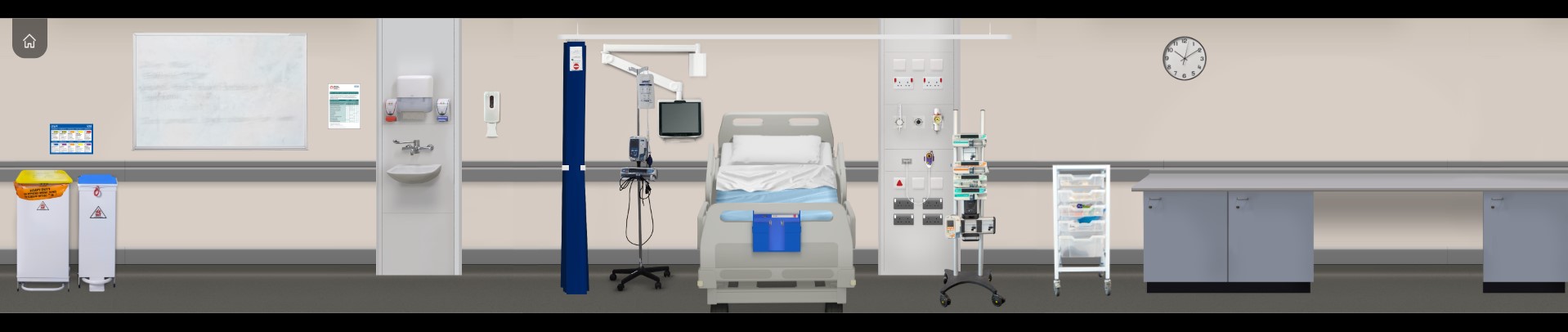
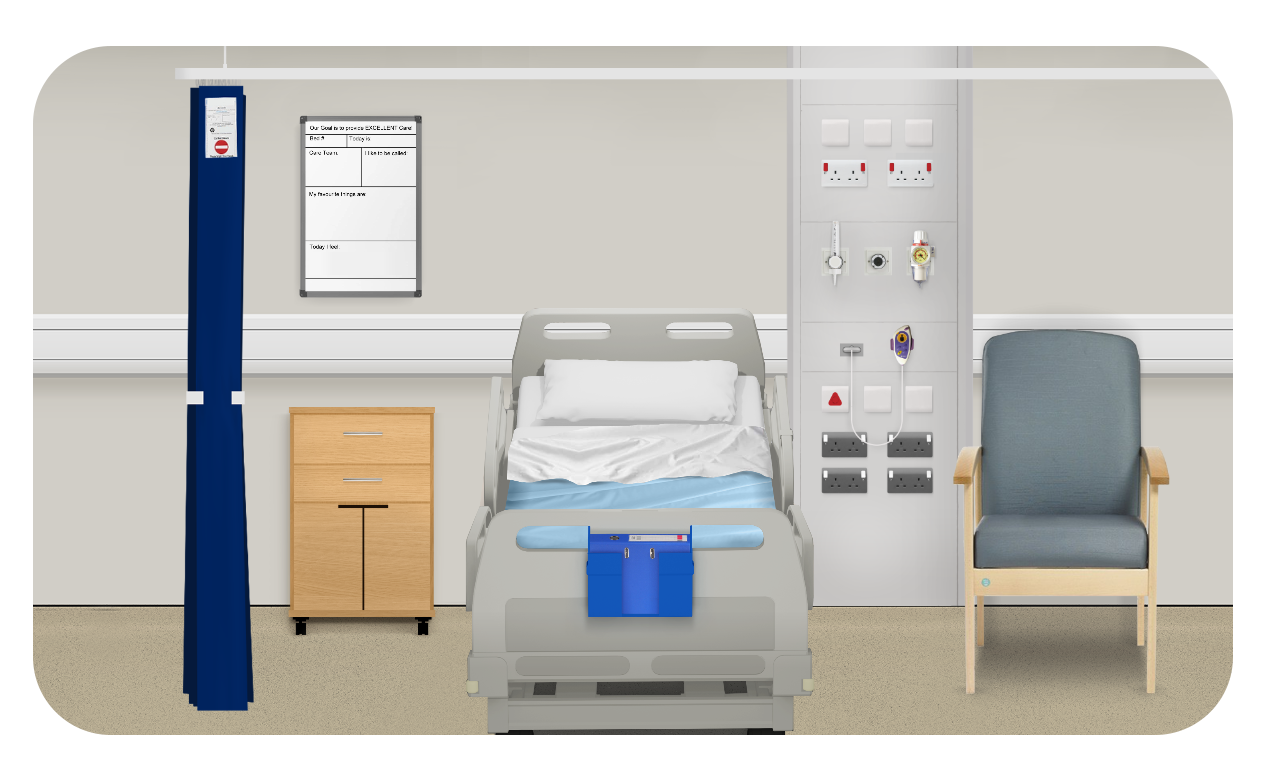
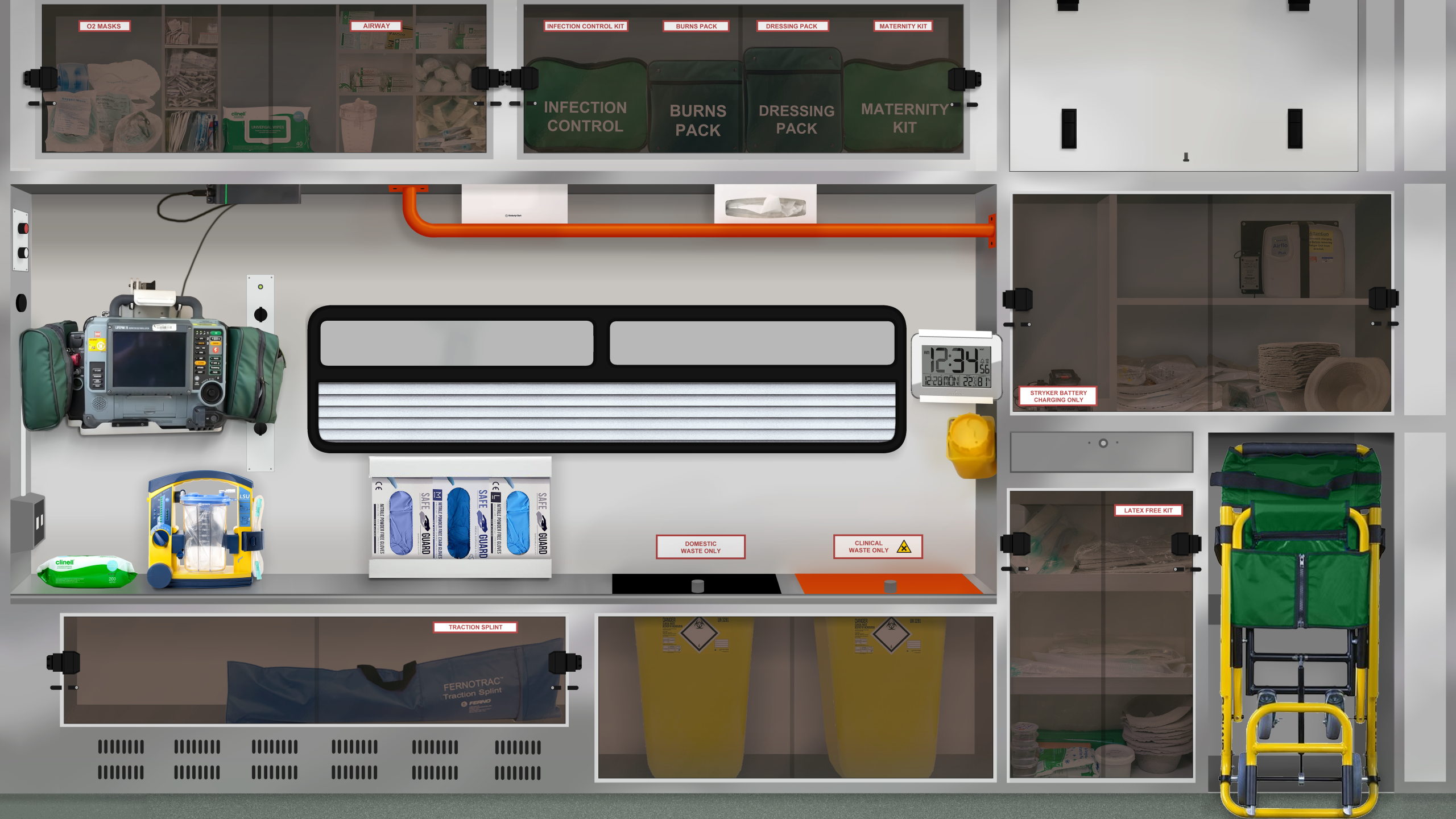
How to get started →
Whether you're coming with a fully formed project or just an early idea, we'll work with you to find the right approach.
-
- Personalised meeting and/or tour of the BLISS facility with CDTH staff
- Discussion of project goals, audiences, and intended outcomes
- Support to refine ideas into a feasible simulation project
- Advice on consumer involvement, research methods, and evaluation approaches
-
- Assistance with scenario design, development, and technical configuration
- Support preparing digital content, workflows, equipment, and simulation environments
- Referrals to technical and design specialists where required
-
- Onsite technical and operational support during simulation sessions
- Guidance on interpreting results and identifying key insights
-
- Support preparing publications, reports, and grant applications
- Advice on implementation, future testing, funding opportunities, and partnership development
- Connections to relevant researchers, clinicians, industry partners, consumers, and community groups
BLISS is a collaboration between the Faculty of Medicine, Dentistry and Health Sciences, the Collaborative Practice Centre, and the Centre for Digital Transformation of Health
FAQs
-
BLISS (Blended Learning Interactive Simulation Suite) is an interactive, projection-based immersive simulation environment located within the clinical simulation lab at the Centre for Digital Transformation of Health, Level 1, Melbourne Connect, University of Melbourne.
It uses three walls of panoramic projection, multi-touch, gesture and voice interaction, and spatial audio to create realistic, team-based simulation experiences for education, research, and training.
At the University of Melbourne, BLISS is a collaboration between the Faculty of Medicine, Dentistry and Health Sciences, Collaborative Practice Centre, Centre for the Study of Higher Education, and the Centre for Digital Transformation of Health.
BLISS is manufactured by Gener8 Spaces and installed and integrated in Australia by Simovation Interactive Technologies – specialists in healthcare simulation technology. Scenario development is supported through the Intuiface platform.
-
Most immersive simulation technologies place learners inside individual headsets, isolated from their team and navigating virtual environments with unfamiliar controllers. BLISS takes a different approach.
By projecting immersive environments across three walls of a shared physical space, BLISS keeps teams together – interacting naturally, communicating in real time, and working with real tools and real equipment.
BLISS is flexible enough to combine VR and in-room experiences, so that remote participants can have a similar experience to those present in the suite.
-
A standard clinical simulation lab replicates a physical healthcare environment using real equipment and dedicated clinical spaces.
BLISS adds a layer of immersive, responsive digital environments on top of that physical foundation – surrounding participants in projected scenarios that can be switched almost instantaneously.
Where a standard simulation lab is fixed in its physical appearance, BLISS can transform the same space into a hospital ward, an emergency command centre, a disaster response setting, or custom environments.
BLISS is flexible enough to combine VR and in-room experiences so that remote participants can have a similar experience to those present in the suite.
-
Feature
Description
Panoramic projection
Three-wall immersive projection creates a fully surrounding environment
Touchscreen dashboards
Life-sized interactive dashboards projected onto walls – participants can manipulate data, navigate systems, and respond to scenarios in real time
Stereo audio
Environmental soundscapes enhance realism and immersion
One-way glass observation
Dedicated control room enables facilitators and researchers to observe without disrupting the simulation
Near-instantaneous scenario switching
Environments can be changed almost immediately, enabling multiple scenarios in a single session
General use BLIS Suite training
Training to use the Intuiface Software and the BLIS Suite (1 hour)
Scenario development through Intuiface Composer Training
No specialist coding or computing expertise required; scenario design is no more complex than building a PowerPoint presentation (2 hours)
-
The Centre for Digital Transformation of Health’s clinical simulation lab, at Level 1, Melbourne Connect is built around a core goal: de-risking digital health innovation by generating the evidence that health services, purchasers, and government need to know that new tools are ready for use, safe, and effective.
Whether you are an educator designing immersive learning experiences, a researcher building an evidence base, or an industry partner testing a digital health solution before clinical deployment, the SimLab brings together the infrastructure, research expertise, and clinical context to support your work.
The lab comprises four distinct spaces that can be used independently or in combination – providing the right tools for the right purpose at every stage of a project.
Co-design space: A neutral, inclusive environment for early-stage ideation and problem scoping. Designed to bring together diverse stakeholders – clinicians, researchers, technologists, and industry partners – to explore challenges and define solutions collaboratively.
Hospital room and control room: A realistic clinical simulation environment combining physical and virtual realism. The hospital room is equipped with a hospital bed and electronic medical record (EMR) access. BLISs (Blended Learning Interactive Simulation Suite) is integrated within this space, enabling immersive, projection-based simulation scenarios. The control room features one-way glass, cameras, and screen streaming capability, allowing facilitators and researchers to observe and record sessions without disrupting the experience.
GP and home rooms: Realistic general practice and home environment settings designed for iterative prototyping, testing, and evaluation of digital health tools in community and primary care contexts. These spaces support a mix of actors, real patients, service users, and clinicians, and are particularly well-suited to exploring communication challenges and patient experience.
Control room: A central hub for managing and coordinating simulation activities across the lab. Supported by the Sandbox – a flexible digital infrastructure that enables long-running projects, remote and hybrid testing configurations, and integration of multiple digital health tools and platforms.
-
BLISS scenarios can be developed and customised to suit specific educational, research, or training needs. The Intuiface development platform makes scenario creation accessible — no specialist coding or computing expertise is required.
The Intuiface platform used for scenario development is designed to be accessible — comparable in complexity to building a PowerPoint presentation — meaning educators and researchers can develop their own scenarios with appropriate support.
Existing example scenarios include a boat dock, car garage, cabin, campsite, child's bedroom, canyon and fire damaged living room.
-
BLISS has an active and growing community of users across the University of Melbourne, including:
- Associate Professor Thomas Cochrane — Faculty of Education
- Philippa Marriott — Department of Nursing
- Dr Teresa O'Brien — Centre for Digital Transformation of Health
- Dr Sathana Dushyanthen — Centre for Digital Transformation of Health
- Dr Kit Huckvale — Centre for Digital Transformation of Health
- Mahima Kalla — Centre for Digital Transformation of Health
- Andree Gamble — Department of Nursing
- Kisanet Tesfu — Department of General Practice
We welcome new collaborators from across the University and beyond. Get in touch to find out how you can get involved.
-
BLISS is an adaptable platform that can be configured for a wide range of educational, research, and training purposes. While our current focus is on health professions education and simulation-based research, the suite's capabilities are not limited to health contexts.
If you have a use case from outside the health disciplines and would like to explore whether BLISS is the right fit, we'd love to hear from you.
-
Research conducted using BLISS is subject to the University of Melbourne's standard ethics approval processes. Researchers and PhD students planning to use BLISS for data collection – including any biometric or interaction data – should ensure appropriate ethics consent procedures are in place before commencing. The Centre's team can provide guidance on what to consider when designing your ethics application.
-
Yes – the BLISS-enabled clinical simulation lab at Melbourne Connect is fully accessible.
-
We welcome enquiries from educators, researchers, clinicians, and industry partners. Get in touch to arrange a tour of space or discuss how BLISS could support your work. Email validitron-team@unimelb.edu.au.