At the new Aikenhead Centre for Medical Discovery, cutting-edge tech and teamwork are driving innovation in health.
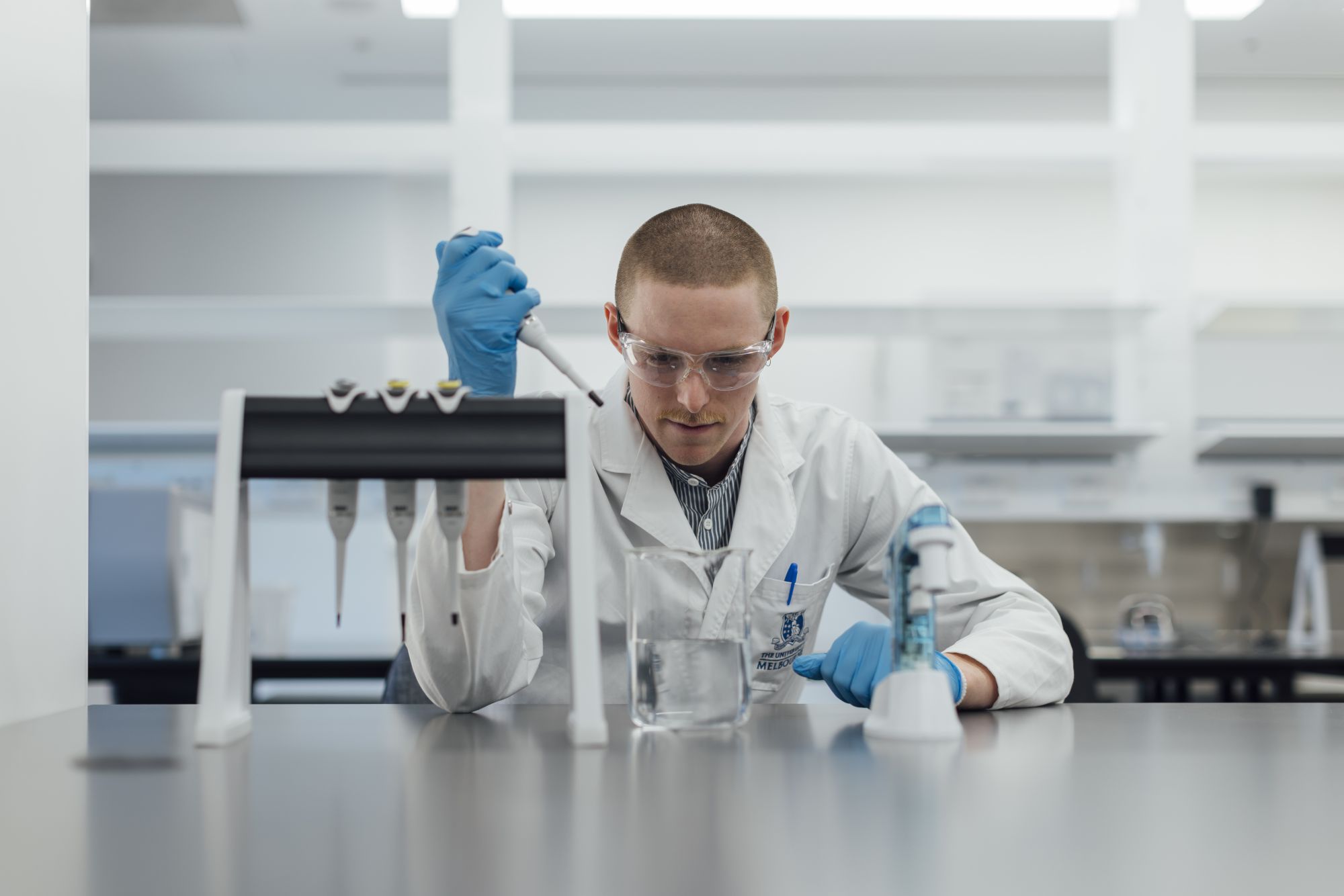
In a lab where clinicians, engineers and students work shoulder to shoulder, PhD student William Humble is rethinking the future of osteosarcoma – a rare but highly aggressive bone cancer that can be fatal or have lifelong consequences for the children diagnosed with it.
“Not a lot of treatments are available,” says Mr Humble, which is why he’s laser-focused on trying to understand the disease at a deeper level. “If we succeed, it will be the first step towards developing drugs that will give patients a much better quality of life.”
It’s an ambitious goal — but not one he’s tackling alone.
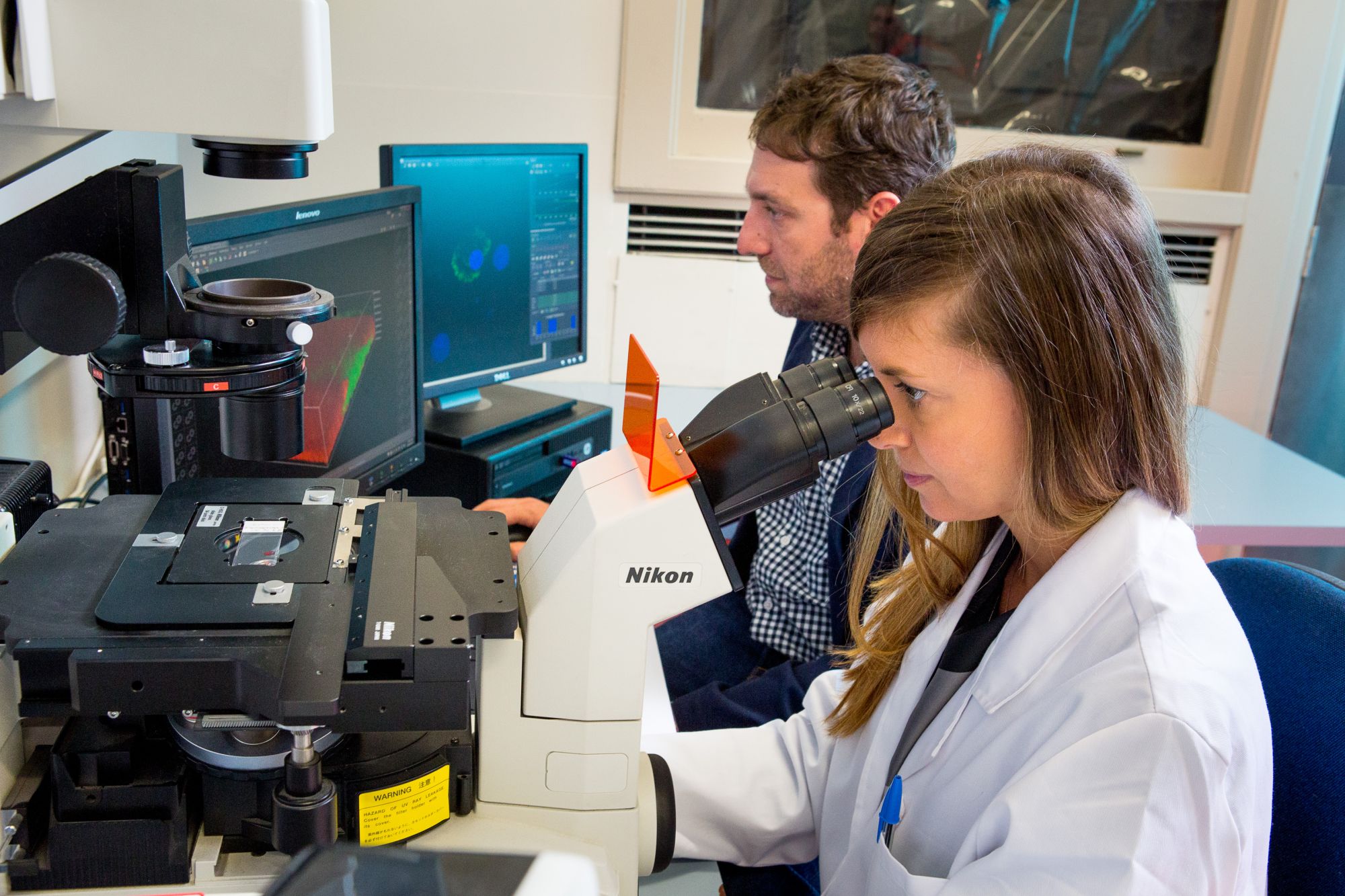
At the new Aikenhead Centre for Medical Discovery (ACMD)*, Mr Humble works side by side with clinicians and experts across medicine, bioengineering and science.
Credit: Michael Kai
An innovation eco-system
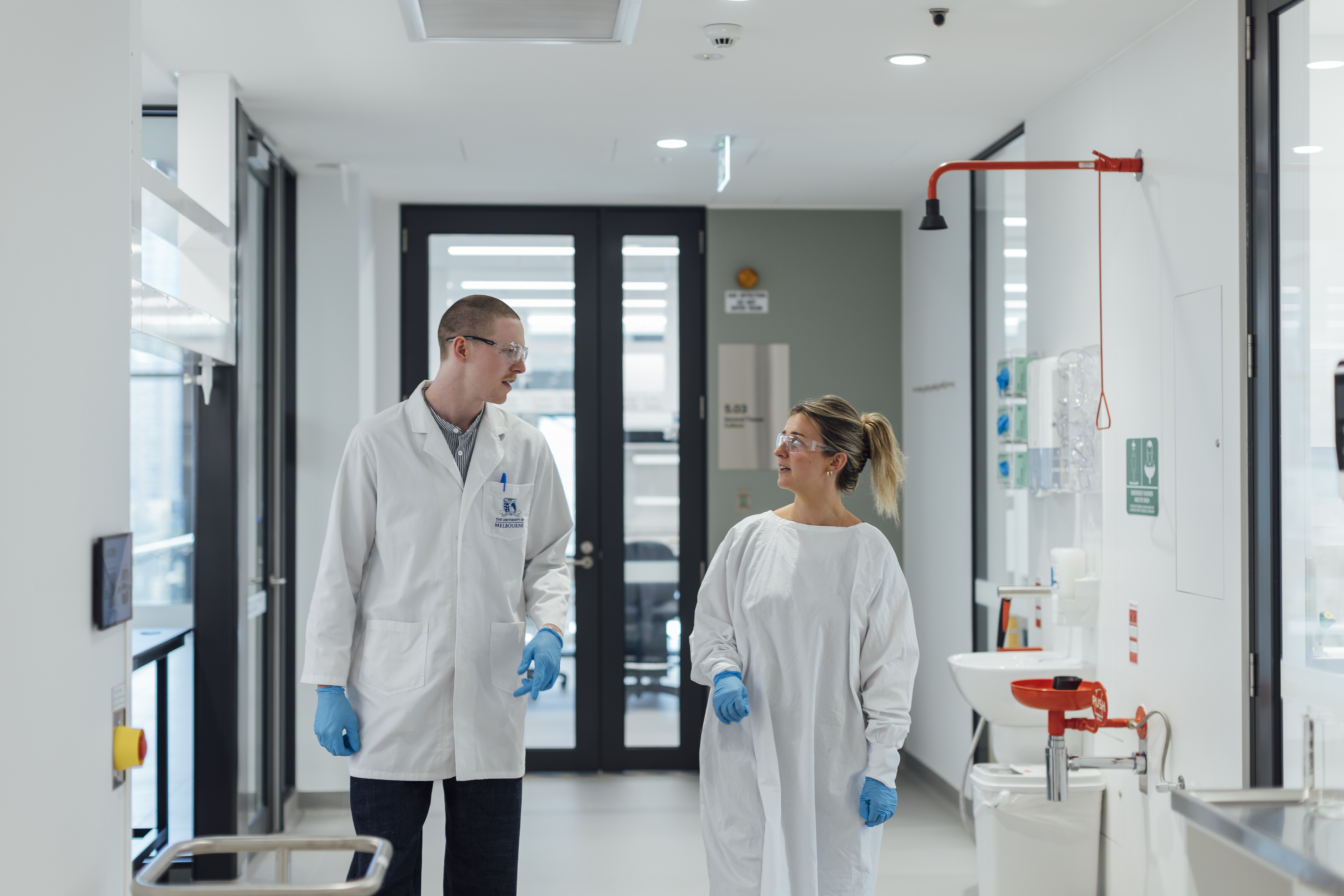
Breaking down walls is exactly what this centre was built to do. Equipped with state-of-the-art spaces for research, development and trials, ACMD is Australia’s first facility explicitly designed to foster collaboration across faculties, universities and research institutes – all with one goal: accelerating the translation of research into products that improve patient outcomes.
ACMD Chief Operating Officer Jason Lemaire describes the building as an innovation “eco-system”, home to researchers from four universities (including the University of Melbourne) and two research institutes as well as clinicians from St Vincent’s Hospital (SVH). Drawing on lessons from the Advanced Biofabrication Centre – the ACMD prototype launched in 2016 – Mr Lemaire has already seen what’s possible when “clinicians identify unmet needs, researchers engineer solutions, and industry translates discoveries into real-world healthcare impact”.
One example of these possibilities is Epiminder, a technology company transforming the treatment of epilepsy. Emerging from a collaboration between the Bionics Institute, the University of Melbourne, Cochlear Ltd and neurologist Professor Mark Cook at St Vincent’s Hospital Melbourne, the company’s implantable Minder® device continuously monitors electrical brain activity and sends real-time data to clinicians. The result is personalised treatment plans that have the potential to significantly improve patients’ quality of life.
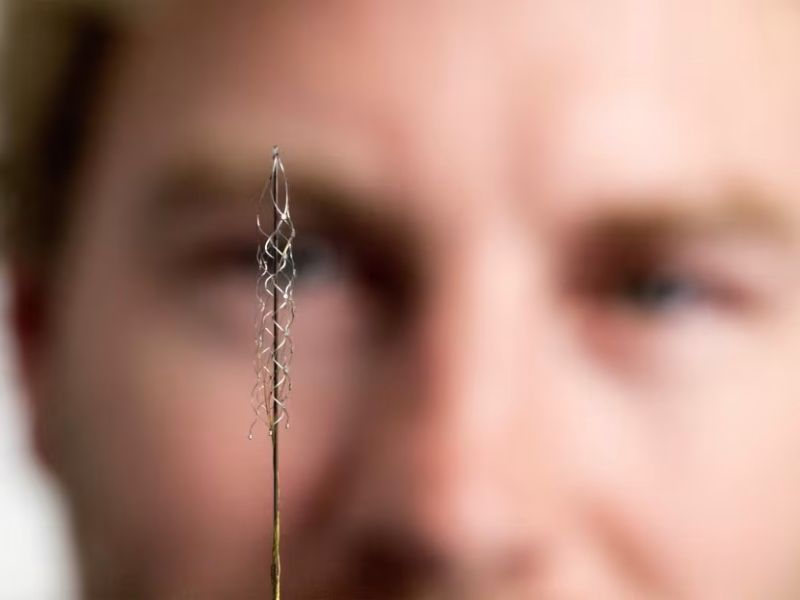
The ACMD aims to foster partnerships like that behind another implantable device – Synchron’s Stentrode™, created by Professor Thomas Oxley through a collaboration between the University of Melbourne, Royal Melbourne Hospital (RMH) and The Florey Institute of Neuroscience and Mental Health. This device makes real an idea that was once the stuff of science fiction – enabling people with paralysis to operate digital devices with their minds.
These devices required years of intensive research and testing before commercialisation was possible. Making the translation of such research into patient-focused products “faster, more connected and more scalable” is ACMD’s mission.
Australia is famous for digging things out of the ground, but we've been digging up research for decades and shipping it overseas. Think of the value add to the economy, and the benefits to patients and health, if we add that value here. Jason Lemaire, ACMD Chief Operating Officer
Rewriting the rules of cartilage repair
Not all modern health breakthroughs take the form of implantable devices. Some are built from living cells.
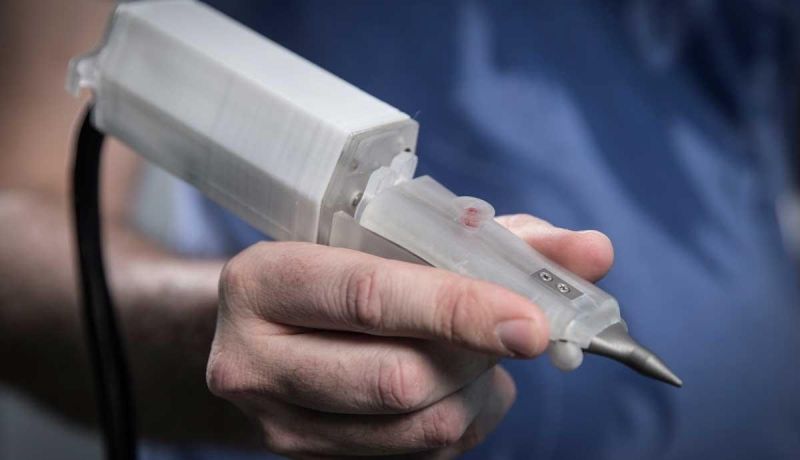
Cellular biologist Associate Professor Serena Duchi is Principal Research Fellow and the Stem Cell stream leader for Axcelda, an ACMD-based team developing a 3D bioprinting ‘pen’ designed to repair damaged knee cartilage. The device enables surgeons to mix a patient’s own stem cells with a protective gel and deliver them directly into the damaged area.
“If you use a syringe, the cells will all die because of the mechanical stress of being pushed through the needle,” she explains. “With the AxceldaPen, we can deliver the cells without compromising their viability.”
Source: Supplied
Source: Supplied
After more than a decade of pre-clinical testing, the focus is now on clearing the safety and regulatory hurdles required before the therapy can be tested in patients – work strengthened by close collaboration with regulatory consultants and consumer engagement teams. “Every time we make a step forward, we consult them,” says Asspcoate Professor Duchi. “Meeting these people in person is what makes the difference.”
For Associate Professor Duchi, seeing the work leave the lab and enter the clinic would be deeply significant.
It will be the first time that I see something I’ve worked very hard on be tested in a patient. To potentially change the entire orthopaedic field...that's what motivates me most. Associate Professor Serena Duchi
Collaboration is the future
Beyond accelerating clinical breakthroughs, ACMD is reshaping medical education. Around 60 medical students are based at the new home of the St Vincent’s Clinical School each year, getting hands-on experience in a hospital setting while surrounded by innovation, research and MedTech development.
Head of the Melbourne Medical School at the University of Melbourne, Professor Sarath Ranganathan, says this new immersive approach is essential. “For tomorrow’s doctors to be fluent in evolving technology, we must embed them in collaborative environments where innovation happens.”
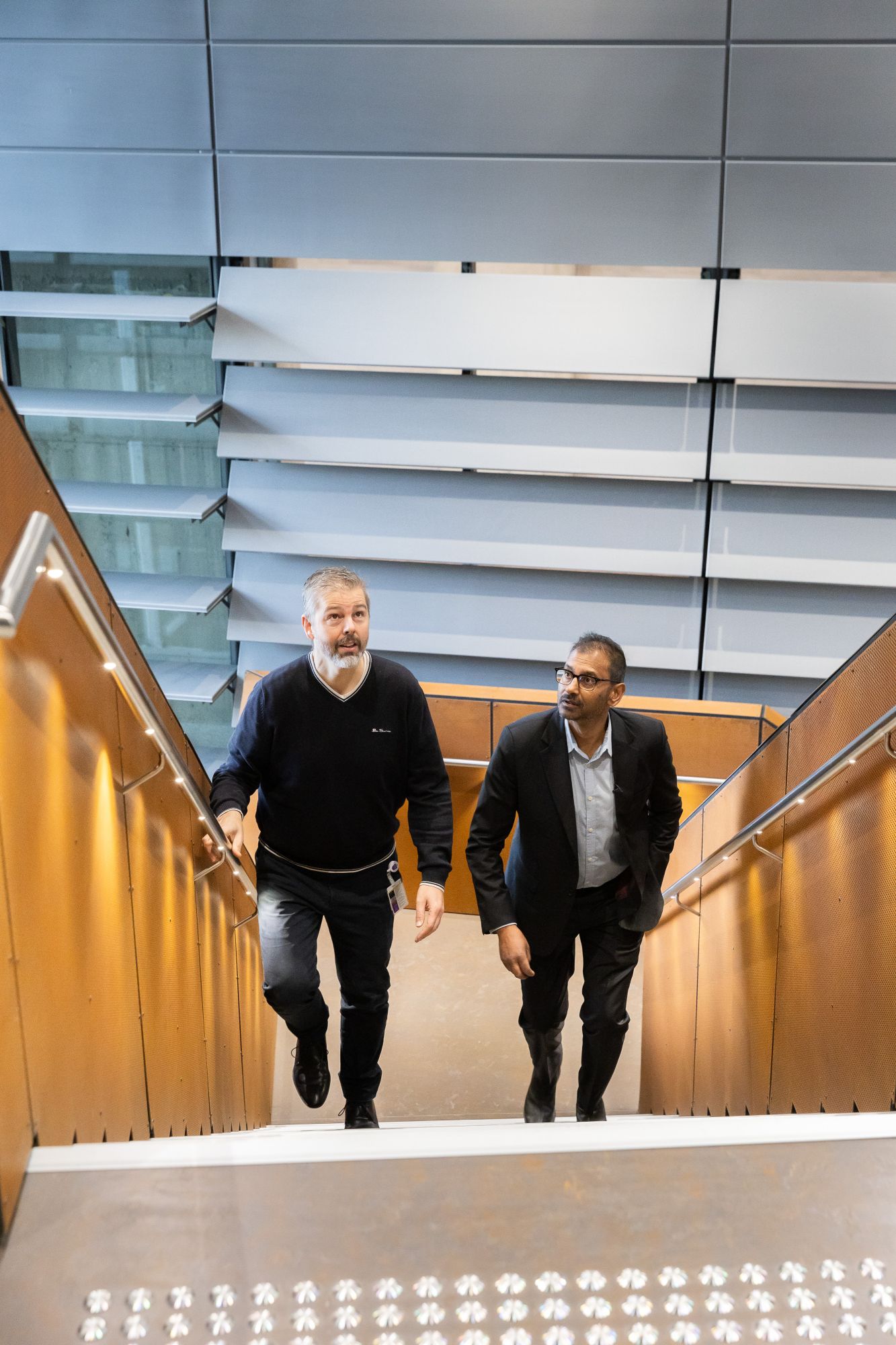
PhD student William Humble experiences that collaboration daily. For him, it means sharing resources, testing ideas and gaining fresh perspectives – whether by discussing the real-world implications of new drugs with clinicians or simply hearing another point of view.
The result, he says, is better science and better outcomes. “It pays to look up every once in a while and take in the bigger picture, because that gets us closer to the answer.”
*ACMD is a partnership between The University of Melbourne, Australian Catholic University, RMIT University, Swinburne University of Technology, Bionics Institute, St Vincent’s Institute and St Vincent’s Hospital Melbourne. acmd.org.au
Axcelda is a multi-disciplinary project developed by teams from St Vincent’s Hospital Melbourne, The University of Wollongong, The University of Melbourne and Swinburne University of Technology.
Credit: Peter Casamento