Students place fourth in international Global Health Case Competition
A University of Melbourne team reached the finals in the annual international Emory Morningside Global Health Case Competition, held in Atlanta, USA, last month.
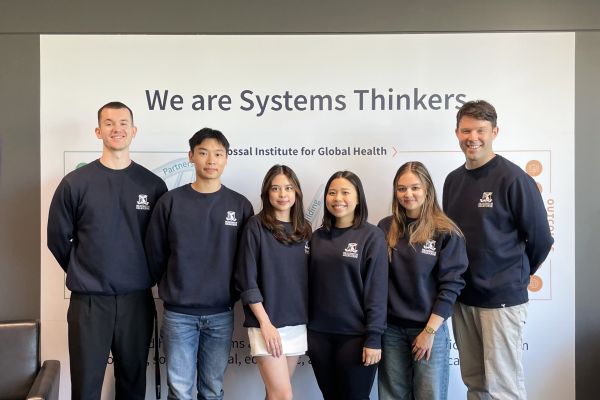
The event brings together students from around the world to tackle pressing global health challenges through interdisciplinary collaboration and innovation. Demonstrating excellent teamwork and research skills, the team placed fourth after facing tough competition from 27 university teams from around the world.
The University of Melbourne team included Jessica Andriani Putrono from the Faculty of Arts, as well as Kieran Benn, Samantha Eala, James Puckridge, Planning Saw, and Cara Siren from the Faculty of Medicine, Dentistry and Health Sciences.
“The Emory competition is a great experience for our students and provides the opportunity to travel abroad and learn from industry experts, academics and fellow students and test their skills in a highly competitive environment. It will be exciting to see how they will bring the skills they’ve honed into their learning and future careers,” said Professor Margie Danchin, Associate Dean International in the Faculty of Medicine, Dentistry and Health Sciences.
After participating in the University’s Indo-Pacific Global Health Case Competition in October last year, the highest-performing students were selected and sponsored by the faculty to travel to the prestigious Emory competition.
“Having dedicated time to work with a group of people you don’t know, on a real-life global health issue, is an invaluable experience that will benefit these students long into the future. As we face fast-evolving public health challenges, workplaces and research institutes need talented people like these to come up with solutions that are interdisciplinary, practical and culturally nuanced,” said Professor Cathy Vaughan, Director of the Nossal Institute for Global Health and Chair of Global Health at the Melbourne School of Population and Global Health.
This year, participating teams were challenged to propose a five-year program to support the Government of Kenya in accelerating efforts to eliminate cervical cancer. In particular, they were asked to develop innovative ways to strengthen cervical screening and treatment. The students had eight days to work on an executive summary showcasing their solution, with three days to create and practice their presentation for the judges.
As well as learning about the case topic, the students had the opportunity to gain insights into another country’s culture and healthcare system.
“We did a lot of research, but coming from different backgrounds and walks of life, we also needed to think about how culture and context play a significant role. The main takeaway for me was learning how to mix our multidisciplinary backgrounds and do in-depth analysis and reflection, imagining ourselves in the shoes of a Kenyan woman and how our solution could really support them or not,” said Master of Social Policy student, Jessica Andriani Putrono.
The team also had the chance to develop their skills in presenting to diverse audiences over the course of the competition. Master of Public Health student and team leader, James Puckridge, said, “The competition really exposed us to how we can better present information and ideas to different people and different cultures in a way everyone can understand.”
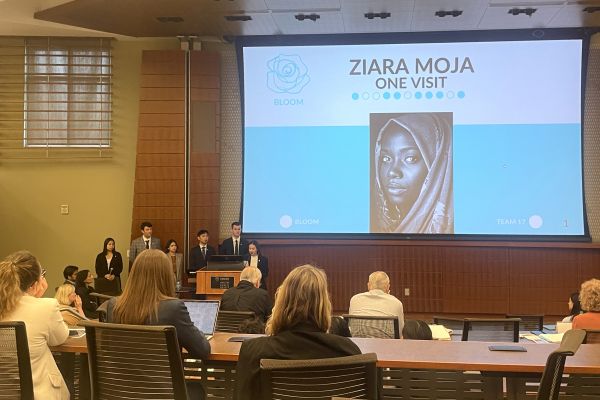
The team also recognised that taking an interdisciplinary approach is vital to tackling global health issues.
“Global health issues are complex and need to be approached from different angles,” James said. “Not only did we have to consider the health benefits of our program, but take into consideration other factors including financing, implementation and monitoring. Our team had a range of backgrounds and expertise, and each team members’ contribution was key challenging us to consider different approaches and improvements. It was a truly iterative process but was very satisfying to see our initial idea develop into a full program. I’m very proud of what we have achieved.”
The Indo-Pacific Global Health Case Competition is organised by the Faculty of Medicine, Dentistry and Health Sciences, Melbourne School of Population and Global Health and the Nossal Institute for Global Health.
University of Melbourne students, from any area of study, can register their interest now, with applications opening in July 2025 for the local competition in September 2025. Partner universities interested in participating can contact the team.