Precision Cancer Care: It's Personal
It’s been almost two decades since the first human genome was fully sequenced. "The promise of the human genome being sequenced was: precision medicine; targeting us and our individual genomes,” said Natasha Mitchell ABC Radio National presenter and the evening’s host, as she opened the panel discussion 'Precision cancer care: it's personal' Tuesday, 31 October to alumni of the Faculty of Medicine Dentistry and Health Sciences (MDHS).
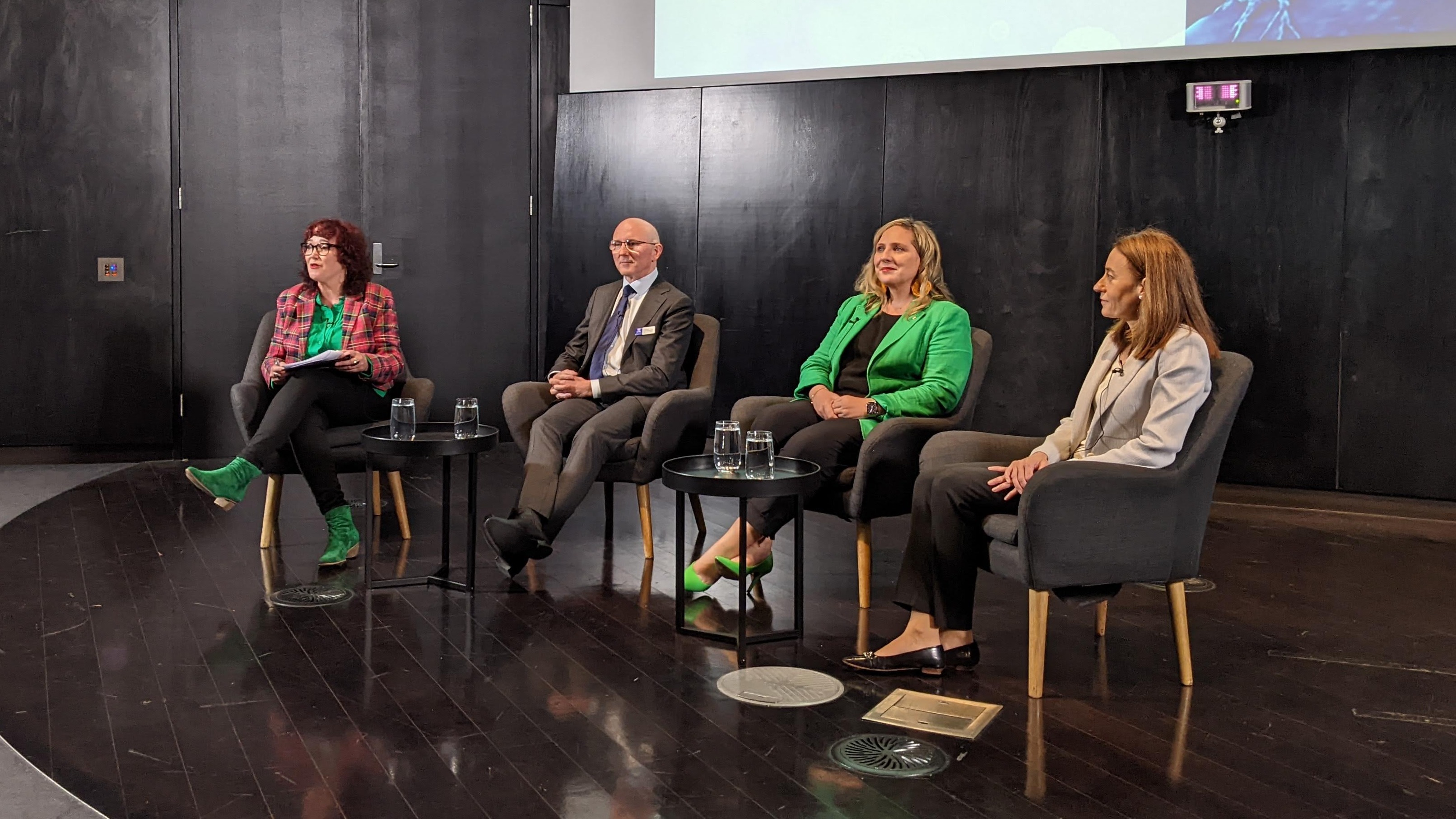 It’s been almost two decades since the first human genome was fully sequenced. "The promise of the human genome being sequenced was: precision medicine; targeting us and our individual genomes,” said Natasha Mitchell ABC Radio National presenter and the evening’s host, as she opened the panel discussion 'Precision cancer care: it's personal' Tuesday, 31 October to alumni of the Faculty of Medicine Dentistry and Health Sciences (MDHS).
“How is that promise; that possibility, played out for those of us who are cancer survivors? What will it do if we use genomics? How will it help us understand cancer, or its disease progression? How will it help us with early diagnosis? How will it help with treatment overall?” she said.
Panellists Professor Sean Grimmond, Director of the University Centre for Cancer Research, Associate Professor Misty Jenkins AO, WEHI (Walter and Eliza Hall Institute of Medical Research) and Professor Sarah-Jane Dawson, Peter MacCallum Cancer Centre, all leading cancer researchers from the Melbourne Biomedical Precinct, shared how their research in genomics, immunology and liquid biopsies has an impact on developing new targeted cancer treatments and improving cancer diagnosis and care accessibility to rural, regional and Indigenous communities.
“We’ve all been personally affected by this disease,” said Natasha Mitchell ABC Radio National presenter and the evening’s host. “We’ve had diagnoses ourselves; we’ve had loved ones who’ve had cancer; or are being treated for cancer.”
 Professor Sean Grimmond, Director of the University Centre for Cancer Research stepped the audience through how cancer research and care has changed in the past decade.
“Traditionally, the way that we’ve treated cancer is by studying cancer in large groups of patients. The precision approach is where we decode the individual’s tumour, understand the root cause, and apply specific therapies for that cancer,” Professor Grimmond said.
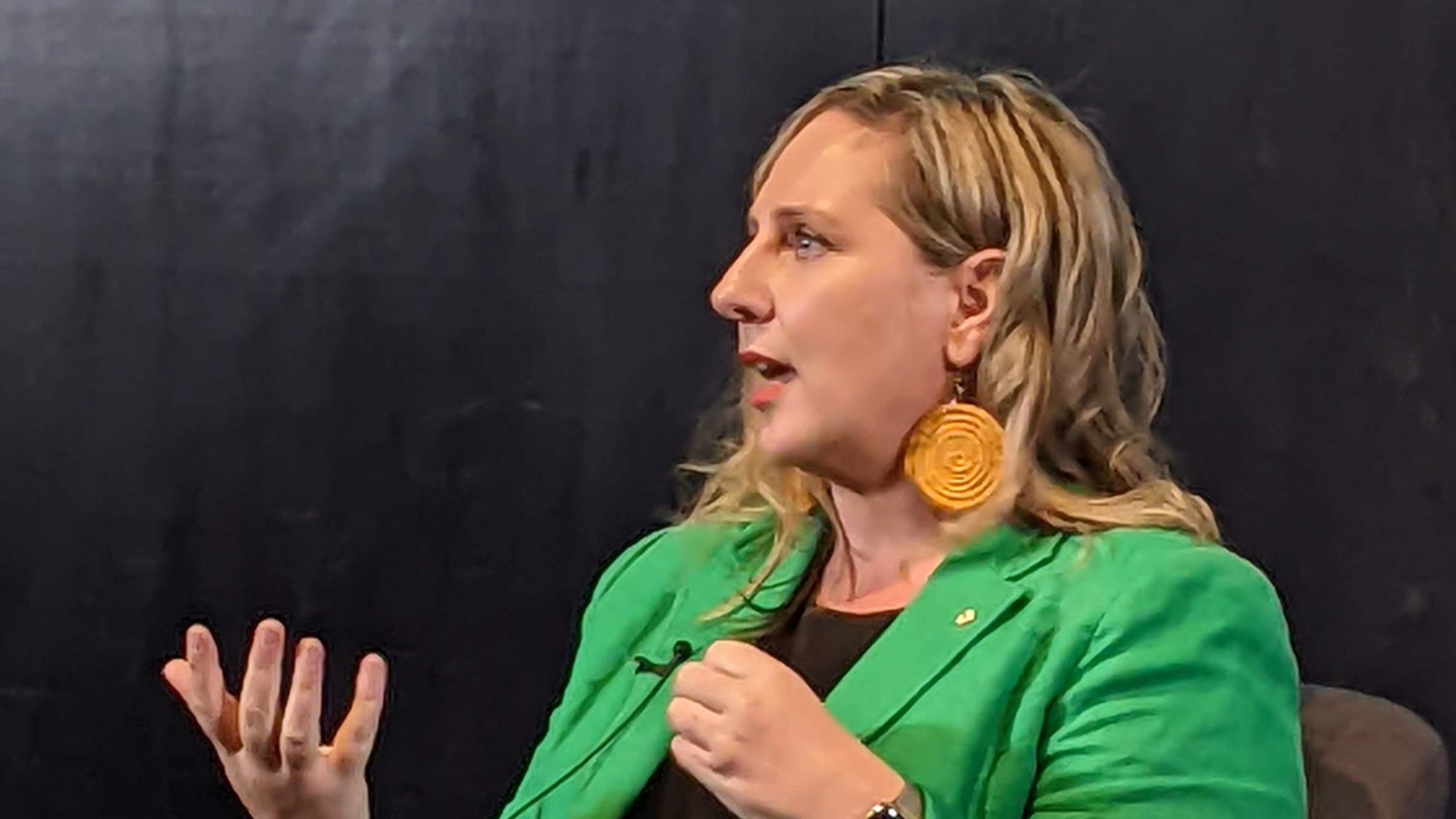
Associate Professor Misty Jenkins illustrated the reason cancer is so challenging to treat and why a personalised approach is needed.
“Cancer is not one disease. Cancer is thousands of diseases, and within those cancers you’ve got lots of different variations as well, and then the complexity of the persons genetic background and all the other factors - that’s why we need a personalised approach,” she said.
But how do you know which cancer you’re dealing with? Professor Sarah Jane Dawson, from the Peter MacCallum Cancer Centre, explained how they can detect and diagnose cancer from blood samples.
“Cancers can release small fragments of their DNA into a patient’s bloodstream. So, we can now take a blood test, identify the fragments, understand or decode the characteristics of that cancer through studying the fragments, rather than relying on a tissue biopsy,” Professor Dawson said.
Decoding is an apt metaphor, as Professor Grimmond went on to describe cancer as an ‘information disease’.
“Cancer is an information disease; it’s damage to the hard drive in your cells (the DNA). The way we solve it, is a big data problem. The ability to decode the genome and understand what was going on was a big data problem - we’ve got that pretty much licked now,” Professor Grimmond said.
So, what are the next horizons for cancer research?
“What we need to do now is aggregate more cases, look at how those cancers evolve or change over time and use that information to build better knowledge bases - so when our next patient comes along, we’re building on all of that data to make it useful for the clinical team,” he said.
Speaking about how to make live-saving therapies more accessible, Natasha Mitchell asked: “What would it take for something like liquid biopsies to be useful to GP’s and in clinics, and help a patient in a rural area access precision cancer care?”
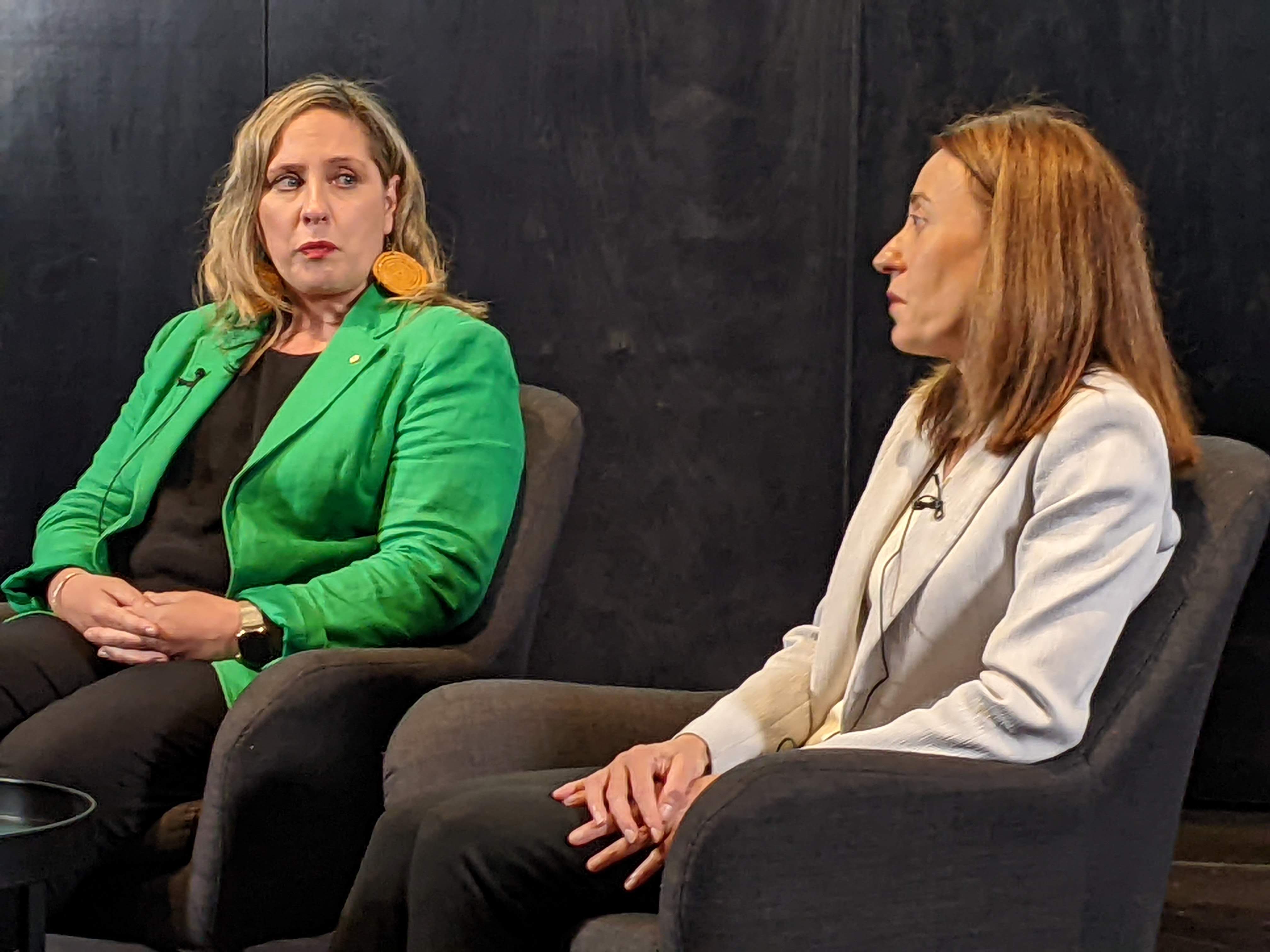 “Liquid biopsies are a good example of how we could bring precision oncology to patients living in regional areas - having a blood test is a straightforward procedure compared to a tissue biopsy, the challenge is these tests are not reimbursed in Australia,” explained Professor Dawson.
Associate Professor Misty Jenkins ended the evening on a hopeful note - that over time, as the technology improves, and costs come down, the use of precision cancer care will become equitable and possible and support the patient journey in cities and in rural and remote communities.
The Panel Discussion on Precision Cancer Care, 31 October at the Ian Potter Auditorium, Kenneth Myer Building was one of a series of events offered to alumni of the Faculty of Medicine Dentistry and Health Sciences (MDHS) ,University of Melbourne.
To connect, engage and learn more about alumni events and activities visit the MDHS Alumni website.