Phage Against the Machine: researchers make important discovery to improve our understanding of alternatives to antibiotics
Bringing back a century-old treatment for bacterial infections to combat antibiotic resistance could be closer to becoming a reality thanks to new research from the University of Melbourne and Hebrew University of Jerusalem.
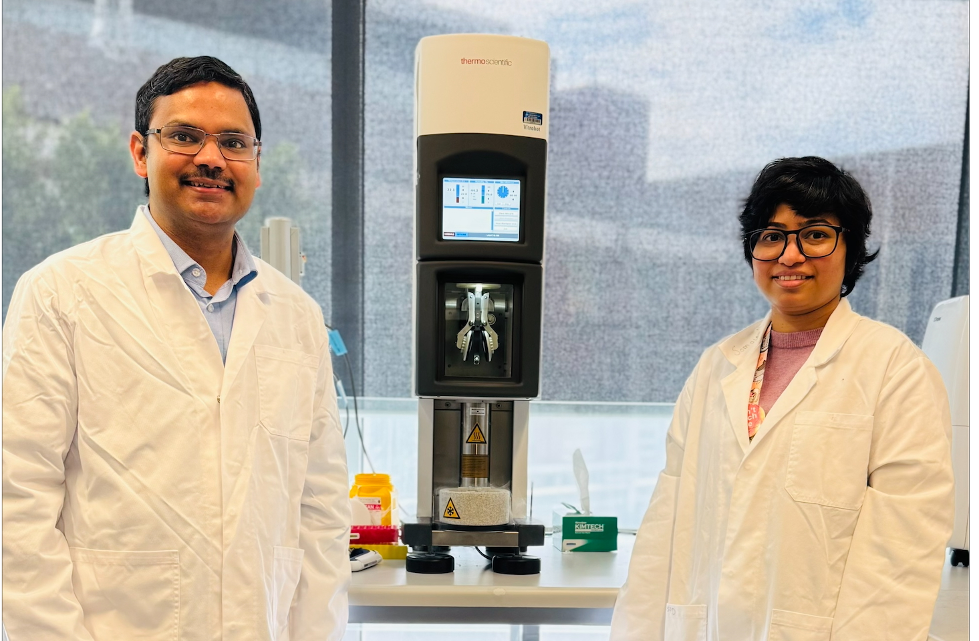
Co-lead author A/Prof Debnath Ghoshal and PhD candidate Somavally Pundalik Dalvi in their Melbourne-based lab.
In a new paper published in Cell Reports, researchers investigated how a form of bacterial treatment, using phages, could be improved through developments in our understanding of how bacteria attempt to fight off these specific microscopic agents.
Bacteriophages (also known as phages) are viruses that infect and kill bacteria.
Researchers, including University of Melbourne Associate Professor Debnath Ghosal, have discovered a mechanism that bacteria employ to fight off phages and thereby reduce their efficacy as an alternative treatment to antibiotics.
Understanding the defences that bacteria can mount against phages is an important step in refining potential treatments.
Phages were independently discovered by Frederick Twort in 1915 and Félix d’Hérelle in 1917. By the 1920s, d’Hérelle had begun using these microscopic agents to treat bacterial infections, laying the groundwork for what became known as phage therapy.
However, the discovery of penicillin by Alexander Fleming in 1928 sparked the antibiotic revolution, which soon eclipsed phage therapy and transformed modern medicine, saving millions of lives over the past century. Phage therapy was continued in the former USSR.
Yet today, the rapid rise of antibiotic resistance (also known as antimicrobial resistance or AMR) is threatening to undo past progress. Experts warn we may be approaching a post-antibiotic era, where even minor infections could once again become deadly because existing drugs no longer work.
In their study, researchers identified a bacterial protein that plays a crucial role in preventing phages from eliminating bacterial infection. This bacterial "sensor protein” is called YjbH.
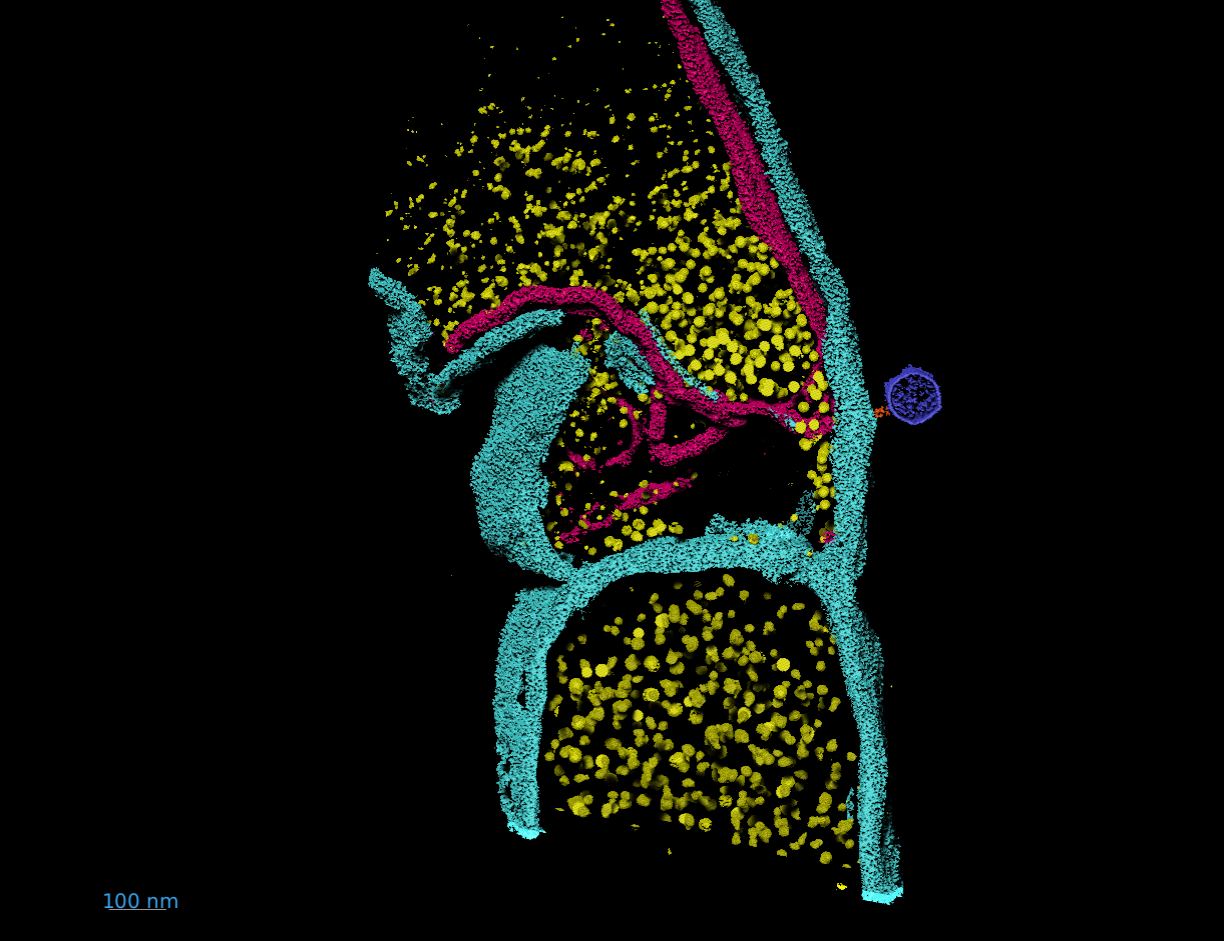
Associate Professor Ghosal said, "Our observations suggest that bacteria, despite being single-celled organisms, are capable of a dramatic escape strategy similar to those seen in higher organisms. Just as doctors may amputate an infected limb to save a life, or lizards shed their tails to evade predators, bacteria can isolate and sacrifice an infected part of themselves to survive a viral attack. This phenomenon, similar to “bacterial autotomy”, marks the first discovery of such an anti-phage defence system."
Study researchers, including PhD candidate Somavally Pundalik Dalvi, likened the actions of YjbH to containing the spread of house pests through drastic quarantine measures.
Researchers used advanced bacterial genetics, fluorescence microscopy and high-resolution cryo-electron tomography (imaging in 3D) to identify the sensor protein and reveal how this protein fends off phage attack.
Co-lead author Professor Sigal Ben-Yehuda from the Hebrew University of Jerusalem added: “We often think of viruses as overpowering their microbial hosts, but what we’ve found is that bacteria have evolved smart ways to protect themselves—essentially cutting off the infected part of the cell to save the rest.”
Now that researchers have identified this defence mechanism, they can work on different ways to neutralise it. These could include the creation of a compound to add to the phage therapy and prevent the sensor protein from identifying different phages, re-activating phage therapy against multi-drug-resistant bacterial infections.
The researchers hope that their discovery will contribute to progress on non-antibiotic treatments for infections.