Citizen science, and why it matters to Jack Alexandrovics
Jack Alexandrovics is a current PhD student, undertaking his final year at the Walter and Eliza Hall Institute (WEHI). We caught up with him to chat not about his research, but about a side project that has him bringing science to the people.
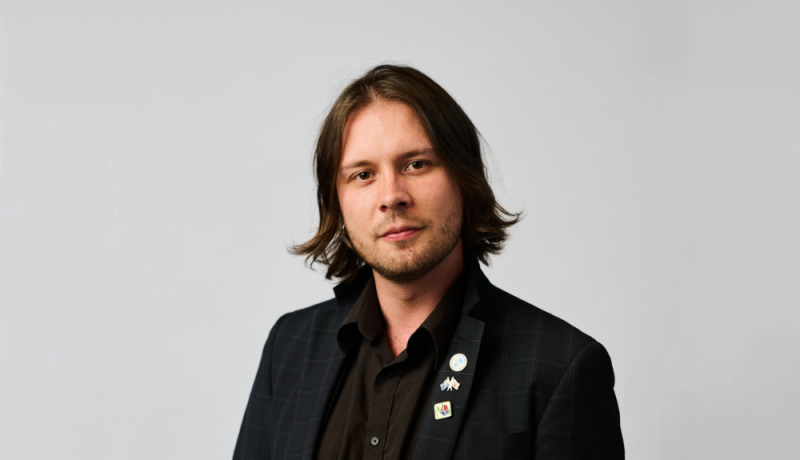
Jack Alexandrovics is a final-year PhD student at WEHI who wants more people to understand the basics of science - and he's doing something about it. Image supplied.
Technically, Jack is a structural biochemist, but he says he’s more of a “generalist in attitude”.
Outside of the lab, where he’s working on fundamental research into how protein recycling in cells works, he’s currently spending a lot of time preparing for the third iteration of his Citizens of Science program.
Citizens of Science is a free mentor and education program based around biological and biomedical science literacy that brings together PhD researchers and people from the general public who are interested in learning about science. The program was developed within WEHI and is now supported by Graduate Research in the Faculty of Medicine, Dentistry and Health Sciences at the University of Melbourne. The goal is to expand further across the Parkville health and biomedical precinct.
The first part of the program comprises online interactive learning modules – what Jack calls “a crash course in biomedical science”.
Jack, along with recently graduated student Kaiseal Sarson-Lawrence, designed these biomedical science literacy modules themselves.
“It basically teaches you the baseline level of knowledge that we think everyone should have – kind of like how everyone should have a certain understanding of a particular language, or writing, or mathematics, to be able to function in the world,” he says.

Understanding how DNA works and its transition from RNA into protein is one of the Citizens of Science literacy goals. Image supplied.
The second part is a mentorship component, where volunteer PhD student mentors are linked up with mentees from the general public to work on a particular research project.
But the program isn’t designed for your typical 'A-grade' students; it’s specifically targeted at people who may not have had any education in science before.
“We’re not going to school kids or university students,” says Jack. “Our goal is really to attract people who have kind of missed out, or have been forgotten by the system.”
Some of the meetings are conducted online, but the mentees are also encouraged to come into the WEHI laboratory for a tour of the facility, and to see some science experiments in progress.
At the end of the six-week program, the mentees come together for a final, celebratory event in which they present the research that they’ve been working on – and learn from their fellow citizen scientists.
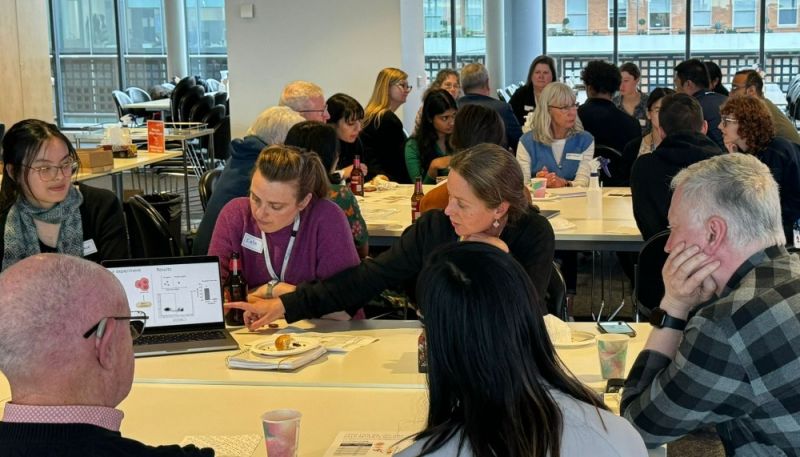
At the end of the program, mentees present the work of their PhD mentors in a round-table format. Image supplied.
The idea is that, having completed the program, the mentees will have a more nuanced perspective the next time they hear something science-related on the news.
“When they hear something about a disease or a new discovery, they’ll be able to piece that together and what it might mean. They've seen how science is actually done, and what’s necessary and why it’s challenging. I kind of disagree with the idea of just trusting experts. Science has become so abstract, and people are just expected to have trust in them without having any understanding of what they’re talking about. But if people are, for example, going to vote on things or make decisions, then they should understand it to some degree – so that was a big motivation for this project,” he says.
What started as just an idea in 2020 turned into a small pilot in 2021, and expanded in 2023 to a program with 10 mentors and 20 mentees.
The 2024 program, which will start in September, is set to be the most comprehensive yet, and will include mentors from across Melbourne’s biomedical precinct, including WEHI, the Peter MacCallum Cancer Centre, the Florey Institute, the Doherty Institute, Bio21 and the Murdoch Children’s Research Institute.
“We’ve had a lot of previous mentors who want to come back and be part of the program again,” says Jack, indicating that the mentors are getting as much out of the program as the citizens.
So far, 50 PhD researchers have expressed interest in being mentors – a scale which is unfortunately not achievable this year given the size of the organisational team.
But given that Citizens of Science has gone from strength to strength, it may not be long before it has developed into a much bigger program.
Jack’s passion for science has been lifelong – not just an interest in it, but a deep belief in what it can achieve.
“I find a lot of meaning in the search for knowledge and truths in reality – to be able to understand the world is one of the most important things one can do. But from a more practical sense, science is one of the things that has allowed us to have achieve what we have in existence – for good and for bad. And we can’t achieve all this stuff with science if people don’t understand what’s going on. This is what motivates me – it’s the big picture.”
Interested in being a citizen of science, or have family/friends who might like to take part? Email scienceofcitizens@gmail.com to register your interest in advance!
You can follow Citizens of Science on LinkedIn, Facebook and Instagram.