Associate Professor Stephanie Best on why collaboration is key to the future of healthcare
Associate Professor Stephanie Best is a research leader in the implementation science space. We caught up with her to understand the importance of collaborations like the CAPR Project and the ACMD for the future of healthcare in Australia.

Associate Professor Stephanie Best is an implementation researcher using implementation science methods to investigate the translation of complex health interventions into routine clinical practice. Image supplied.
Stephanie wasn’t always interested in implementation science, getting her start as a chartered physiotherapist in the UK. But as she progressed in her career from ‘doing to leading’ she observed a curious trend in the uptake of new clinical strategies.
“The clinicians I was working with were all very focused on getting the best for their patients,” Stephanie said.
“But when there was a new way of doing something, there wasn’t always a tendency to put it straight into practice. So, naturally, I did a PhD to understand why!”
Her investigations revealed a disconnect between the implementation of new methodologies, practical applications for clinicians and patient outcomes.
This study of methods and approaches to aid the uptake and integration of research findings is known as implementation science, the aim of which is to improve the quality of health, education and social services.
“Implementation science isn’t about telling people what they need to be doing. Instead, we use theories, models and frameworks to study the process of putting evidence-based methods into everyday practice and, most importantly, to understand why these methods do or don’t work.”
Her passion for the intersection of human behaviour and clinical implementation led Stephanie to be involved in a number of implementation science collaborations, all of which emphasised the value of diverse experiences and perspectives across a range of disciplines.
“I commonly work with people who are content experts in their area – genomics, emergency department procedures, cancer care – which are not my areas of clinical expertise, but we combine our clinical and implementation science knowledge and experience to better understand and address the problem at hand.”
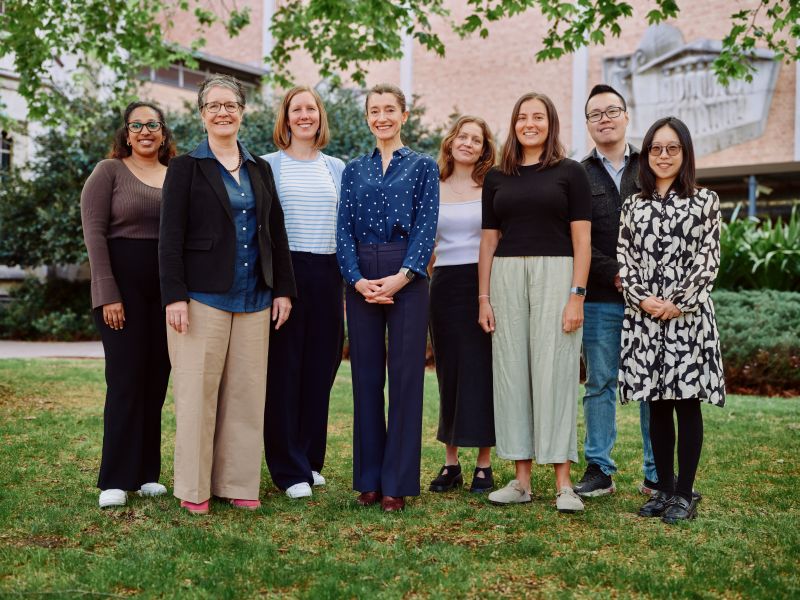
Stephanie leads the Melbourne Research Group at the University of Melbourne School of Health Sciences. Image supplied.
One of Stephanie’s recent collaborations, the Consumer Actionable Pathology Reports (CAPR) Project, received over $570,000 in funding by the Department of Health and Aged Care’s Quality Use of Diagnostics, Therapeutics and Pathology Program.
Standard pathology reports are highly technical and jargon-heavy documents designed for clinicians, not patients. But when making informed healthcare decisions around disease diagnosis, prognosis and management it’s crucial that patients can understand their results.
The project aims to develop an electronic tool that translates complex pathology results into a format that is simple for clinicians to share and easy for patients to comprehend, empowering them to make informed treatment decisions.
Stephanie’s expertise comes into designing and implementing this new tool at all levels. “We don’t want to implement a new method for the sake of trying something new. It’s about getting a real understanding of the problem to create something that people actually want and use.”
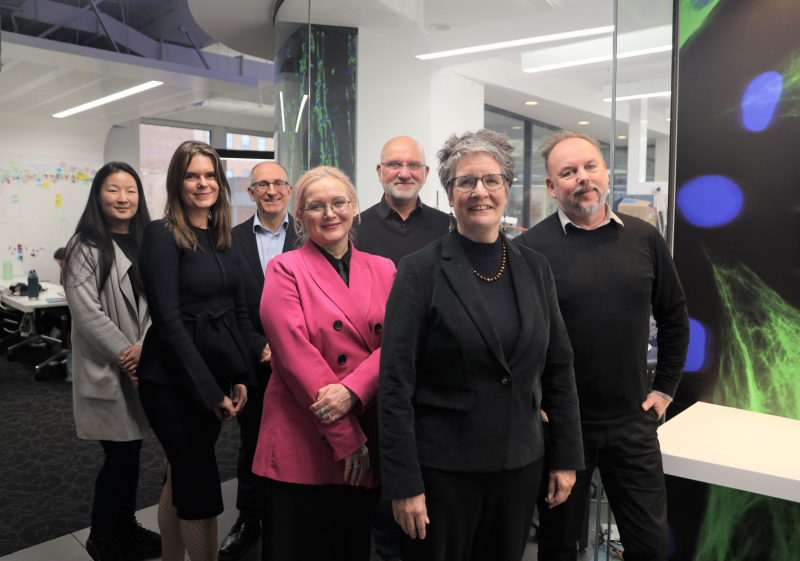
The minds behind the CAPR Project aiming to develop accessible pathology reports for clinicians and patient outcomes. Image supplied.
A consortium of four organisations is developing this new approach, including St Vincent’s Hospital Melbourne, the University of Melbourne, Swinburne University of Technology and the Aikenhead Centre for Medical Discovery (ACMD).
The project was formed as a direct result of the ACMD-Challenge Program run by the ACMD, a collaborative biomedical engineering centre accelerating the translation and commercialisation of research.
Scheduled to open in 2025, the ACMD aims to foster further collaborations like the CAPR Project, bringing together clinicians, major universities, leading research institutions, and innovative healthcare companies to drive the transformation of the healthcare system.
As the premier university partner, the University of Melbourne is working with the ACMD to deliver cross disciplinary teaching, learning and research opportunities for students and researchers.
Stephanie is hopeful that cross-disciplinary studies like the CAPR Project and collaborative hubs like the ACMD present a bright outlook for the future of health solutions.
“In implementation science there’s nothing you can, or want to, do on your own. We need to collaborate if we’re really serious about addressing the complexity of the challenges facing our healthcare system.”
Interested in learning more about implementation science? Explore the new Specialist Certificate in Implementation Science created in collaboration with Stephanie.
You can follow the ACMD on LinkedIn, join the mailing list or visit the website to learn more.