New specialist stuttering clinic trials holistic approach to speech therapy
A new University of Melbourne clinic is testing a different approach to supporting stuttering in young people. It combines speech therapy with psychological support to address both communication skills and the broader social and mental health impacts of stuttering.
Dr Sarah Horton, a Research Fellow in the Department of Audiology and Speech Pathology, a speech pathologist and a person who stutters, is leading the two-year trial. The clinic will offer intensive group programs and after-school drop-in sessions for teenagers and young adults alongside one-to-one support, all based at MTHC Speech Pathology.
"We're looking at speech strategies and speech skills...while also addressing the thoughts and feelings that come along with stuttering," Dr Horton said.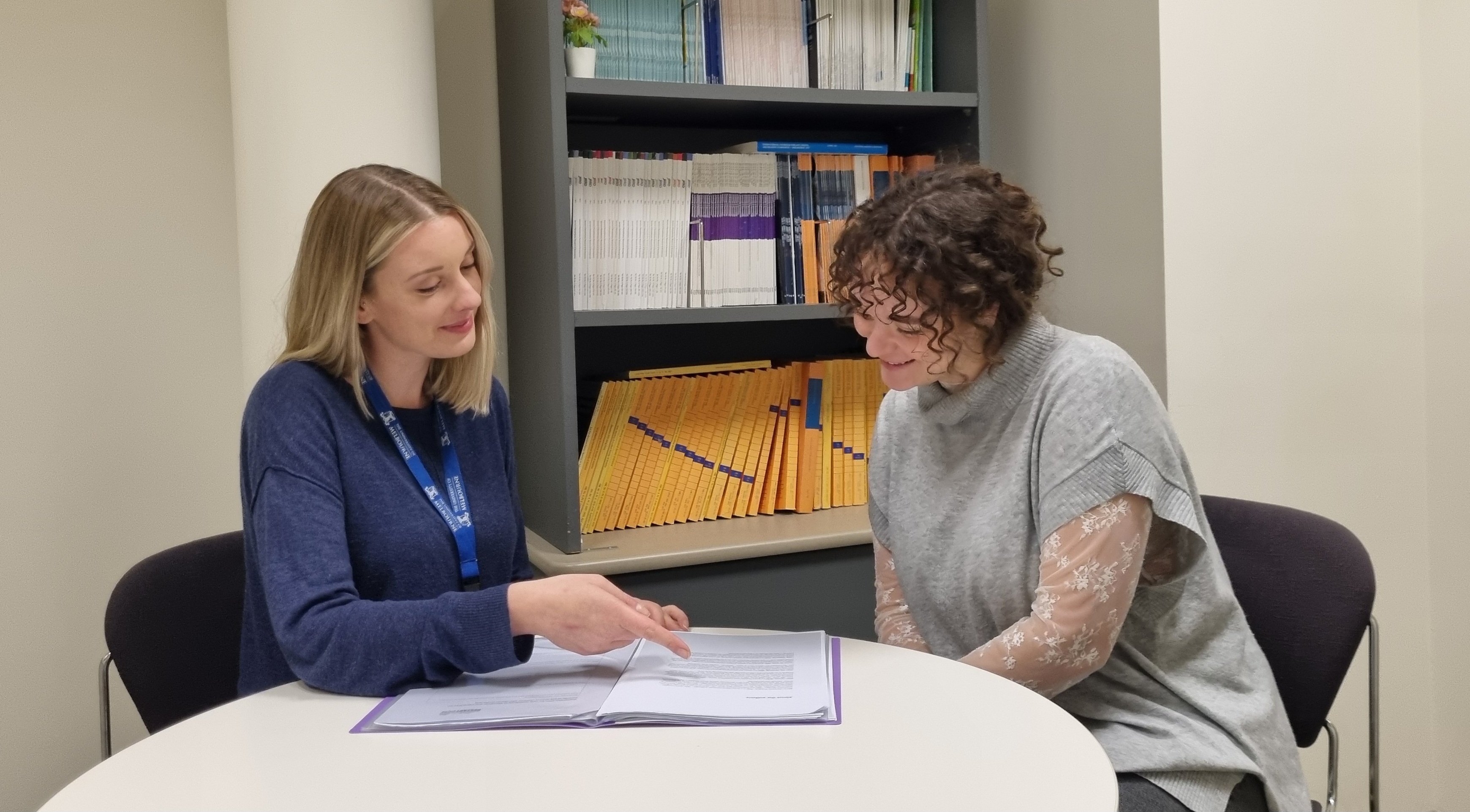 Dr Sarah Horton and colleague look at a document together.
Working with psychologist Dean Smith, who stutters and has 30 years of clinical experience, the team will prioritise peer support and psychosocial principles alongside traditional speech strategies and techniques.
Stuttering affects up to 10 percent of young children. While it resolves naturally in many children or with early speech pathology intervention, stuttering can become entrenched, persisting in approximately one percent of adults worldwide. It is characterised by repeated speech sounds, words or syllables, often interrupted by hesitations or ‘blocks’.
The trial is funded by a generous gift from the Channel Foundation. The field of speech pathology is increasingly adopting psychosocial approaches alongside traditional methods. While established treatments remain available for younger children, there is currently limited evidence for teenagers and young adults. This model prioritises individual choice and communication confidence that translates to the real world.
"The clinical view of stuttering is changing for the better, and we should be training the next generation about the importance of psychosocial approaches," said Professor Angela Morgan, Director of the NHMRC Centre of Research Excellence in Speech and Language at the University of Melbourne.
"We are excited to continue our relationship with Channel Foundation Director Philip Myer, supporting a new generation of speech pathologists to lead this exciting approach, which will hopefully become a national model if successful."
 An adult and a teenager use hand signals and a picture card to communicate in a one to one session. iStock image.
For Philip Myer, attending a group stuttering program at Royal Melbourne Hospital in his early twenties, led by speech pathologist Roslyn Franck, was life changing. Funding the trial is about securing long-term outcomes and speech management skills for the next generation.
"When you empower a young person to communicate with confidence, you change the entire trajectory of their life," Mr Myer said.
"From my personal experience, I strongly believe that the dynamics of group therapy can motivate stutterers to learn the skills necessary to manage their speech. For the Channel Foundation, funding this trial is about far more than short-term therapy; it is about creating a lasting impact that gives young people who stutter the resilience, self-belief, and support they need to thrive well into the future".