Global platform shows carbon footprint of everyday medical equipment
The University of Melbourne’s Healthcare Carbon Lab has played a key role in launching a global platform which aims to improve sustainability in healthcare by providing comprehensive carbon analytics of everyday medical equipment.
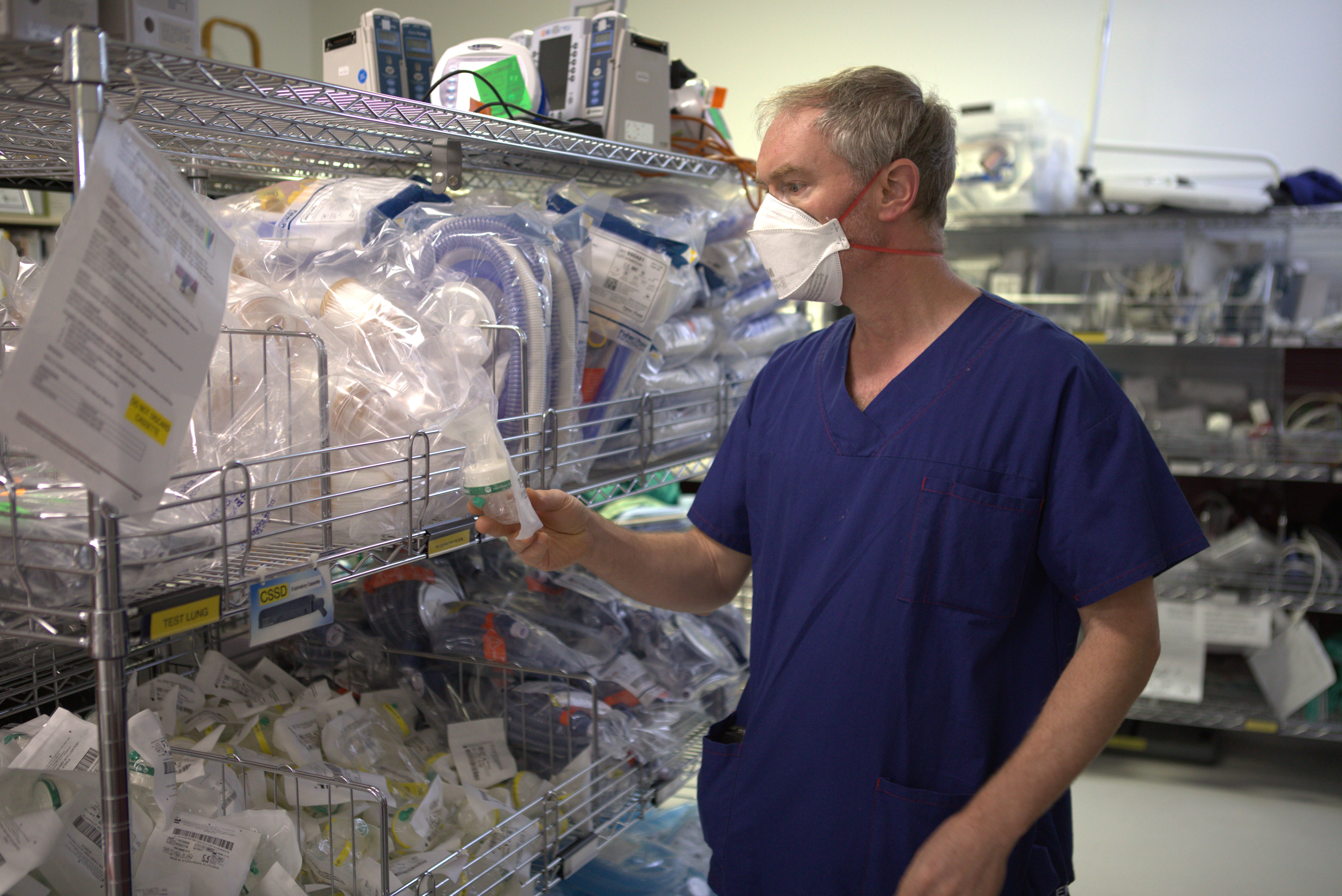
The Lancet MedZero platform, was developed by an international academic consortium that includes experts from the University of Melbourne and Western Health. The platform has been established to help hospitals and clinics save money, reduce waste, improve patient care, and tackle climate change.
Every year 15 billion surgical gloves; 129 billion surgical masks and 16 billion syringes are used and discarded in healthcare globally. If healthcare was a country, it would be the fifth largest carbon emitter on the planet – with CO2 emissions in the sector higher than all of aviation and shipping combined. There is a financial, but also a carbon and environmental cost to extraction, manufacture, shipment, use and disposal of these medical items, but it’s been difficult to measure.
The global, free, open-access platform calculates the carbon emissions associated with medical instruments, devices and drugs and is built to inform decisions at every level of the health system.
The Healthcare Carbon Lab team in the Faculty of Medicine, Dentistry and Health Sciences led by Professor Forbes McGain, Associate Dean Healthcare Sustainability and ICU Director Footscray Hospital, Western Health, in partnership with Western Health teams, provided gold-standard lifecycle analysis data for approximately 1,200 medical items that underpins the Lancet MedZero platform.
Read Pursuit piece about the work of the Healthcare Carbon Lab here.
“This is the first web platform to provide information about the sustainability of individual healthcare products. Previously, clinicians and researchers had to trawl through published papers to find relevant information, and even then, often have not been able to find data they needed,” Professor McGain said.
“We are proud of our engagement and find it humbling to know that the data we've obtained is now out in the Lancet MedZero, free for all to use, and aiming to make global healthcare high-value, low-carbon, low waste.”
![[This images is a screenshot of the new Lancet MedZero website.]](https://mdhs.unimelb.edu.au/__data/assets/image/0009/5565609/The-Lancet-Screenshot-Website.png "[This images is a screenshot of the new Lancet MedZero website.]")
Western Health led the 'medical devices' part of Lancet MedZero, and has made changes as a result. Based on life cycle analysis data, Western Health switched from using disposable to reusable gowns and converted from intravenous to oral medications to drive down carbon emissions.
“We have taken devices from Western Health to the Healthcare Carbon Lab at the University of Melbourne, weighed, noted the location of manufacture, and run them under an infrared spectroscope to discover the devices' composition to measure quite closely the carbon footprint of a device. This is a journey that is really only beginning for we have thousands of devices as well as pharmaceuticals to examine for the future,” he said.
Professor McGain said that the Lancet MedZero platform provides healthcare carbon footprint metrics at scale. With over 1,500 products examined and tailored to where in the world you are based, be it a hospital in Brazil, or in Footscray, Australia, it also takes into account how you are disposing of products, whether in landfill, or by incineration; and for devices, whether the device is reusable, or single-use.
“Such data are a major step forward for clinicians, researchers, healthcare procurement officers, and healthcare managers to know the carbon footprint of their daily, through to yearly activities. With such knowledge comes an ability to focus upon 'the big-ticket items' to make healthcare more sustainable- financially and environmentally,” Professor McGain said.