Could chewing gum stop a sexually transmitted infection? University of Melbourne researchers think so
Something as simple as medicated chewing gum could be the answer to preventing people from getting infected with a sexually transmitted infection (STI), according to researchers at the University of Melbourne’s Faculty of Medicine, Dentistry and Health Sciences.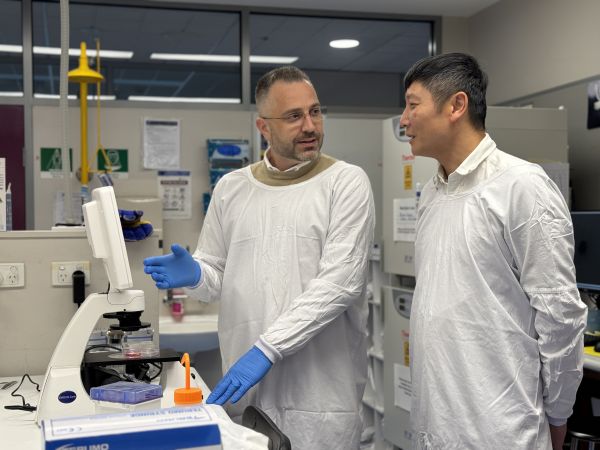
(L-R): Associate Professor Antonio Celentano and Associate Professor Fabian Kong.
Oral gonorrhoea is an infection that most people don’t know they have, and it’s on the rise. Infections can be passed onto women through oral sex and cause reproductive issue, such as infertility.
The number of gonorrhoea cases has doubled in the past decade, with more than 44,210 diagnoses in Australia last year, according to the Kirby Institute.
Treating oral gonorrhoea has become more challenging as the bacteria have developed antibiotic resistance, with most treatment failures occurring in the mouth.
Condoms and mouthwashes have also proven ineffective, so alternative methods are needed to prevent and treat the infection.
One innovative idea being explored is whether an effective and safe compound can be put into a chewing gum to prevent transmission during oral sex.
Until now, it’s been unclear why current treatments have been unsuccessful, as it wasn’t known how gonorrhoea behaves in the mouth.
However, a new world-first 2D laboratory model, which accurately mimics oral gonorrhoea with human oral cells in a petri dish, could provide a solution, showing how gonorrhoea infects the mouth and responds to treatments.
The team behind the breakthrough hopes it will unlock new approaches, from better-targeted antibiotics to simpler ways to prevent infection.
Associate Professor Fabian Kong, Deputy Head of the University of Melbourne’s Sexual Health Unit, is leading this project. He said oral gonorrhoea is a growing public health concern.
“The number of new infections and treatment failures are rising worldwide, driven by drug-resistance. The mouth is now recognised as a key site where resistance emerges and spreads. Until now, we’ve never had a reliable way to study how these infections behave in the mouth.”
“Our 2D laboratory model breakthrough not only sheds light on why existing treatments are ineffective, but also paves the way for innovative solutions, ranging from more precisely targeted antibiotics to simple interventions, like medicated chewing gum, that could help prevent infection.”
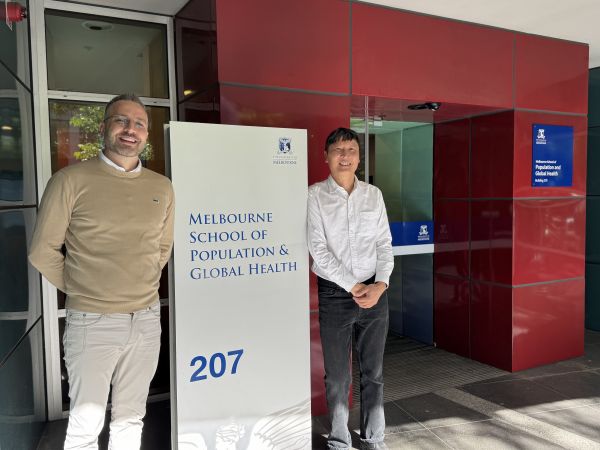
(L-R): Associate Professor Antonio Celentano and Associate Professor Fabian Kong.
Associate Professor Antonio Celentano, Co-Lab Head of Oral Medicine and Oral Cancer at the Melbourne Dental School, leads the development of the 2D model. He said that by understanding the bacteria’s behaviour in the mouth, new remedies such as the medicated chewing gum idea, could be developed quicker, cheaper, and more ethically, meaning no testing on humans or animals.
The new 2D laboratory model, developed and housed at the University of Melbourne’s Dental School, is a collaboration between the World Health Organization, industry partners Wintermute Biomedical, and the University of Melbourne.
The project received senior technical oversight from Rita Paolini, Team Leader – Research, with substantial experimental support from Caroline Moore, Senior Technical Officer, and Dr Syed Ameer Hamza, Research Fellow.
The Melbourne Dental School combined expertise, together with the valuable clinical consultation provided by Associate Professor Fabian Kong, was instrumental in ensuring the model’s successful establishment and clinical relevance.