Celebrating 21 years of the Bio21 Institute
More than 70 guests gathered in the University’s Bio21 Molecular Science & Biotechnology Institute (Bio21 Institute) atrium on Friday evening to celebrate 21 years of discovery and innovation that has helped position Victoria and Australia as a leading destination for life sciences and biotechnology research.
The sit-down dinner was hosted by master of ceremonies, University of Melbourne Pro Vice-Chancellor (Research Collaboration) Professor Alastair Sloan, and opened with a keynote speech from University of Melbourne Interim Vice-Chancellor Professor Glyn Davis.
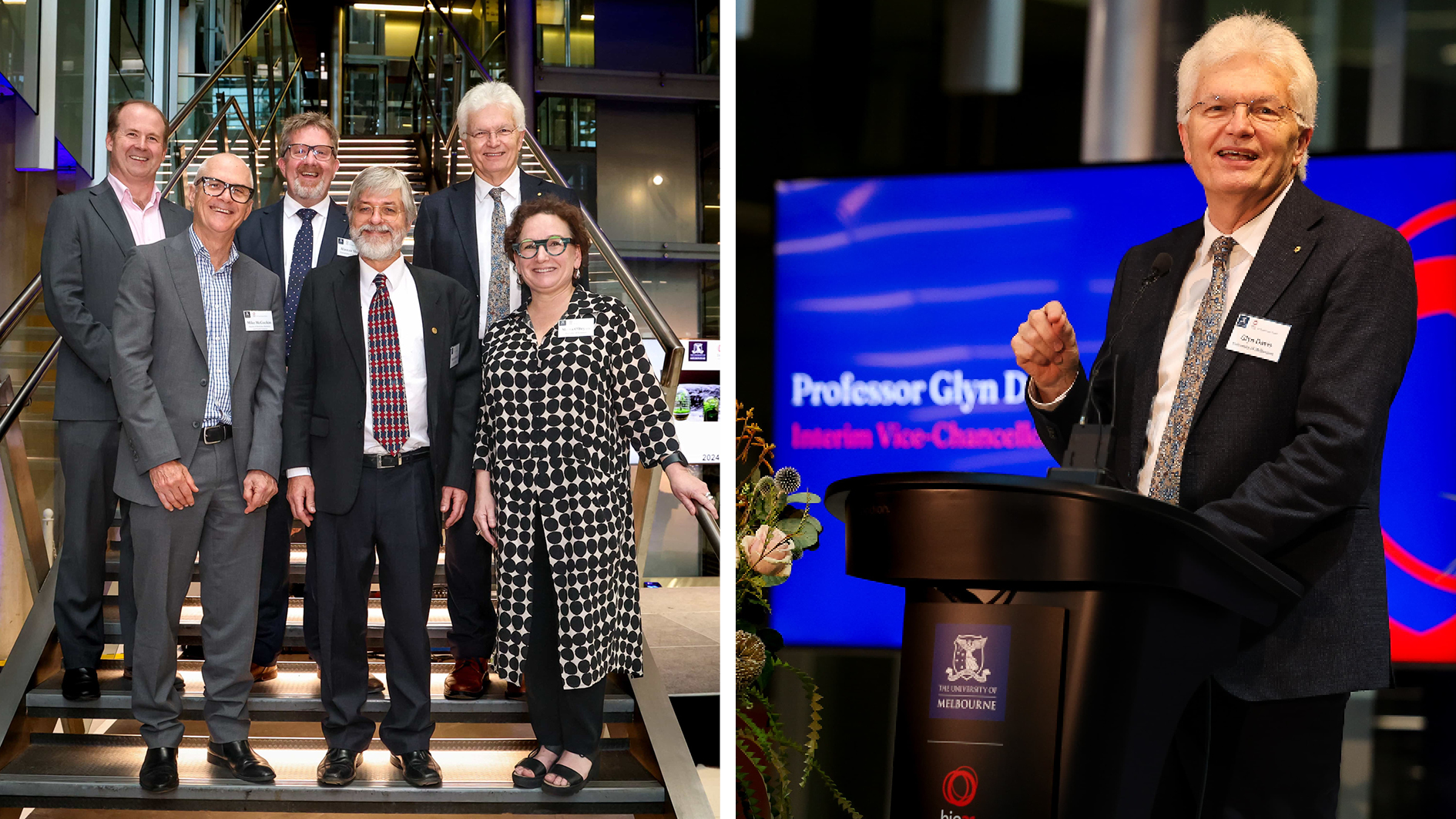
Left: Celebrating the Bio21 Institute's 21st anniversary were (back row, from left) Deputy Vice-Chancellor (Research) Professor Mark Cassidy, Pro Vice-Chancellor (Research Collaboration) Professor Alastair Sloan, Interim Vice-Chancellor Professor Glyn Davis, and (front row, from left) Acting Dean of Medicine, Dentistry and Health Sciences Professor Mike McGuckin, Bio21 Institute Director Professor Michael Parker, and Dean of Science Professor Moira O'Bryan. Right: Interim Vice-Chancellor Professor Glyn Davis during his speech.
“With its multidisciplinary capacity, Bio21 is an example of how to create a collaborative culture in the workplace, with people from tenant companies, university faculties, affiliated institutes and students drawn together, formally and serendipitously, through sharing spaces, holding events, working on projects together and – that key ingredient in so much innovation – informal fraternising,” Professor Davis said.
“At only 21, Bio21 is already a pioneer in the kind of collaboration and innovation that is increasingly being taken up, elsewhere in this health and research precinct and at similar locations in Melbourne and in cities worldwide.”
The Bio21 Institute was established in 2005 with the simple idea that ground-breaking scientific discoveries and inventions often happen through the interaction of distinct fields.
Rather than working in academic and faculty silos, it was the University’s first cross-faculty STEM institute, bringing together researchers from three faculties – Science, Medicine, Dentistry and Health Sciences, and Engineering and Information Technology – under one roof to collaborate and co-create with other leading research entities.
Today, more than 800 staff across more than 40 academic research groups use molecular approaches and innovative biotechnology to solve scientific problems, improve human and environmental health and advance knowledge.
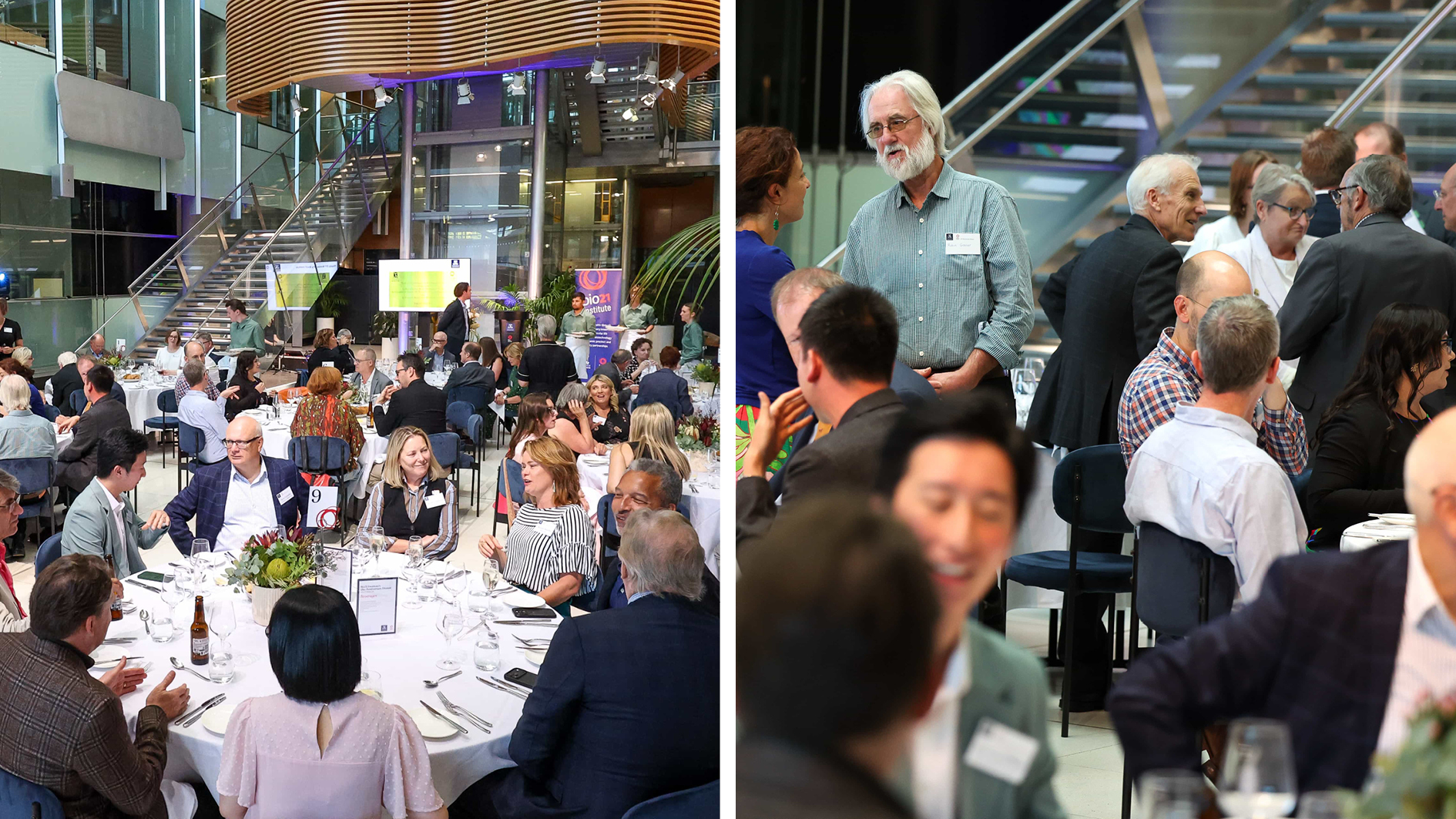
Scenes from the Bio21 anniversary event in the Institute's atrium.
Other speeches throughout the evening included Deputy Vice-Chancellor (Research) Professor Mark Cassidy, CSL Head of Global Research Innovation Dr Marthe D'Ombrain and Bio21 Institute Associate Director (Engagement) Professor Sally Gras.
In his closing speech, Bio21 Institute Director Professor Michael Parker described what the next 21 years will look like.
“The next 21 years will include more scientific discoveries, more innovation, more translation, more highly trained students enable to find solutions to pressing health and environmental problems,” Professor Parker said.
“We will continue to attract world class talent, foster close interactions with the public, and remain a key member of the biomedical precinct, increasing our ties with the hospitals.”