The Shanghai-Melbourne Research Training Group was founded in 2020 to develop the next generation of researchers across China and Australia.
Working collaboratively in joint supervision of PhD candidates based at each university, senior Shanghai Jiao Tong and University of Melbourne researchers support them to pursue innovative solutions to intractable health and medical challenges, and establish their place within a growing network of academics with experience in the research landscape in both countries.
Combining expertise and resources to combat global health challenges
The University of Melbourne’s Faculty of Medicine, Dentistry and Health Sciences is proud to partner with Shanghai Jiao Tong University, one of China’s oldest and most prestigious research universities.
The importance of this dynamic partnership has been evidenced by the crucial financial support received from international funding bodies since 2020, including from the National Natural Science Foundation of China to further their groundbreaking research and solutions to global health problems.
Importantly, the Shanghai-Melbourne Research Training Group cross-cultural research collaboration gives joint Shanghai Jiao Tong and University of Melbourne PhD candidates access to the combined resources and facilities the two universities have to offer.
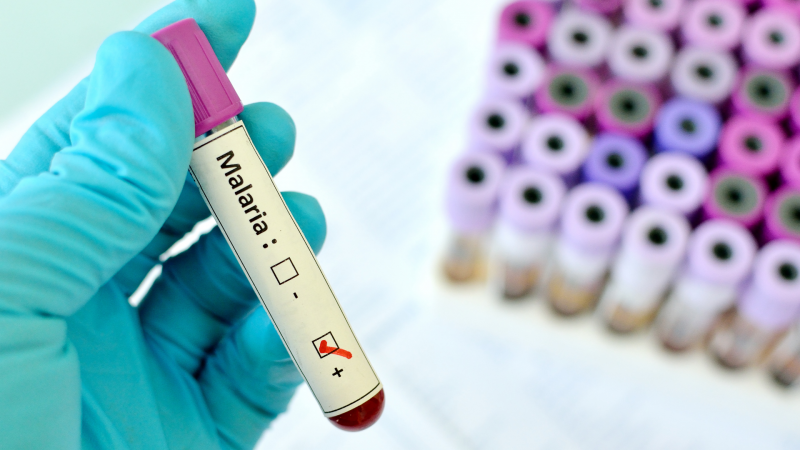
Building on Chinese experience to eliminate malaria in the Asia-Pacific
Researchers and PhD candidates within the Shanghai-Melbourne Research Training Group, led by Prof Ivo Muller (Melbourne) and Prof Xiao-Nong Zhou (Shanghai), are working on a signature project to identify the key reasons behind the successful elimination of malaria in China where, despite importations from neighbouring endemic countries, no new incidents of malaria have been reported since 2017.
By identifying the critical interventions that have led to this successful elimination in China, and integrating them into existing mathematical models of malaria transmission, the research collaborators from the universities of Melbourne and Shanghai are combining in-depth epidemiological analysis with advanced mathematical models to see how similar interventions could help other Asia-Pacific countries – such as Cambodia, Indonesia and the Solomon Islands – to overcome the final barriers to malaria elimination.
Using modelling to work towards elimination of malaria worldwide
In the next phase of their investigation, Prof Muller and Prof Nong’s group will assess the effectiveness of a program widely considered influential in China’s successful elimination of malaria from a high base of 30 million cases 70 years ago.
Known as ‘1-3-7’, this malaria surveillance and response strategy requires health facilities to report a case of malaria within one day, followed up by health authorities within three days and within seven days, taking appropriate action to combat the spread of the disease.
After reviewing and analysing historical databases including case data, data on local interventions, molecular and serological data collected in the Chinese province of Yunnan from 2005–2010 and data collected from 2011–2016 following launch of the National Malaria Elimination Program, the researchers will apply existing mathematical models of malaria transmission to quantify the effectiveness of China's various malaria intervention strategies.
Finally, these models are being adapted to estimate the feasibility of implementing the ‘1-3-7’ strategy and similar programs in other Asia-Pacific countries, to achieve the same success experienced in China.