The Melbourne India Postgraduate Academy (MIPA) is a joint initiative between the University of Melbourne and a group of India’s top research universities: the Indian Institute of Science Bangalore, Indian Institute of Technology Kanpur, Indian Institute of Technology Kharagpur, Indian Institute of Technology Madras , and the Indian Institute of Science Education and Research Tirupati . Since its establishment in 2018, the MIPA partnership has enrolled 39 exceptional joint PhD candidates across Engineering, IT, Science and Medical fields at the University of Melbourne.
To date, 62 candidates have graduated from the program, with 35 completions, and another 27 in progress.
Enhancing impact and benefit in health and wellbeing
Following the University of Melbourne delegation to the Indian Institute of Science Bangalore (IISc) in September 2022, the Faculty of Medicine, Dentistry and Health Sciences (MDHS) officially joined the MIPA partnership. In 2023, the Faculty recruited its first MIPA PhD candidate, who is receiving joint supervision from Dr Arnab Barik from the Indian Institute of Science in Bangalore and Professor Stuart Mazzone from the University of Melbourne’s Department of Anatomy and Physiology.
Collaboration is now underway with the Indian Institute of Science Bangalore (IISc) and the Indian Institute of Technology Kanpur (IITK). Both universities have embarked on projects to build 600-bed hospitals in their local areas, increasing the potential for synergies with University of Melbourne colleagues.
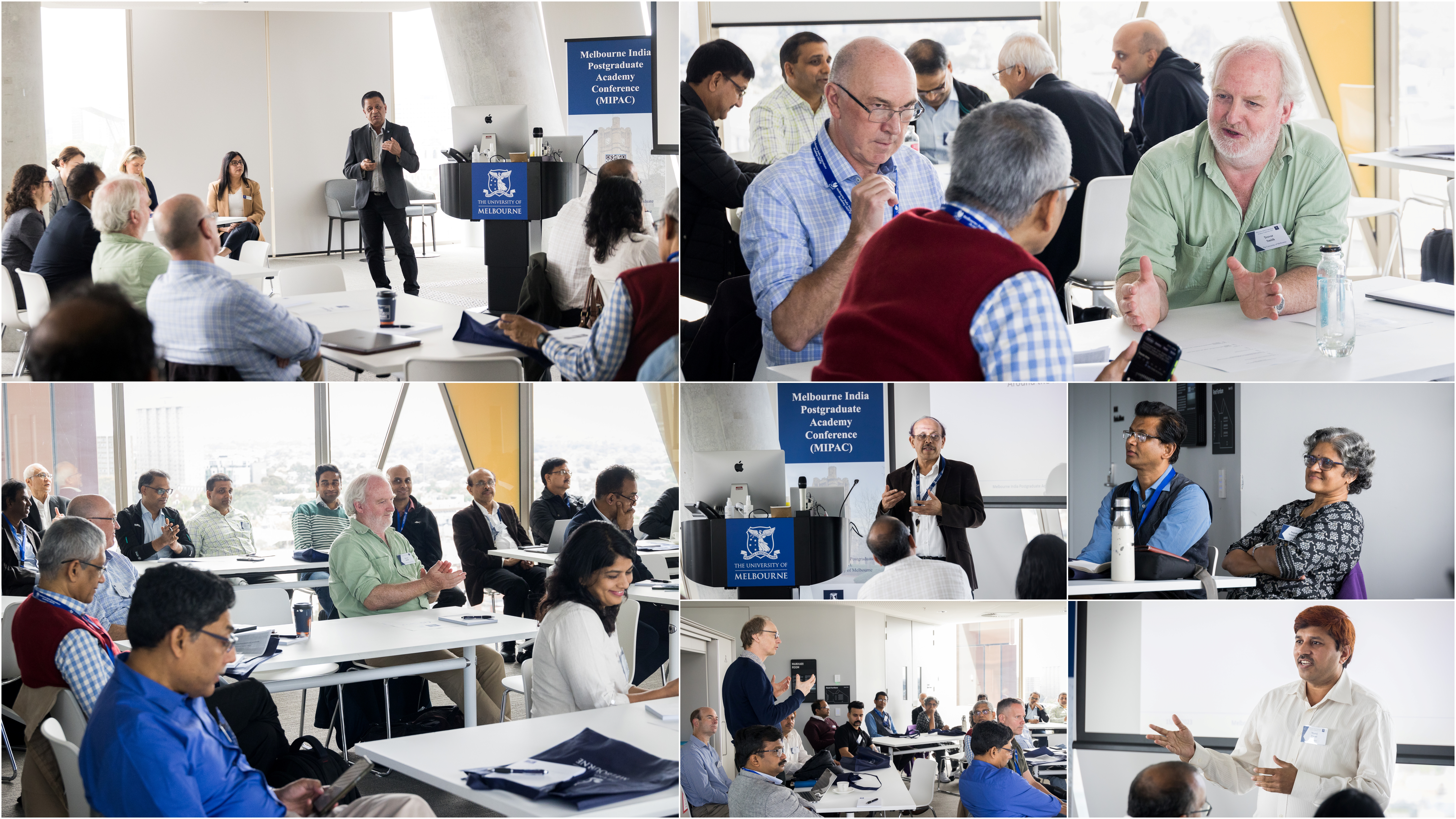
MIPA 2023 Academic Workshop
Seeding the growth of medical collaboration with India
The University of Melbourne's longer-term aim is to match the numbers of MIPA engineering and science PhD candidates and strengthen the Faculty’s engagement with top-ranked Indian medical researchers to provide candidates with access to high-quality facilities and resources, support them in learning to adapt to new cultural and research environments, and ultimately, apply this knowledge to drive transformative outcomes in health research in their communities.