Study highlights value of Digital Coordination Centres
A new study led by the University of Melbourne’s Centre for Digital Transformation of Health in partnership with the Royal Melbourne Hospital (RMH), has revealed how a Digital Coordination Centre can transform hospital operations—while also highlighting the challenges of implementing such complex digital innovations.
Published in BMC Health Services Research, the study evaluated the first phase of the implementation of a Digital Coordination Centre at the RMH.
The Digital Coordination Centre acts as a central hub, using real-time data and situational awareness to improve patient flow and operational decision-making across the hospital. Hospitals across Australia face ongoing pressures from staff shortages, increased demand, and other system-wide challenges. The Digital Coordination Centre was introduced as part of a broader strategy to improve patient access and reduce delays in care.
The research found that the Digital Coordination Centre delivered clear benefits, including improved visibility and coordination across departments such as Emergency, ICU, and surgical units, faster decision-making through real-time dashboards and daily huddles, and greater adaptability as the system evolved based on staff feedback.
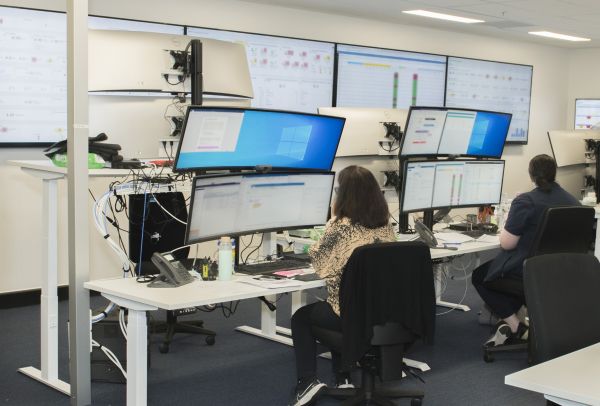
“By bringing together real-time data and key decision-makers in one place, the Digital Coordination Centre helps hospitals respond faster and more effectively,” said lead author Dr Louise Shaw. “This is about making sure patients are in the right place at the right time.”
Dr Shaw undertook the research while a Research Fellow at the University of Melbourne’s Centre for Digital Transformation of Health and is now Senior Research Fellow – Health Services Research at the Murdoch Children’s Research Institute (MCRI).
The study offers critical learnings to guide the successful implementation and scaling of digital coordination solutions in similarly complex healthcare environments, including the need to proactively manage and monitor data quality and engage effectively across the spectrum of clinical teams affected by coordination changes.
"Key enablers of successful implementation include strong leadership and clear communication to build trust, continuous training and data literacy programs for staff, and iterative design and feedback loops to refine systems over time," said Dr Shaw.
“Digital Coordination Centres have already proven their value overseas, reducing wait times and improving patient flow in hospitals across the US, UK and Canada. We’re excited to be applying those lessons here in Australia, adapting them to our local context so we can bring our health system up to speed and ensure patients benefit from the same efficiencies and improved care.”
Sarah Aranha, Director Access and Patient Flow at the RMH and co-author on the paper, said: “A key enabler of the implementation of a Digital Coordination Centre at the RMH has been the team's willingness to embrace learning together and a commitment to continuous improvement.
“We’re excited to see the next phase of our Digital Coordination Centre and the care it can help provide to our community.The research involved 42 interviews with hospital staff and stakeholders and was guided by the Consolidated Framework for Implementation Research. It provides one of the first in-depth qualitative evaluations of a Digital Coordination Centre in an Australian hospital.”
Future phases of Digital Coordination Centre implementation will expand beyond access and flow to focus on preventing hospital acquired complications and providing early intervention that will impact clinical outcomes.
The Digital Coordination Centre at the RMH marked two years of operation in September 2025, with a visit from Victorian Minister for Health, The Hon. Mary-Anne Thomas. Since its launch in 2023, the centre has coordinated over 130,000 admissions and thousands of transfers, marking a major step in modernising hospital care through digital innovation. The centre was developed in partnership with the University of Melbourne’s Centre for Digital Transformation of Health.